
AFRINIC · RIR Watchdog
Story
BTW reporting and context linked to this RIR. For the proposal-by-proposal history, the people involved and their changing positions, start with Policy.
Story
Latest stories
1,193Stories
Story
AFRINIC AFPUB-2019-V4-003-DRAFT04: A Proposal That Outlived Its Forum
AFRINIC's Resource Transfer Policy began as a 2019 attempt to define how IPv4 registrations could move across regional boundaries. By draft 4, the proposal had absorbed repeated revisions, compatibility questions from other registries, a disputed consensus determination and a…

Story
Portable Registries Would Make Elections Less Existential
If operators could change the organisation maintaining their number-resource registration without changing the resources or routes themselves, board elections would still matter but would no longer concentrate every accountability question inside one provider.

Story
A Valid Vote Is Not a Regional Mandate
A regional registry election can lawfully authorise directors to govern a corporation without authorising them to speak for every network, institution or person in the region it serves.

Story
The Candidate Statement That Cannot Be Challenged
An official election page cannot borrow institutional authority for a candidate's claims while offering voters no durable way to test, correct or answer them.

Story
Campaign Finance in a System That Says It Has No Politics
Regional registry elections have no parties and rarely use the language of campaigns, but candidates still compete with money, travel, staff time, data and organisational sponsorship that voters deserve to see.
Story
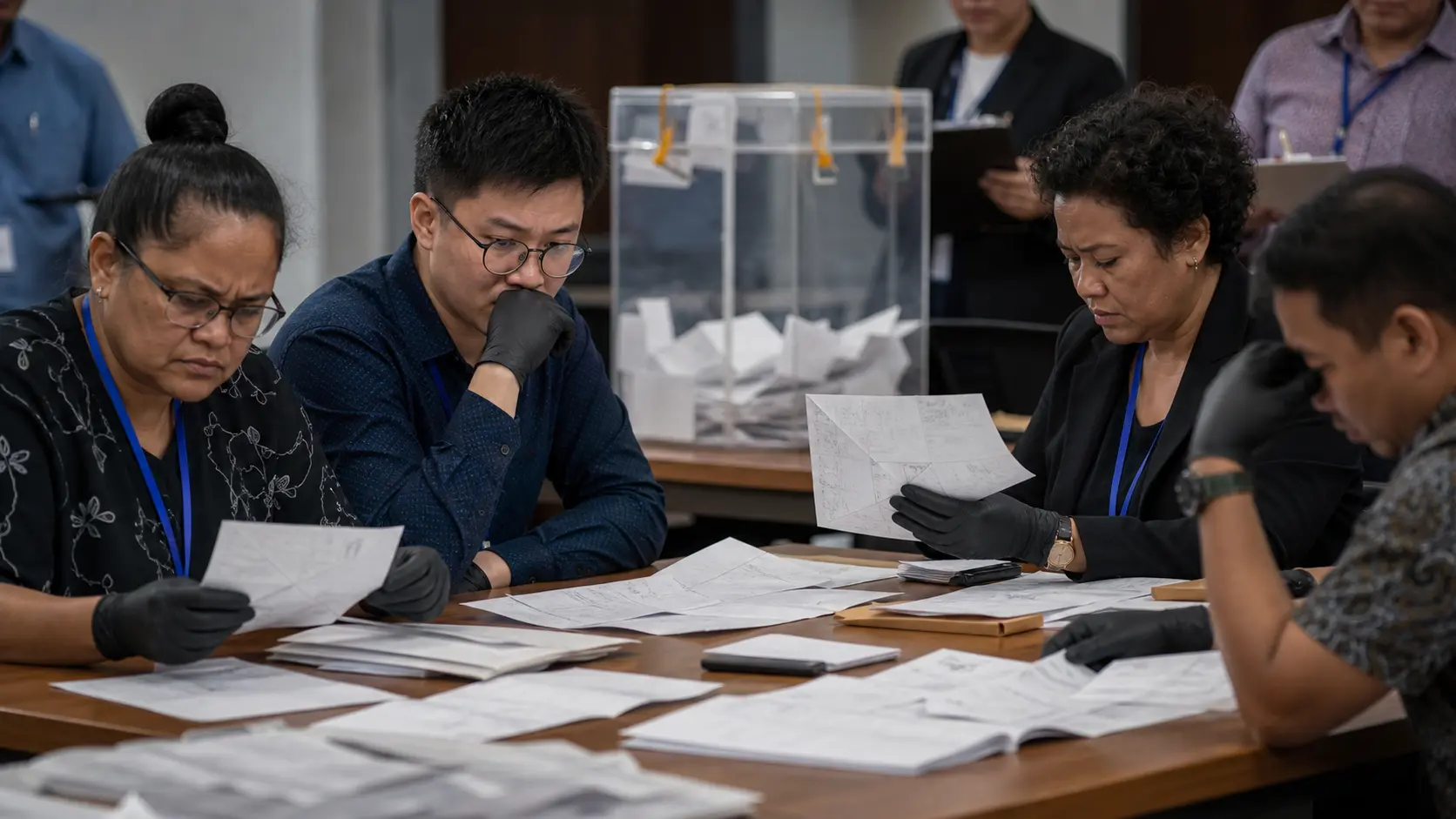
The Spoiled Ballot as Institutional Evidence
An invalid vote may be irrelevant to the winning margin and still be the most revealing fact in an election, because rejection patterns expose where instructions, access, timing and institutional assumptions fail.

Story
Tie-Breakers, Randomness and Chair Power
When a registry election or resolution ends in a tie, the secondary rule—not the original tally—allocates power. Repeat ballots, auditable random draws, automatic rejection and bounded chair discretion each shift authority differently, so the applicable mechanism must be fixed…

Story
Board Vacancies and the Power of Temporary Appointments
RIPE NCC directors are unpaid and periodically re-elected, yet office itself supplies visibility, information, travel, institutional roles and a record of decisions that challengers cannot reproduce. None of those advantages proves an unfair election; together they form a loop…

Story
Election Observers Without Remedial Power
Election observers are valuable precisely because they do not decide who wins, but their neutrality becomes decorative when no institution must preserve, assess and answer the evidence they report.

Story
When Staff Call the Voters
During a contested election, an ordinary verification call can alter the event it is meant to protect. Staff possess contact data, institutional authority and knowledge of who is trying to vote. If they contact one member about one disputed mandate without a published rule…

Story
Secret Ballot, Public Infrastructure
A registry member's selection should remain private. Almost everything that makes that selection valid should be capable of examination: the electorate, authority to vote, system configuration, custody, tally procedure, conflicts, incidents and certification. Treating all…

Story
The Proxy Holder Who Carries Fifty Mandates
Imagine fifty member organisations delegating their ballots to one trusted conference regular. Every instrument may be genuine and every principal willing, yet the resulting concentration changes the election. The important governance question is not whether delegation is…

Story
Remote Voting Did Not Remove the Attendance Premium
Regional Internet registries have made ballots reachable from laptops and phones, but the choice placed on those screens is still shaped by meetings. Regular attendees encounter candidates, institutional language and emerging disputes before a remote member receives a voting…

Story
The Election Calendar as an Instrument of Control
An election calendar looks administrative until one asks what every deadline makes possible, and for whom. Across the regional Internet registries, time determines whether a member can authorise a voter, whether a challenger can become known, whether a disputed credential can be…

Story
AFRINIC's Bylaws Before and After Crisis
AFRINIC's governance crisis did not produce an enacted new constitution. It exposed how the 2020 text worked under stress and set a harder test for reforms still awaiting lawful adoption.

Story
The Transitional Pool: How AFRINIC Inherited Records It Did Not Create
AFRINIC's 2005 transition made one regional registry operationally responsible for African number-resource records that had been assembled under APNIC, ARIN and RIPE NCC. That continuity was necessary, but it did not make every inherited entry self-proving evidence of original…

Story
AFRINIC’s 2005 Recognition Record and Its Narrow Original Task
AFRINIC was recognised through a sequence of provisional approval, transition evidence, applicant assertions, an administrative assessment and final Board resolutions. That record established a regional registry service role for Africa; it did not silently become a broad charter…

Story
AFRINIC’s Mauritius Choice: Neutral Venue or Legal Single Point of Failure?
AFRINIC’s founding design separated the places where work was done from the place where corporate authority lived. Mauritius supplied the legal person, while South Africa, Egypt and Ghana carried other operating roles; the later question is what that distribution protected, and…

Story
Africa’s Long Wait for Its Own Registry
AFRINIC’s long formation was not an empty delay between an African registry idea and final recognition. It was an eight-year accumulation of training, predecessor service relationships, legal design, staff learning and divided authority that made continuity safer while leaving…

Story
When AFRINIC utilisation audits become a gate over running networks
AFRINIC's Phase 2 IPv4 scarcity makes utilisation audits necessary, but the evidence power must be bounded before a ledger check becomes a gate over running networks.