
Summary
- The Governance Document for the Recognition, Operation, and Derecognition of Regional Internet Registries (the "RIR Governance Document") is the successor to Internet Coordination Policy-2 (ICP-2), adopted on 4 June 2001 (1). ICP-2 set criteria for establishing new RIRs but said little about what happens if an existing registry fails.
- As of 28 September 2026 the operative text is Version 3, labelled "1 September 2026 (FINAL DRAFT)" on the Number Resource Organization (NRO) site (1), also circulated as Version 3.4, the ASO Address Council Final Draft dated 5 July 2026 (2, 3). It is a Recommended Draft delivered to the NRO Executive Council on 28 July 2026 — not an adopted instrument (6, 7).
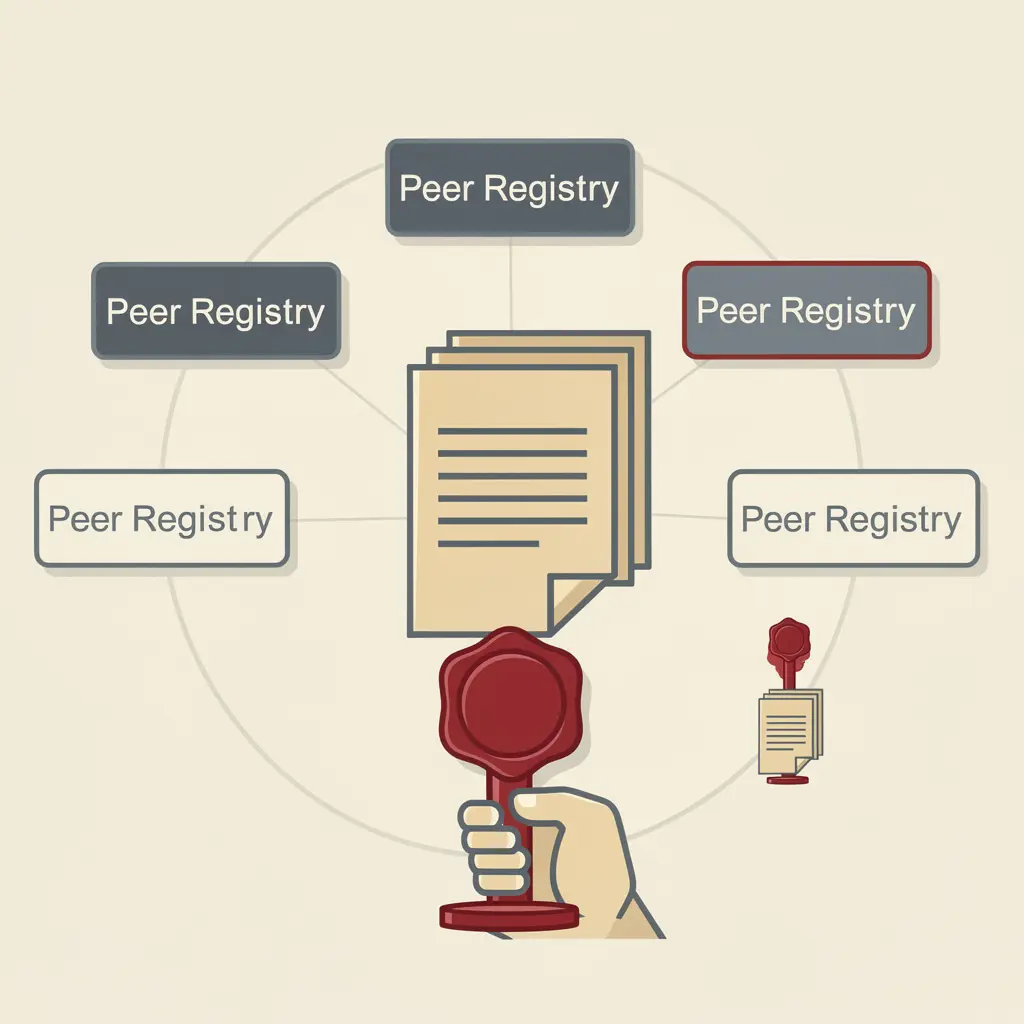
- Recognition is gated by the peer registries: ICANN "shall have no power to Recognize a Candidate RIR" without a proposal supported by at least two-thirds of the RIRs submitting Recognition Assessments (Section 3.7) (1).
- Derecognition is rehabilitation-first. An RIR may be derecognized only for material non-compliance with Section 4.1 requirements "despite having been afforded a reasonable opportunity to remedy" (Section 6.1), and rehabilitation is the preferred path before any final decision (Section 6.2) (1).
- Three actors can start a derecognition proposal: any RIR, a member group of at least 25% of the subject RIR's members or 2,000 members (whichever is lesser), or ICANN itself (Section 6.3) (1). But ICANN cannot decide alone: it may not derecognize an RIR without the support of Derecognition Assessments from at least two-thirds of the RIRs, excluding the subject (Section 6.7(c)) (1).
- Version 2 had required unanimity of the other RIRs before a derecognition proposal could go to ICANN (4); Version 3 lowered that to two-thirds and added amendment safeguards. The NRO's own rationale page presents the change as aligning derecognition with the recognition threshold while keeping rehabilitation central (5).
The instrument that would define RIR legitimacy
Every institution that allocates internet number resources on behalf of a region does so under some grant of authority. For the five existing Regional Internet Registries — AFRINIC, APNIC, ARIN, LACNIC and the RIPE NCC — that grant has rested on ICP-2, a document adopted by ICANN and the RIR community on 4 June 2001 titled "Criteria for Establishment of New Regional Internet Registries" (1). ICP-2 answered one question: how does a new RIR come into existence? It barely addressed the mirror-image question: how does one stop being one?
The Governance Document for the Recognition, Operation, and Derecognition of Regional Internet Registries was drafted to close that gap. Its preamble, as reproduced on the NRO's Version 3 page, states that it "succeeds" ICP-2 and "reflects a coordinated initiative led by the NRO Number Council, also serving as the ASO Address Council, in consultation with the global Regional Internet Registry and ICANN communities" (1). An April 2025 draft carried a different title — "Recognition, Maintenance, and Derecognition" — and placed derecognition in Article 5 rather than Article 6 (9), a sign that the drafters were still settling the document's basic architecture a year ago.
Reading the operative provisions rather than summaries of them, the document distributes power in three places.
1. Recognition: the peer gate
Section 3.1 sets six criteria for recognizing a candidate RIR: Regional Qualification, Resource Holder Support, Community Support, Capability, Impact and Improvement (1). The Capability criterion requires the candidate to "substantively meet all the operational requirements of an RIR specified in Section 4.1," and the Improvement criterion requires that recognition "would result in a material improvement to the functioning of the Internet Numbers Registry System relative to the existing state of affairs" (2).
The decisive constraint, however, is in Section 3.7, titled "ICANN Limitations": "ICANN shall have no power to Recognize a Candidate RIR unless it has received a Proposal to do so that is supported by at least two-thirds of the RIRs submitting Recognition Assessments" (1). Existing registries, in other words, hold a veto-shaped gate over who may join them — with a qualification: the NRO's Version 3.4 text permits excluding a materially affected RIR's adverse recommendation, subject to written notice and an opportunity to respond (3).
2. Derecognition: triggers, initiators and the two-thirds ceiling
Article 6 defines the exit. Section 6.1 permits derecognition only where an RIR "does not continue to materially meet all the requirements specified in Section 4.1" and, "despite having been afforded a reasonable opportunity to remedy such failure through the applicable compliance and rehabilitation processes, remains materially non-compliant" (1). Section 6.2 establishes rehabilitation as the preferred path: a non-compliant RIR is to be derecognized only after a Rehabilitation Plan has failed, not as a first response (1).
Section 6.3 defines who may initiate. A proposal may come from any RIR, from a group of at least 25% of the subject RIR's total members or 2,000 members (whichever is lesser, with each legal entity counted once), or from ICANN itself (1). The member-initiation right is the provision with the most direct legitimacy consequences: it gives the entities a registry serves — its own members — an independent trigger, rather than leaving review to the RIR peer group and ICANN alone.
But initiation does not decide. Section 6.7(c) again constrains ICANN: "ICANN shall have no power to Derecognize an RIR unless it has first received a Proposal to do so that is supported by the Derecognition Assessments of at least 2/3s of the RIRs, excluding the subject RIR" (1). The combined effect is a double gate: members or a peer registry can put the question on the table, but only a two-thirds supermajority of the other RIRs can put it in front of ICANN for decision.
Section 6.8 then defines the effect: handoff and transfer duties, termination of the derecognized RIR's service responsibility, and loss of NRO membership and decision-making authority (1). The drafters paired this with continuity planning — the Version 3.4 text carries a Temporary Emergency Continuity Arrangement in Article 5, initiated by ICANN and two-thirds of the other RIRs and capped at 90 days unless renewed (3).
3. What changed from Version 2
The Version 2 FINAL text, published in August 2025 for the second consultation window (4), drew the same trigger map but a much harder decision rule. Its approval section required the RIRs excluding the subject to "unanimously recommend" derecognition before referring the proposal to ICANN; if they did not, the proposal was "deemed rejected" (4). Version 2 also numbered the effect provision as Section 6.3 and described derecognition as a last resort (4).
Version 3 made three deliberate changes, per the NRO's own summary of differences: it replaced unanimity with the two-thirds threshold "excluding the subject," it aligned key derecognition steps with the recognition process, and it added publication duties and amendment safeguards — including a bar on amendment while a Temporary Emergency Continuity Arrangement is in force or a derecognition proposal is pending (5, 10). Lowering unanimity to two-thirds makes derecognition procedurally easier while the rehabilitation-first structure makes it substantively harder; the drafters traded one form of protection for another.
Currency: this is still a draft
The single most important fact for anyone relying on this document is its status. The NRO's timeline page places "Drafting Final Version of RIR Governance Document" in process through Q3 and Q4 2026, with "Approval and Adoption – Q4 2026" listed as upcoming (7). The ASO's announcement of 1 September 2026 describes Version 3 as the "ASO AC Recommended Draft" delivered to the NRO EC on 28 July 2026, with responsibility for the document now resting with the NRO EC (6). The NRO FAQ likewise states that the NRO EC will review the Recommended Draft and progress the next stages toward a final version (8).
None of these instruments records adoption. As of 28 September 2026, the operative recognition rule remains ICP-2's criteria for establishment, and the Article 6 derecognition machinery — the member initiation right, the two-thirds thresholds, the rehabilitation plan, the emergency continuity arrangement — binds no one. The document's authority is prospective, and its final shape is in the hands of the NRO EC coordinating with ICANN and the RIRs (6).
That status matters for the AFRINIC governance dispute that has unfolded since 2021. The draft's own texts contain no provision linking its procedures to any specific pending dispute, and no instrument located for this report connects a governance-document procedure to a concrete outcome in that matter. Readers should treat any suggestion that the new document resolves the AFRINIC situation as unsourced inference; what the draft offers is a general framework that did not exist when that dispute began.
Member Briefing
Deeper Profile Context
Sign in with the right membership level to unlock the full briefing and source notes.
Only for Strategic Circle
Strategic Circle
Open to all readers. Unlock profile briefings after joining and signing in.
Join Strategic CircleOnly for Leadership Alliance
Leadership Alliance
For qualified IP-asset owners and management; sign in to unlock alliance briefings.
Join Leadership Alliance