
Topic
IPv4 Scarcity Economics
Within the Topic facet, IPv4 Scarcity Economics topic intelligence connects articles that share a specific subject, signal focus, or monitoring theme. The page gives readers a richer path through related reporting, source evidence, market actors, and infrastructure implications, with enough context to understand why the topic matters across company movements, governance decisions, regional exposure, and operational risk. Readers can compare recurring signals, affected organisations, public evidence, market context, service continuity, procurement, competition, compliance, and strategic planning questions behind the subject instead of stopping at a thin list of matching articles. It explains what the topic covers, which infrastructure actors or policies are involved, what evidence supports the coverage, and why the subject may matter for operators, customers, investors, and policy readers.

Story
The Price of a Clean /16 Is Not the Price of Every /16
Two IPv4 /16s each contain 65,536 addresses. That arithmetic does not make them economically interchangeable. A defensible price must disclose the chain of recognised holdership, prior use, reputation evidence, subdivision, transfer path, routing state, RPKI and route-object…

Story
Depreciation, Impairment and an Address Block That Does Not Wear Out
An IPv4 block does not rust, lose pixels or exhaust itself through use. Its economic value can nevertheless fall sharply. Accountants and holders need a model that separates protocol endurance, market liquidity and registry-dependent control instead of forcing all three into an…

Story
Addresses in a Merger Purchase Price Allocation
An acquirer can call IPv4 space a registration, a licence, a contractual position or a bundle of operational rights and still have to put a fair value on it. Purchase price allocation does not wait for institutions to agree on a universal theory of ownership. It asks a narrower…

Story
Covenants Written Around a Registry's Discretion
An IPv4 lender cannot make a Regional Internet Registry promise that a transfer, substitution or enforcement request will succeed. It can, however, refuse to pretend that uncertainty is unpriceable. The strongest financing documents divide the risk into facts the borrower can…

Story
The Balance-Sheet Asset With No Standard Name
IPv4 rights have become valuable enough to sell, lease, impair and finance, yet companies still place economically similar portfolios in different accounting boxes. Some acquired addresses appear as indefinite-lived intangibles, some are amortised over 17.5 years, some sit in…

Story
The Waiting List and the Secondary Market Are One System
ARIN presents a waiting list and specified-recipient transfers as different ways to obtain IPv4 addresses. Economically, they are not separate. The possibility of receiving scarce returned space at an administrative price changes when an applicant buys, what size it seeks, how…

Story
A Transfer Cap Is a Capital Allocation Decision
A ceiling on an IPv4 transfer can be presented as an anti-abuse precaution: no more than a stated quantity, no repeated receipt within a period, no onward transfer until a clock expires. In a secondary market, however, a cap also decides which network may expand in one…

Story
The Price Discount for a Slow Region
An IPv4 block does not become technically weaker when its registration sits in one region rather than another. Yet a seller may receive less for it when the available transfer route is slower, requires a harder demand showing, depends on bilateral compatibility or leaves the…

Story
The Needs Test After a Price Has Been Agreed
When an IPv4 buyer and seller have fixed a price, a registry that reopens the buyer's demand is no longer merely conserving a free pool. It is deciding which business may commit scarce capital, in what quantity and on what timetable. Anti-hoarding controls can be legitimate, but…

Story
AFRINIC's Remaining Pool and the Cost of Being Last
AFRINIC's position as the last regional registry with a meaningful unrestricted IPv4 pool looked like an African advantage. It also made every needs decision, regional-use judgment, resource review and transfer rule more valuable, more contested and more visible to actors far…

Story
LACNIC's 2020 Exhaustion Phases and the Disappearing Queue
LACNIC's last free IPv4 block did not simply run out on 19 August 2020. It converted a visible stock of addresses into a long, conditional claim on whatever might later be recovered, exposing how queue rules distribute time, information and entry costs when a regional registry…

Story
APNIC's 103/8 Rationing Experiment
APNIC tried to preserve a small IPv4 foothold for future networks by limiting each account holder to a fixed share of 103/8. The rule extended access for more than a decade, but it also made the account boundary economically valuable. Applicants adapted through smaller requests…

Story
ARIN's 2015 Exhaustion Day and the Market That Was Already There
ARIN's free pool reached zero on 24 September 2015, but the decisive economic change had begun years earlier. A transfer rule, a matching service, bankruptcy sales, inter-regional demand and a growing class of brokers had already separated IPv4 acquisition from ordinary registry…

Story
RIPE NCC's 2012 Last /8 Rule and the New Entrant It Could Not Save
*The one-/22 rule did what rationing can do: it stopped the first large claimant from consuming RIPE NCC's final block and kept a small allocation available to thousands of later LIR accounts. It did not give a new operator enough IPv4 for open-ended growth, equalise historical…

ICANN
The 2011 IANA Ceremony and the Scarcity Clock That Kept Running
*The ceremony in Miami marked the end of routine top-level IPv4 distribution, not the end of IPv4 demand. Once IANA handed one final /8 to each Regional Internet Registry, the decisive authority moved down a level: regional institutions no longer merely distributed fresh stock…

History
A Registry Without a Balance Sheet: The Low-Value Premise of Early Coordination
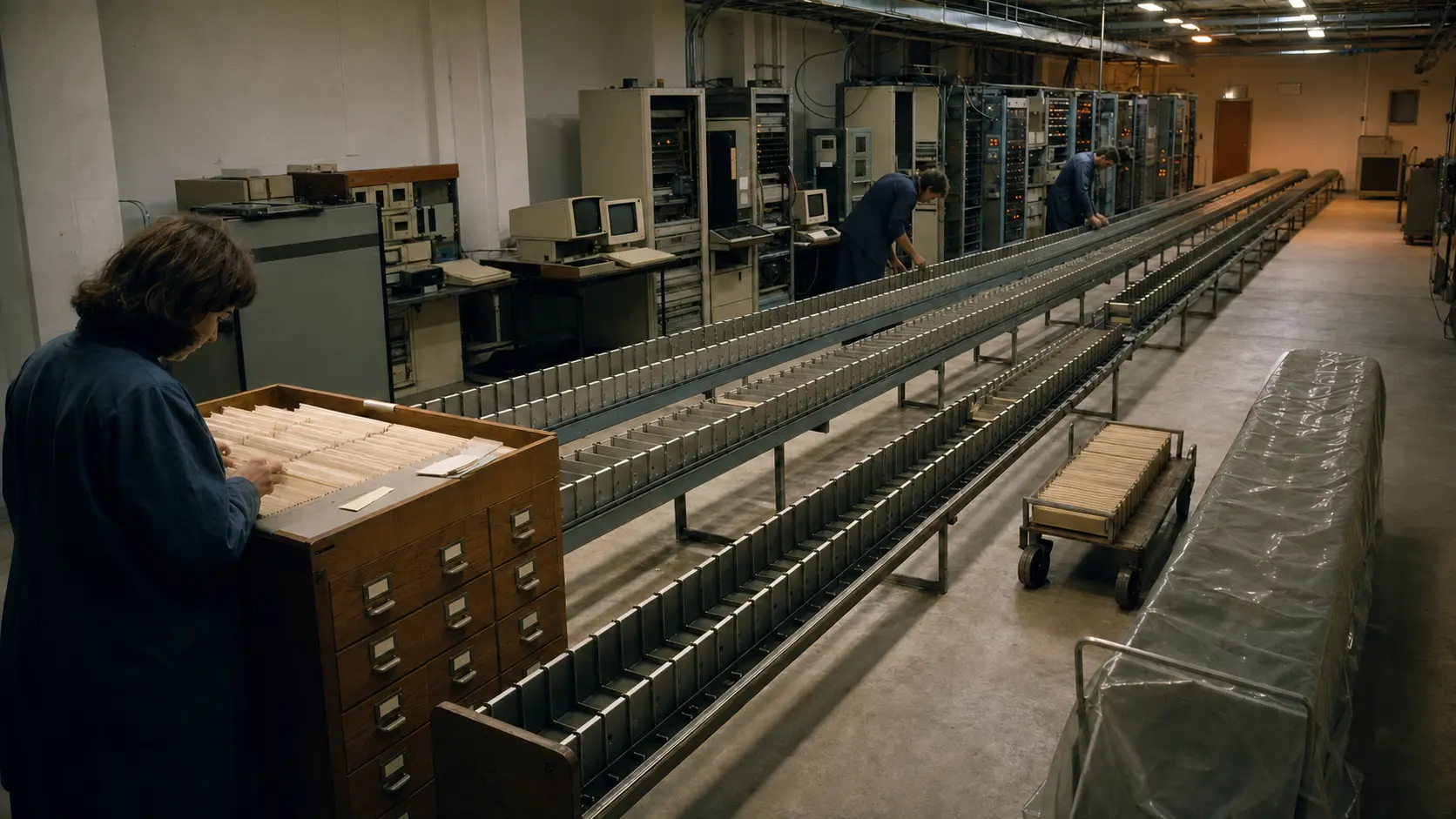
Early number coordination funded real institutions while leaving the economic status of assigned resources unsettled.
History
The First-Mover Dividend in Legacy Address Space
An audit of the Internet’s earliest classful records shows that timing created durable advantages for some recipients—but only where administrative continuity became operational capacity, avoided cost or documented economic value.

History
The Classful Address Era and the Birth of Administrative Scarcity
Classful IPv4 forced applicants and administrators to translate uncertain network plans into three allocation units whose enormous size gaps carried different costs in address capacity, routing state, equipment compatibility and institutional attention.

Story
The LACNIC database record that counterparties can rely on
Database accuracy is often treated as clerical hygiene. In a scarce-address market, it is closer to settlement infrastructure: the record that lets buyers, lenders, lessees, clouds and public customers decide whether a block can be relied upon.

Story
LACNIC RPKI governance when certification affects market access
RPKI is sold as routing security, but its economic force comes from reliance. When certification state affects filters, cloud onboarding, credit, transfers and leases, governance of keys and ROAs becomes governance of market access.