
Impact
Critical
Within the Impact facet, Critical impact intelligence highlights articles where the expected effect level, operational exposure, or decision relevance is comparable. Readers can use the page to separate routine market updates from higher-consequence governance, infrastructure, security, and investment signals that may affect planning, procurement, policy, or customer exposure. The page connects the consequence band to public evidence, related organisations, regional context, operating dependencies, service continuity, competition, investment timing, compliance, and customer risk. It helps readers decide which developments deserve deeper monitoring, which actors are most exposed, and how a signal may affect operations or market planning.

Global Cloud Services
Salesforce's Drift-token campaign made OAuth consent an accountability boundary
The Salesloft Drift campaign against Salesforce customer environments was a clean demonstration of a modern SaaS accountability problem: the attacker did not need to break the front door of every customer. The attacker could use a trusted integration's OAuth access and refresh…

Global Cloud Services
JetBrains TeamCity made build servers a software-supply-chain accountability surface
The 2023 TeamCity authentication-bypass vulnerability showed why developer infrastructure is not back-office tooling: when a build server can be reached by attackers, source code, signing secrets, deployment credentials, and downstream software customers all enter the…
Global Cloud Services
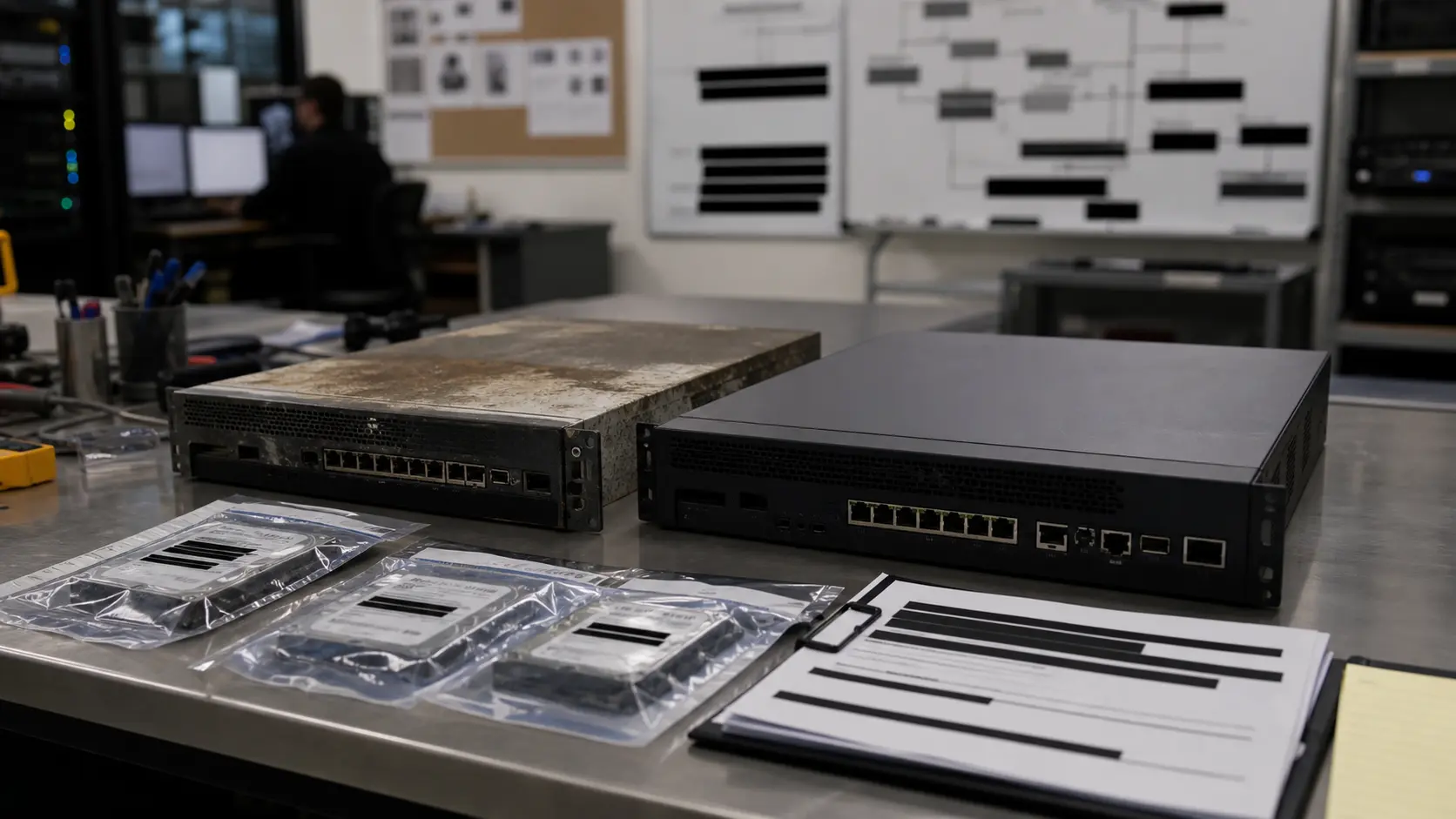
Palo Alto Networks made firewall root compromise a recovery-accountability test
Palo Alto Networks' PAN-OS GlobalProtect emergency showed why perimeter products need more than a patch table: once a firewall flaw is exploited as a command-injection path, customers must decide whether the device is merely updated, forensically reviewed, credential-cleaned, or…

Global Cloud Services
VMware ESXiArgs showed how old hypervisor patches become continuity duties
The ESXiArgs ransomware wave demonstrated that virtualization risk can sit dormant until an old patch gap becomes a mass outage: VMware had already issued fixes for the underlying OpenSLP vulnerability, but exposed unpatched hypervisors still turned server estates into recovery…

Story
When AFRINIC utilisation audits become a gate over running networks
AFRINIC's Phase 2 IPv4 scarcity makes utilisation audits necessary, but the evidence power must be bounded before a ledger check becomes a gate over running networks.

Story
AFRINIC and the economics of transition architecture beyond RIRs
The AFRINIC crisis makes the next institutional question unavoidable: if discretionary registry power has to be narrowed or moved, the transition must protect resource records, live services and users before it settles who governs. The credible alternative is not punishment or…

Story
AFRINIC and the economics of legitimacy after scandal
AFRINIC can keep services running and elect a board, but legitimacy after scandal returns only when operators, members, courts, lenders, cloud providers and public customers can rely on its number-resource ledger without extraordinary proof, discounts or defensive contracts.

Story
AFRINIC and the economics of IANA recognition and franchise risk
Global recognition turns a regional number registry into something closer to a franchise operator for territorial uniqueness: exclusive in its region, indispensable to users, shielded by continuity concerns, and tempted to convert a neutral coordination function into permission…

Story
AFRINIC and the economics of NRO coordination incentives
When one regional internet registry is in crisis, its peers can look like the sober adults in the room. Their help keeps records available, reassures operators and reduces panic. The same help can also become a club insurance policy: preserving the registry system while softening…

Story
AFRINIC and the economics of ICP-2 reform
ICP-2 reform is usually presented as a governance clean-up after AFRINIC's long crisis. That is too small a frame. Recognition standards decide which institution can make scarce number-resource records usable, how much risk address holders must absorb when a registry fails, and…

Story
AFRINIC and the economics of constitutional limits of RIRs
A private membership registry can exercise public-like authority only if mandate boundaries, due process, reviewability, member-power checks, conflict rules, emergency powers, remedies and public-dependency duties keep scarce-address governance inside a narrow constitutional…

Story
AFRINIC and the economics of court orders and registry continuity
Court orders can protect rights without turning a regional internet registry into a hostage to litigation, but only if injunctions, freezes, operating carve-outs and emergency powers are drafted for the ledger services that running networks depend on.

Story
AFRINIC and the economics of bankruptcy and resource transfer
When an address-dependent operator fails, scarce IPv4 becomes an estate interest whose value depends on court authority, customer continuity and post-insolvency registry execution.

Story
AFRINIC and the economics of merger and acquisition address risk
AFRINIC-administered IPv4 can decide whether an acquisition delivers the address continuity, customer capacity and integration value a buyer thought it had priced.

Story
AFRINIC and the economics of lending and collateral risk
AFRINIC-administered IPv4 can support credit only when lenders can prove the holder, the registry status, the control chain and the default remedy before cooperation ends.

Story
AFRINIC and the economics of accounting treatment of IPv4
IPv4 scarcity makes AFRINIC registry recognition an accounting-treatment problem: recognition, classification, measurement, impairment, disclosure, tax and audit evidence now depend on records that were once treated as network administration.

Story
AFRINIC and the economics of asset capitalisation
IPv4 scarcity turns AFRINIC registry recognition into a capital question for boards, lenders, buyers, auditors, tax advisers and networks that depend on continuity.

Story
AFRINIC and the economics of incumbent optionality
Scarce IPv4 gives established AFRINIC-region holders more than inventory. It gives them a portfolio of timing, product, reserve and bargaining choices that policy language often fails to price.

Story
AFRINIC evidence and cloud NAT control over public workload identity
AFRINIC shows how cloud NAT turns private subnet design, scarce public IPv4, managed egress, external IP billing, logs and telemetry into platform-controlled public identity for African workloads.

Story
Carrier-grade NAT under AFRINIC scarcity and the burden of shared identity
AFRINIC shows how carrier-grade NAT turns IPv4 scarcity into a hidden operating tax paid through port scarcity, attribution logs, lawful-access handling, abuse desks, support queues, application failures and premium public-address exceptions.