
Primary Domain
Network-resource Evidence
Within the Primary Domain facet, Network-resource Evidence intelligence groups reporting by primary domain so readers can follow a focused area of internet infrastructure, governance, connectivity markets, or digital capital. The page brings together related articles, public evidence, institutions, companies, people, regional exposure, operating dependencies, and market context that may otherwise sit across separate category pages. It explains the domain, the likely actor class, the market or governance context, and the source material readers should use when comparing signals. Operators, analysts, and governance readers can see how the same domain appears across events, profiles, market shifts, public-source evidence, regional dependencies, and longer-cycle infrastructure decisions over time.

Global Regional ISP
Shijiazhuang XuDing Technology Company Ltd: a Chinese-registered company inside RIPE NCC's registry, operating the CoreLink routing brand
Shijiazhuang XuDing Technology Company Ltd: a Chinese-registered company inside RIPE NCC's registry, operating the CoreLink routing brand intelligence summary explains the development, the public evidence available to readers, the organisations involved, the regional context…

Asia-Pacific Regional ISP
One Network That Moves Traffic, Two That Never Did: Inside NEXGENET COMPANY LIMITED's Operating Record
One Network That Moves Traffic, Two That Never Did: Inside NEXGENET COMPANY LIMITED's Operating Record intelligence summary explains the development, the public evidence available to readers, the organisations involved, the regional context, market exposure, and the…

Global Cloud Services
Five prefixes, five answers: what AS210973's mirror disagreement teaches about trusting the record
Every monitor that watches the routing table tells a slightly different story about the small Vienna network operated by DATAMATIX Datensysteme GmbH. Reading those differences carefully — rather than averaging them away — is the fastest way to learn which layers of the internet's…
Europe and Middle East Cloud Services
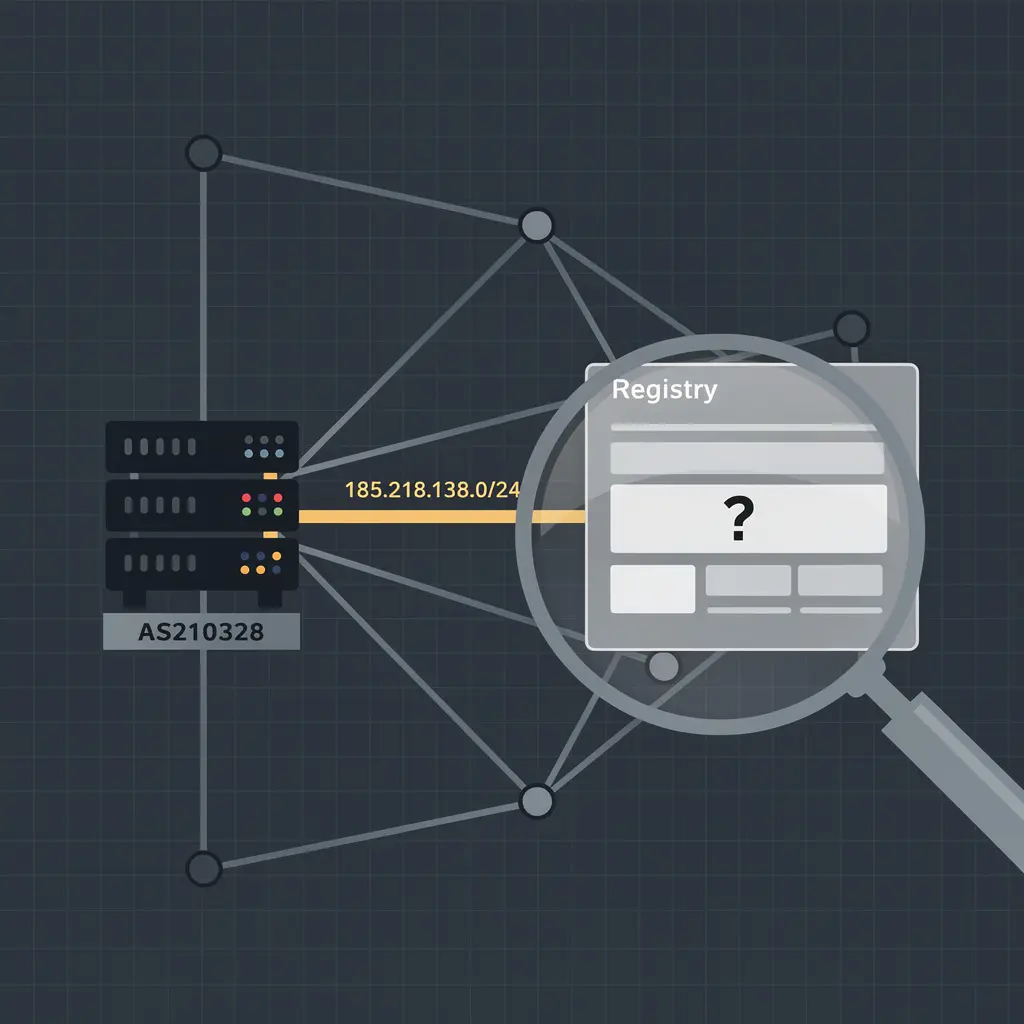
The Registry Says One Company, the Records Say Another: Inside AS210328's Identity Gap
The Registry Says One Company, the Records Say Another: Inside AS210328's Identity Gap intelligence summary explains the development, the public evidence available to readers, the organisations involved, the regional context, market exposure, and the infrastructure consequences…

CASE FILE
Four Databases, Four AlmazClouds: The Incompatible AS210328 a Buyer Meets in September 2026
Four Databases, Four AlmazClouds: The Incompatible AS210328 a Buyer Meets in September 2026 intelligence summary explains the development, the public evidence available to readers, the organisations involved, the regional context, market exposure, and the infrastructure…

Story
DFINFRA and AS210860: The Registry Says One Thing, the Routing Table Says Nothing — and Neither Has Moved
DFINFRA and AS210860: The Registry Says One Thing, the Routing Table Says Nothing — and Neither Has Moved intelligence summary explains the development, the public evidence available to readers, the organisations involved, the regional context, market exposure, and the…
Story
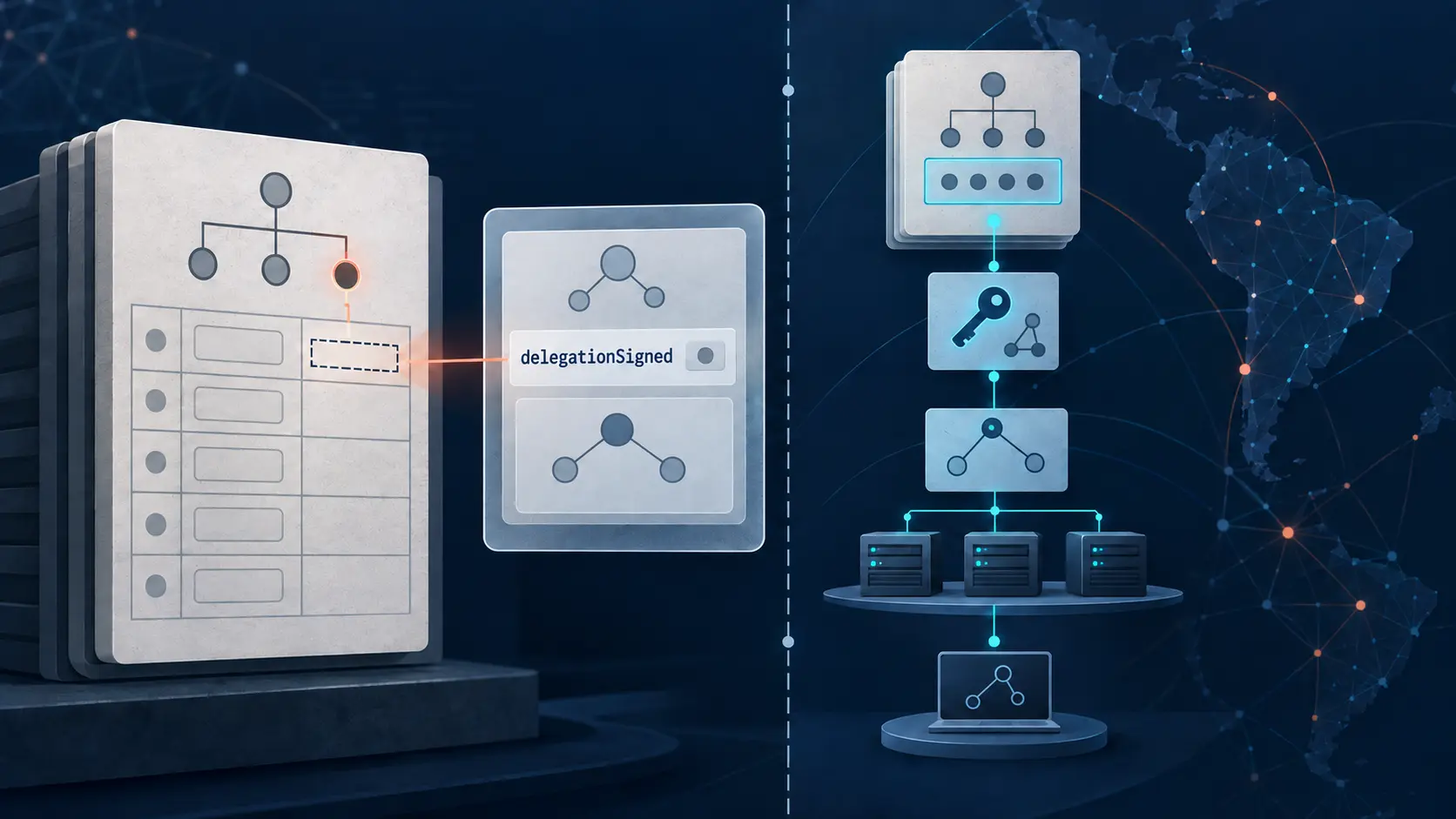
LACNIC's RDAP delegationSigned Records Parent DS Presence, Not DNSSEC Validation
A boolean in a registry response can look like a verdict on the security of a DNS chain. LACNIC's RDAP `delegationSigned` field answers a narrower question: whether the registration view reports DS records in the parent. It does not run a resolver, test the child keys or prove…

Story
AFRINIC's upd-to Receives Failed Update Notices, Not Database Authority
An unexpected Whois update can place a complete rejected entity in somebody's inbox. AFRINIC's `upd-to` field explains why that person received the warning; it does not identify the sender, confer a credential or prove that the attempted change ever reached the registry.

Story
RIPE's member-of Proves Authorized Set Membership, Not Live Route Propagation
RIPE's member-of Proves Authorized Set Membership, Not Live Route Propagation intelligence summary explains the development, the public evidence available to readers, the organisations involved, the regional context, market exposure, and the infrastructure consequences that may…

Story
APNIC's ASPA Lists Authorized Providers, Not Observed Transit
APNIC's ASPA Lists Authorized Providers, Not Observed Transit intelligence summary explains the development, the public evidence available to readers, the organisations involved, the regional context, market exposure, and the infrastructure consequences that may follow. The Story…

Story
ARIN's Retired Origin AS Field Recorded a Possibility, Not a Live Route
Old registration exports can preserve an `Origin AS` value long after ARIN removed the field. The label looks authoritative, but ARIN defined it as an optional holder-supplied list of ASNs from which a block might originate. It was neither a cryptographic authorization nor a…

Story
LACNIC Whois created Dates the Registry Record, Not the Network's Launch
A timestamp precise to the second can look like a birth certificate. In LACNIC registration data, however, `created` dates the record for an address block. It does not reveal when the holder was founded, when engineers switched on a network, when the addresses were first used, or…

Story
AFRINIC Whois org-type Classifies a Registry Relationship, Not Legal Corporate Form
AFRINIC’s `org-type` field looks deceptively familiar: a short label attached to an organisation record. Its proper use is narrower. It helps describe how that record sits inside the registry’s resource and membership system; it does not answer the legal, ownership or operational…

Story
RIPE Database mnt-ref Authorises an Organisation Reference, Not Corporate Control
An accepted `org:` link in the RIPE Database has passed a meaningful authorisation test. That makes it evidence of an approved database reference—not a shortcut to proving ownership, group membership or control of the network behind the record.

Story
APNIC’s NIR RDAP Redirect Finds a More-Specific Record, Not a Network Operator
A redirect from APNIC to an NIR-specific RDAP host is an evidence trail about where registration data is served. It can lead to a narrower record without proving who currently routes, owns or operates the network.

Story
ARIN’s Whois Retirement Proposal Is a Protocol Transition, Not the End of Directory Data
Three dates in ARIN’s latest consultation can look like shutdown deadlines. They are not. The registry is asking how to retire three older access protocols in favour of RDAP, with separate dependencies and earliest dates for each path. The proposal changes how registration data…

Story
LACNIC Whois routing-c Can Register Routing Policy, Not Prove Who Operates BGP
LACNIC Whois routing-c Can Register Routing Policy, Not Prove Who Operates BGP intelligence summary explains the development, the public evidence available to readers, the organisations involved, the regional context, market exposure, and the infrastructure consequences that may…

Story
AFRINIC Whois mnt-domains Authorizes Reverse-Domain Records, Not DNS Service Operation
A database key can authorize the creation of a reverse-domain record while every DNS query to the supposed service still times out. In the AFRINIC Database, `mnt-domains` identifies a maintainer with authority over child domain-entity creation. It is evidence about registry…

Story
RIPE assignment-size Describes Aggregated IPv6 Assignments, Not Active Subscribers
A `/46` contains 1,024 possible `/56` prefixes. When a RIPE Database entity pairs that aggregate with `assignment-size: 56`, the arithmetic is exact—but the tempting subscriber count is not. The field records the size used for End User assignments inside an aggregate…

Story
APNIC Whois mnt-irt Points to Incident Response, Not Network Control
A mandatory contact pointer can look like a declaration of who runs a network. In APNIC Whois, `mnt-irt` has a narrower and more useful meaning: it connects a number-resource record to an Incident Response Team entity for security and abuse handling. That link strengthens…