
Content Type
Research
Within the Content Type facet, Research intelligence gathers BTW.MEDIA articles that share the same editorial format, helping readers compare briefings, profiles, risk notes, market analysis, and event coverage without mixing different kinds of evidence. The page explains how this content type frames internet infrastructure events, company movements, governance decisions, operational signals, and public evidence across the site. Readers can compare which actors or infrastructure systems appear most often, how source quality changes interpretation, and whether the material is a durable profile, a time-sensitive event, a strategic market signal, or a governance development. The result is a useful search page for operators, investors, customers, analysts, and policy stakeholders who need to understand the consequence, timing, and evidence behind similar article formats.

CASE FILE
The Error Returned as a New Question: DNS Report-Channel and the Authority of Feedback
An authoritative server can announce where it wants to hear about failures it cannot see. It cannot make a resolver diagnose, report or believe anything. DNS Error Reporting turns one local validation failure into a second DNS query, then leaves transport, caching and human…

CASE FILE
The Signature Verified. The Command Was Still Unauthorized: HTTP Message Signatures and the Authority of Covered Components
RFC 9421 can prove that selected parts of an HTTP message survived in a defined semantic form. It cannot decide whether the signer was entitled to issue the command, whether an omitted field changed its meaning, or whether a valid request has already been used.

Story
APNIC Renamed an Election as an Appointment. The Selector Did Not Change.
APNIC's 2026 By-law amendment replaced one verb: the Executive Council would no longer “elect” the Director General but “appoint” that officer. Read alone, the change sounds like a transfer of power. APNIC's own supporting paper says the opposite. The selector was already the…

CASE FILE
The Packet Hid Its Exact Length. The Pattern Still Spoke: EDNS Padding and the Limits of DNS Privacy
An encrypted DNS message can conceal its names and answers while leaving a surprisingly useful silhouette. EDNS Padding changes that silhouette by adding bytes. The difficult question is not whether the packet became larger, but whether client, server, transport and path made…

Number Resource Society
Who can change the Dunnes RIPE record—and what that power does not prove
The authority behind a public internet-resource record is neither unlimited nor merely clerical. In the Dunnes case, protected RIPE Database entities are governed through maintainer authentication, `mnt-by` references and controlled member procedures. Those mechanisms can…

CASE FILE
The Record Bound the Options. The Client Still Chose the Connection: DNS SVCB, HTTPS and Service Authority
A domain owner can authenticate a list of preferred endpoints, protocols and connection parameters before the first application exchange. That does not make the first preference a command, turn a routing target into the origin, or prove which path a real client can securely…

CASE FILE
The Counter Hit Its Ceiling. The Filename Opened a New Epoch: RPKI Manifests and Recovery Authority
A correctly signed RPKI manifest can become unusable because a relying party remembers an impossible predecessor. RFC 9981 gives the issuer a narrow way out: change the manifest filename, start a new comparison epoch and preserve every other freshness, location and integrity…

CASE FILE
The Feed Was Valid. The Answer Was Local: DNS Response Policy Zones and the Authority to Rewrite Resolution
An authenticated threat feed can tell a resolver what a publisher recommends. It cannot decide which users lose a name, whether the answer should disappear or be replaced, or who owns the damage when a correct transfer produces the wrong operational result.

CASE FILE
The Digest Matched. The Zone Was Still Wrong: ZONEMD and the Limits of Cryptographic Integrity
A whole-zone checksum can expose truncation, corruption and substitution. It can also authenticate a mistake with perfect precision. The decision for infrastructure leaders is not whether to trust cryptography, but how narrowly to interpret what it has proved.

CASE FILE
The Signal Was Signed. The Delegation Was Not Yet Secure: CDS/CDNSKEY and the Authority to Publish DS
A child zone can publish a perfectly signed request for a new DNSSEC secure entry point and still lack the one chain that would validate it. CDS/CDNSKEY makes parent coordination machine-readable; it does not collapse operational control, registrant authority, parent admission…

CASE FILE
The Catalog Was Valid. The Deletion Was Not: DNS Catalog Zones and the Authority to Provision
An authenticated DNS transfer can deliver a perfectly formed catalog whose operational consequence is to remove every zone from a secondary fleet. The transport may be trustworthy and the syntax impeccable while the decision encoded inside it is still wrong. DNS Catalog Zones…

Leaders
What Mohamed Awang-Lah controlled at MY.NeuTrans—and what he did not
Dr Mohamed Awang-Lah made a consequential structural choice after JARING: he founded a company designed to supply passive network infrastructure to operators without also competing for their retail customers. The public record supports that decision, its implementation and the…
CASE FILE
The F-Root outage that showed why redundancy is not the same as readiness
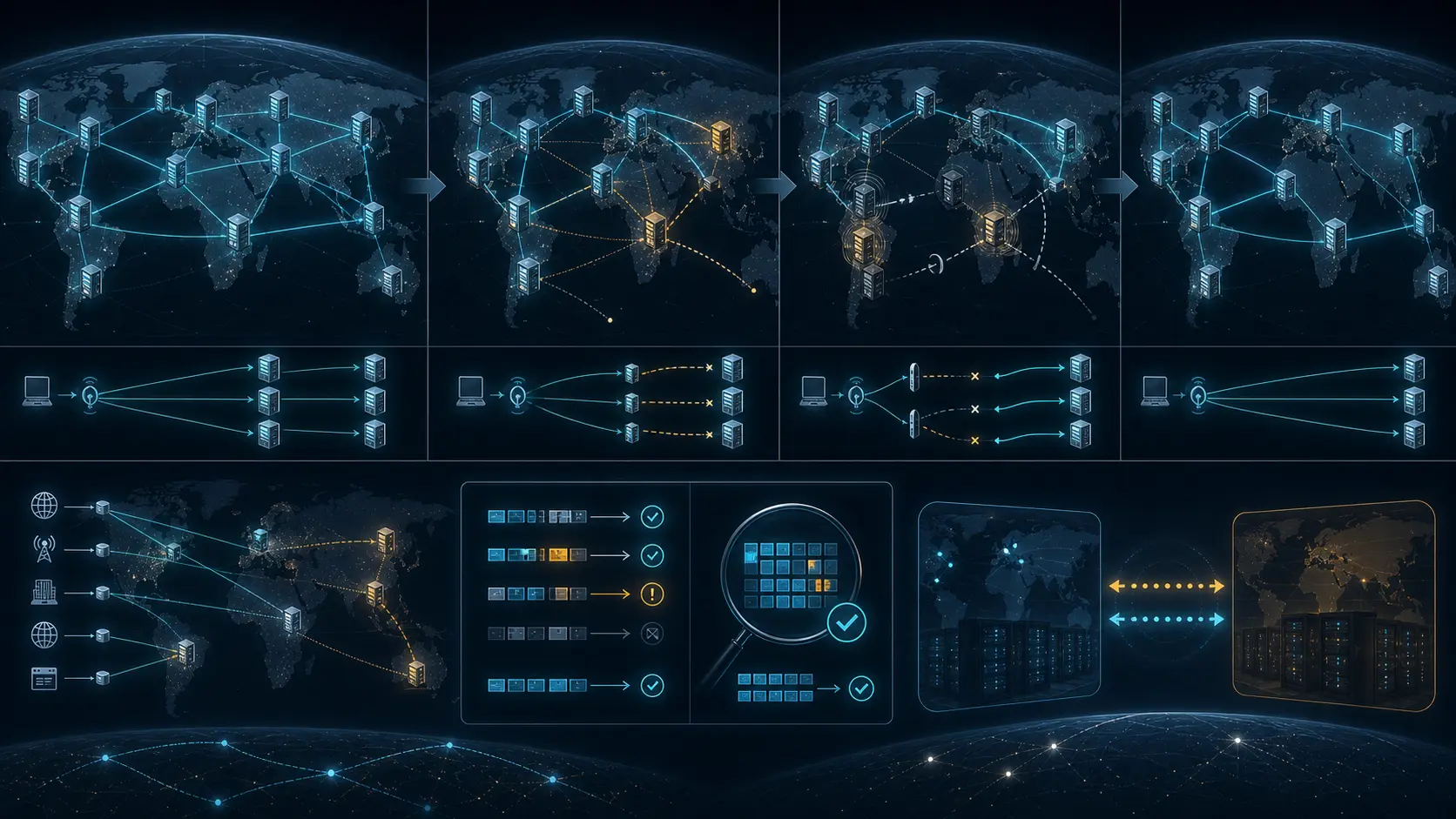
A January 2020 DNS incident exposed a narrow but consequential weakness in distributed infrastructure: many nodes can exist, yet recovery can still depend on whether separate organisations can detect a semantic fault, agree on its cause and exercise emergency routing authority…

Europe and Middle East Cloud Services Trends
The regional boundary behind Genesis Cloud’s GPU capacity
Genesis Cloud’s accelerator inventory becomes useful capacity only when networking, data placement, images, security controls and recovery procedures can support the intended workload. Its documented regional boundaries therefore turn a catalogue question into an architectural…

CASE FILE
The Answer Had Expired. The Failure Had Not: DNS Serve-Stale and the Authority Beyond TTL
A DNS answer can outlive its ordinary freshness without becoming current again. Serve-stale is the resolver's narrow authority to prefer a known old answer over a fresh failure, but only after the source has been consulted, the failure has been bounded and the age of the…

CASE FILE
At PP-26, a Sole Candidate Still Needs a Majority
The live PP-26 page currently shows one candidate for Secretary-General and one for Director of the Telecommunication Standardization Bureau. That is not an election result, or even a final single-candidate slate: nominations remain open until 12 October. If either field still…

Story
RIPE NCC's One-Tier Board Needs an Authority Migration Table
RIPE NCC wants its legal structure to catch up with the way it says the organisation already works. The proposed one-tier Board would put the Managing Director on the Board as an executive director and recast the elected Executive Board members as non-executive directors. That…
Story
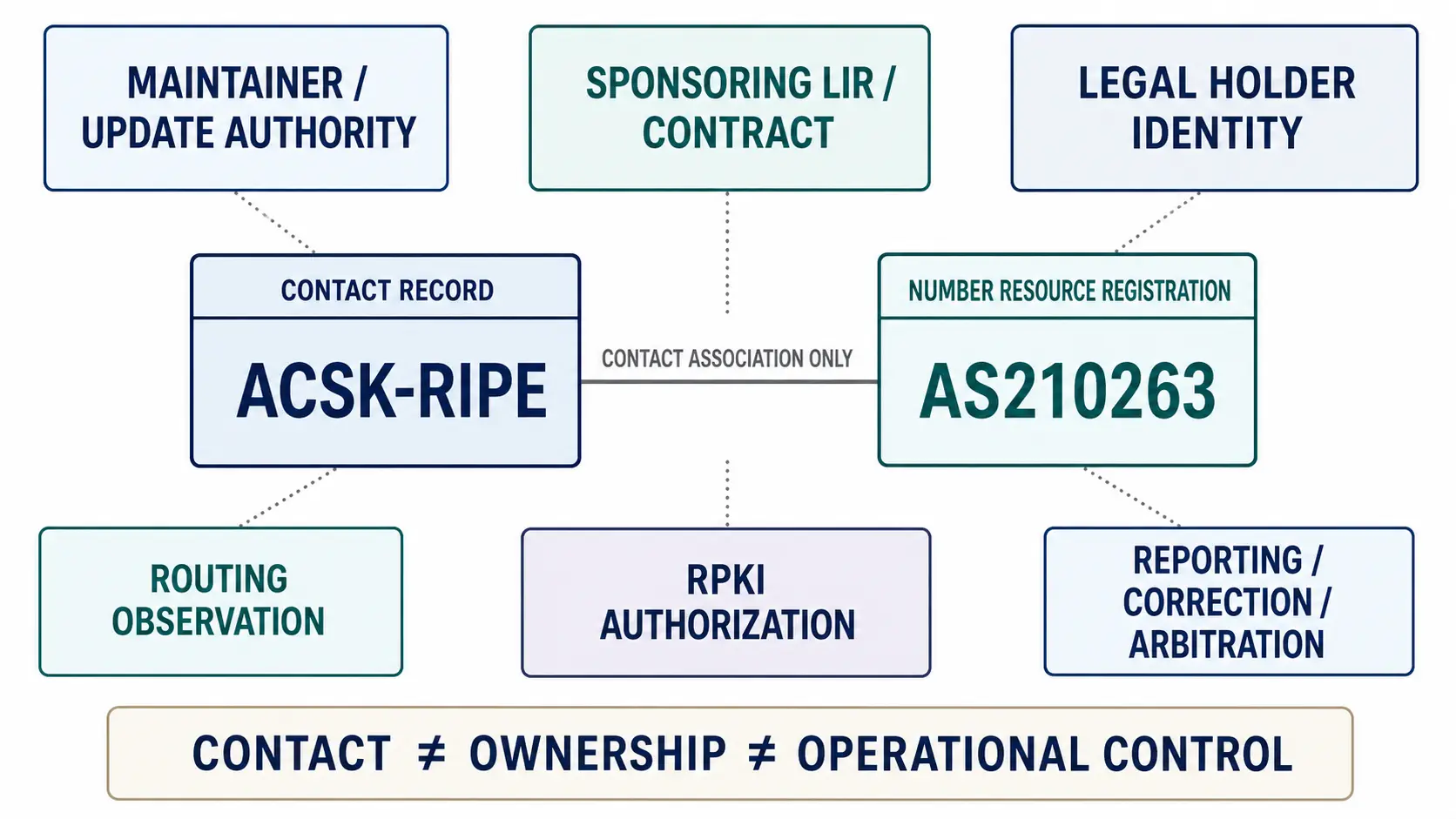
ACSK-RIPE and AS210263: A Contact Handle Is Not a Control Title
ACSK-RIPE and AS210263: A Contact Handle Is Not a Control Title intelligence summary explains the development, the public evidence available to readers, the organisations involved, the regional context, market exposure, and the infrastructure consequences that may follow. The…

Story
APNIC's Leadership Consultation Needs a Participation Receipt
APNIC has designed a careful consultation on barriers to community leadership: three online listening sessions, a mailing list, a hybrid conference session and de-identified reporting. That protects candour, but it also removes the visible trail by which readers could judge…

History
Mark Andrews and the DNS Server That Outlived Its Replacement
A replacement can be announced years before it becomes a migration. Mark Andrews's stewardship of BIND 9 during the BIND 10 programme shows why running infrastructure keeps imposing duties—security fixes, releases, tests and operator support—even while an institution invests in…