
Content Type
Research
Within the Content Type facet, Research intelligence gathers BTW.MEDIA articles that share the same editorial format, helping readers compare briefings, profiles, risk notes, market analysis, and event coverage without mixing different kinds of evidence. The page explains how this content type frames internet infrastructure events, company movements, governance decisions, operational signals, and public evidence across the site. Readers can compare which actors or infrastructure systems appear most often, how source quality changes interpretation, and whether the material is a durable profile, a time-sensitive event, a strategic market signal, or a governance development. The result is a useful search page for operators, investors, customers, analysts, and policy stakeholders who need to understand the consequence, timing, and evidence behind similar article formats.

History
The Filter Looked Readable. The Server Executed a Predicate: RFC 1558
In one short LDAP expression, `*` could ask whether an attribute existed, widen a value into a substring pattern, or survive as a literal character only if the writer escaped it. The line was made for people to read. The server did not read it as prose. RFC 1558 gave executable…

CASE FILE
A SLSA Attestation Is Evidence, Not the Acceptance Decision
A SLSA provenance statement can say something precise about one artifact and the build that produced it. That precision matters. But it does not choose which builders a verifier trusts, define a package’s expected source and parameters, declare a release complete, or decide what…

CASE FILE
QUIC's Partial Reset Gained a Permission Gate. Its Delivery Promise Can Still Shrink
Revision 11 of QUIC Stream Resets with Partial Delivery closes an important permission gap: an endpoint may not send `RESET_STREAM_AT` unless its peer advertised support. That rule says the receiver can parse the extension. It does not make the sender's first Reliable Size…

CASE FILE
The Receiver Counted the Marks. It Did Not Choose the Sender’s Response
An acknowledgment disappears. The next one arrives with a three-bit counter advanced, but perhaps not by as little as it seems: the counter may have wrapped while the evidence was missing. RFC 9768 gives TCP a better congestion receipt, not an oracle. The receiver reflects marks…

AFNOG
AfNOG’s Partial-Input Invitation Opens the Door Without Mapping the Process
AfNOG’s 2007 call welcomed suggestions and expressions of interest even without all requested proposal information, but the cited page did not explain beside that invitation how these inputs related to a complete proposal.

IETF
RFC 9917 Lets the Far End Prune the Forward Path
A link can look healthy where traffic leaves but damaged where it arrives. RFC 9917 turns that far-end evidence into a policy input: an operator-defined threshold can place an Extended Administrative Group on the reverse edge, allowing the forward edge to be removed from a…
History
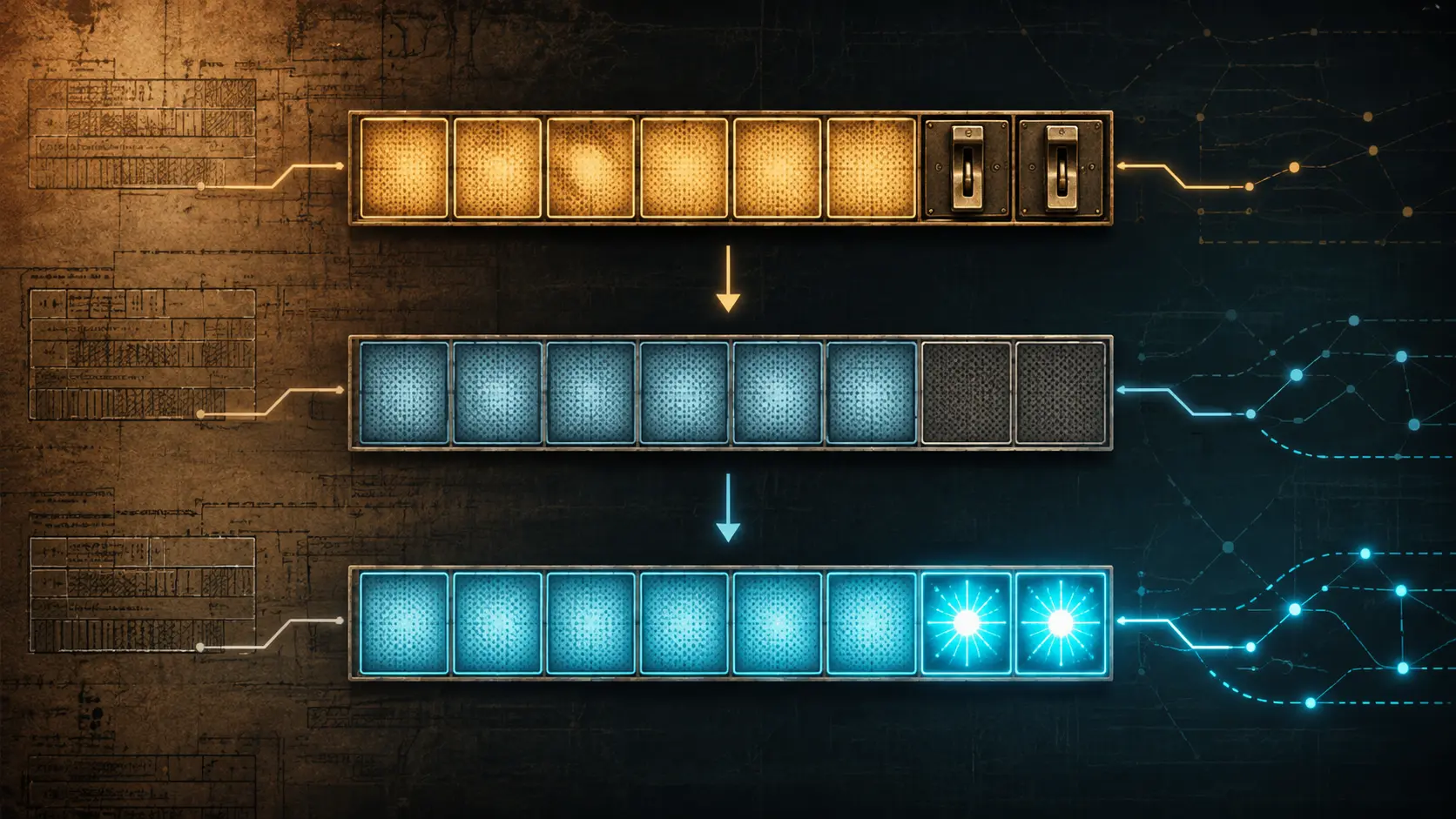
The Octet That Changed Its Contract: From IPv4 Type of Service to DSCP and ECN
The second octet of the IPv4 header did not move, but its contract did. What began as precedence and desired service qualities became a configurable per-hop behavior selector plus an explicit congestion signal—a history of compatibility managed by redefining bits in place.

Leaders
Hans Petter Holen and the Chair That Needed a Selection Process
A trusted personal handover placed Hans Petter Holen in the RIPE Chair role in 2014. By 2020, the more consequential achievement was a community process designed to make the next transition less dependent on any one person.

Story
APNIC Whois mnt-irt Points to Incident Response, Not Network Control
A mandatory contact pointer can look like a declaration of who runs a network. In APNIC Whois, `mnt-irt` has a narrower and more useful meaning: it connects a number-resource record to an Incident Response Team entity for security and abuse handling. That link strengthens…
History
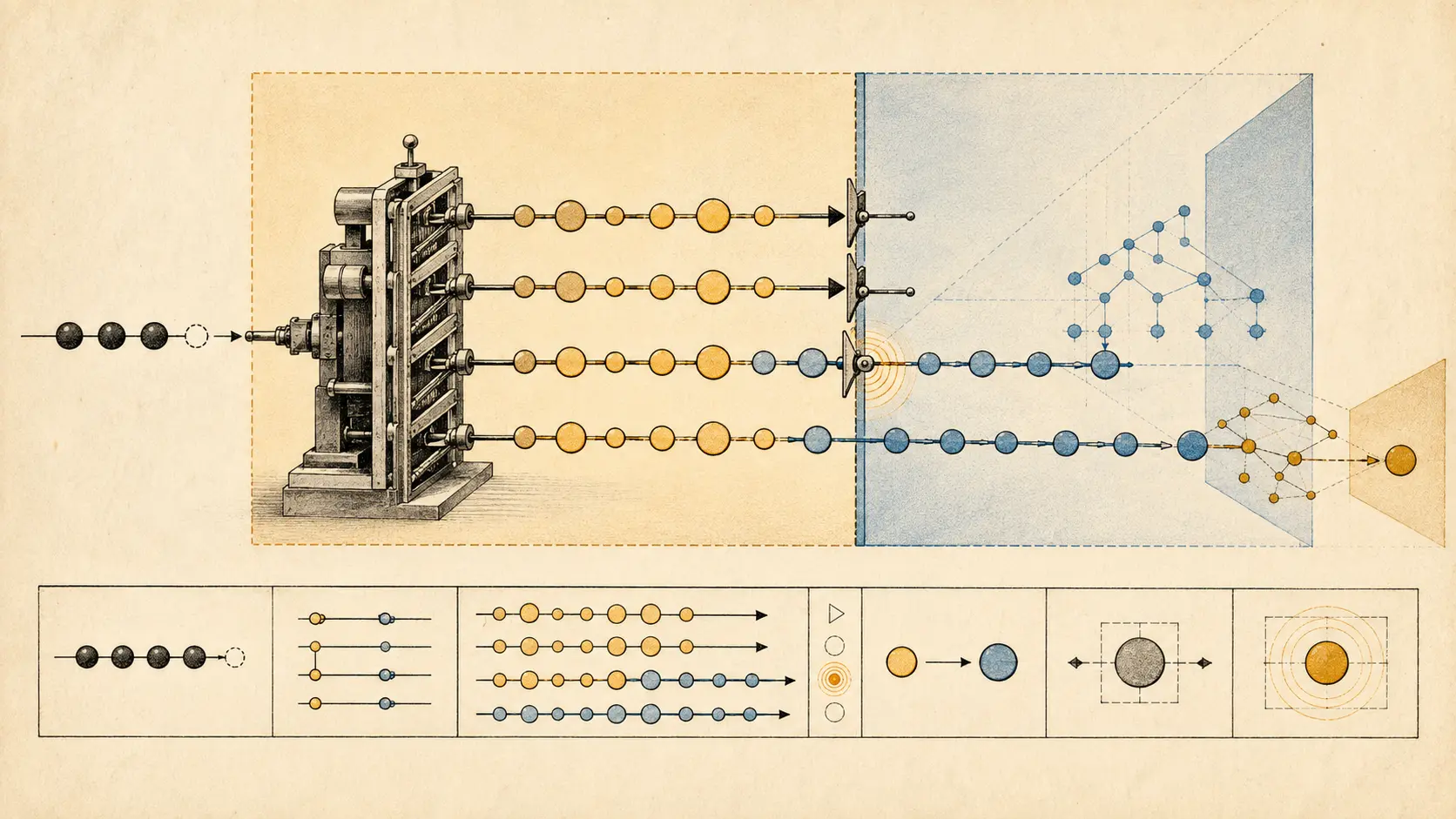
The Name Looked Complete. The Resolver Still Rewrote It: RFC 1535
`UnivHost.University.EDU` looks like an address already supplied. To one 1993 resolver, it was only the beginning of a search. Before asking for the rooted name the user appeared to mean, the software could manufacture three longer candidates, cross from a locally managed suffix…

IETF
RFC 9916 Draws the Line at PCEPS Early Data
A PCE controller can save one handshake round trip and still create a worse incident if path-control data is accepted before replay-safe handshake completion. RFC 9916 therefore treats the PCEPS session boundary as a control-state boundary: negotiate the newest supported TLS…

AFNOG
AfNOG’s Presenter-Cost Rule Waives Registration but Leaves Travel Support Unspecified
AfNOG’s 2007 call said presenters and tutorial instructors were expected to cover travel while being exempt from registration fees, but the cited page did not say beside that rule whether a travel-support exception route existed.

History
The Length That Outranked the Frame: Why IPv4 Counts Its Own Header
An IPv4 packet can sit inside a link-layer frame that is longer than the packet itself. The small field that resolves the ambiguity does more than count payload: it declares the complete IP datagram, header included, so the network layer keeps its own boundary when the enclosing…

Leaders
Mirjam Kühne and the Forum That Had to Become a Journal
A post-Christmas spam problem revealed the editorial work required to keep an open technical publication useful: selection, moderation, format and a named hand-off.

CASE FILE
The Beacon Anchor Became Verifiable. Its Quantum Timeline Still Needed Another Archive
Revision 01 of Wathīqa repairs an important weakness in its evidence record: the first beacon value is no longer merely a time-shaped field but a signed pulse tied to a pinned certificate, with an optional successor that can prove immediate chain continuity. The repair is real.…

CASE FILE
The Receiver Lowered the Window. The Sender Never Changed Its Algorithm
A small advertised TCP window is often read as proof that the receiving application cannot keep up. RFC 9840 makes that shortcut unsafe. It gives the receiver a second reason to limit the window—deliberate low-priority transport—while leaving the sender’s congestion-control…

IETF
A Lease Is a State Machine: RFC 9915 Tightens DHCPv6 Authority
A client can receive an address successfully and still fail hours later when renewal, rebinding or delegated-prefix continuity crosses a server or relay boundary. DHCPv6 is therefore a state machine, not a one-shot response: the operational question is whether identity, lifetime…

AFNOG
AfNOG’s Reproduction-Permission Request Leaves the Licence Boundary Unstated
AfNOG’s 2007 call asked for permission to reproduce the contributor’s presentation after the event, including permission to post it on the AfNOG website. That sentence names two requested acts, but it does not state how long the permission would last, where it would apply…

Story
ARIN’s Incoming-Reassignment Switch Makes Registry Association Consent-Bound
An organization identifier used to be available for an upstream provider’s reassignment workflow unless another requirement failed. Since ARIN’s January 2026 release, the recipient can refuse that association before it is created. The new switch changes registry accountability in…

IETF
The Root Writes the Shortcut: RFC 9914 Projects Routing State into RPL
A leaf-to-leaf packet may climb a stretched RPL DODAG path through the Root even when a shorter directional path exists. RFC 9914 lets the Root project a PCE-computed shortcut as routing state into selected nodes—improving path choice, but also making freshness, precedence…