
Content Type
Analysis
Within the Content Type facet, Analysis intelligence gathers BTW.MEDIA articles that share the same editorial format, helping readers compare briefings, profiles, risk notes, market analysis, and event coverage without mixing different kinds of evidence. The page explains how this content type frames internet infrastructure events, company movements, governance decisions, operational signals, and public evidence across the site. Readers can compare which actors or infrastructure systems appear most often, how source quality changes interpretation, and whether the material is a durable profile, a time-sensitive event, a strategic market signal, or a governance development. The result is a useful search page for operators, investors, customers, analysts, and policy stakeholders who need to understand the consequence, timing, and evidence behind similar article formats.

History
Before Renumbering Had a Procedure, It Had a Field Diary: RFC 1916
Most RFCs are remembered for an answer. RFC 1916 deserves attention because it published a question. In February 1996, the IETF's PIER working group needed practical guidance for changing enterprise IP addresses, but it did not pretend that a standards room already possessed the…

Story
RIPEstat Is Rebuilding Routing History to Enable CSP. The New View Needs a Parity Record
A safer browser should not leave an operator wondering whether a changed graph reflects changed routes or changed presentation. RIPE NCC has a sound reason to replace legacy RIPEstat visualisations. Routing History is precisely where the migration needs a small public receipt…

Creators
Roy Arends and the hard work of changing the DNS safely
Roy Arends helped write the 2005 specifications that made modern DNSSEC interoperable. Two decades later, his work at ICANN centres on a harder operational problem: changing keys, error signals and delegations across a global system that no institution can update by command.

History
The Assurance Was Public. The License Form Was Not: RFC 1915
A standard can be open to inspection while a decisive commercial term remains behind the next conversation. In 1996, the IETF published Motorola’s assurance that licences for claimed patents affecting two PPP control protocols would be available on reasonable and…

Story
ARIN’s Ombuds Reports Reach the Board. The Public Record Does Not Track the Advice
ARIN’s minutes show that outside advice about the safety and conduct of its meetings does not disappear into a ceremonial file: recommendations have changed practice, some have met practical limits, and the Board is now considering the programme’s scope, continuation and…

Story
APNIC’s Definition Page Shows a Draft. Its Official Text Is Still Active
APNIC built one definition document so the same words would not acquire different meanings as they crossed policy files. The document now has a different problem. Its main web page presents version 004 as a draft; its stable official-text address still presents version 003 as…

Story
AFRINIC's Six-Month Implementation Rule Has Two Start Dates
A policy clock is useful only when the institution and its community can identify the event that started it. AFRINIC's current Consolidated Policy Manual starts its six-month implementation expectation at the end of Last Call. AFRINIC's current public explanation starts it at…

Story
LACNIC Says to Email the Bulk WHOIS Form. The Same Page Says Email Is Not Accepted
LACNIC’s public instructions give a Bulk WHOIS applicant two doors and no label for the threshold between them. The signed form is to be emailed first, the original is to be posted after approval, yet the same page ends by saying emailed forms are not accepted. The problem is not…

Story
RIPE Database Is Switching to OIDC. Maintainer Authority Does Not Move With the Session
RIPE NCC plans to replace a site-wide cookie with an OIDC session for interactive RIPE Database use. That can improve authentication, but the harder acceptance question begins after login: which `mntner` authorises this identity to change this entity, under which session regime…

Story
ARIN Closed the ROA Wording Fix. The Published Example Drops the Mask Interval
ARIN answered a precise operator complaint in five weeks and marked the documentation repair complete. That is the constructive part of the record. The harder question is why the live example no longer contains the length boundary that made the requested correction capable of…

Story
APNIC Adopted a Foundation Liaison. The Public Record Stops Before the Protocol
APNIC has done the difficult part that institutions often avoid: it identified an old role with no settled scope, named the governance risks around it, and formally adopted a replacement. The next part was deliberately separated. Observer attendance, confidentiality and…

History
The Parent Named the Server. The Server Still Had No Zone: RFC 1912 and Lame Delegation
The referral worked exactly as configured. A resolver asked the parent where to find a child domain, received two name-server names and sent a query to one of them. Only then did the system reveal its mistake: the selected machine had no child zone to serve. The directory entry…

Academics
Colin Perkins: How Real-Time Media Learned to Share the Internet
Colin Perkins did not invent RTP, WebRTC or Internet congestion control. His more defensible contribution is also more revealing: over three decades, he helped develop the repair, feedback, signalling, safety and governance mechanisms that allow voice and video to remain useful…

Story
AFRINIC’s 5% Early-Payment Discount Runs on Two Invoice Clocks
AFRINIC's renewal calendar begins with an invoice released in November and rewards payment received by the end of December. Its accompanying prose sets the reward against a different entity: the date of the invoice. Those statements can belong to a perfectly coherent billing…

History
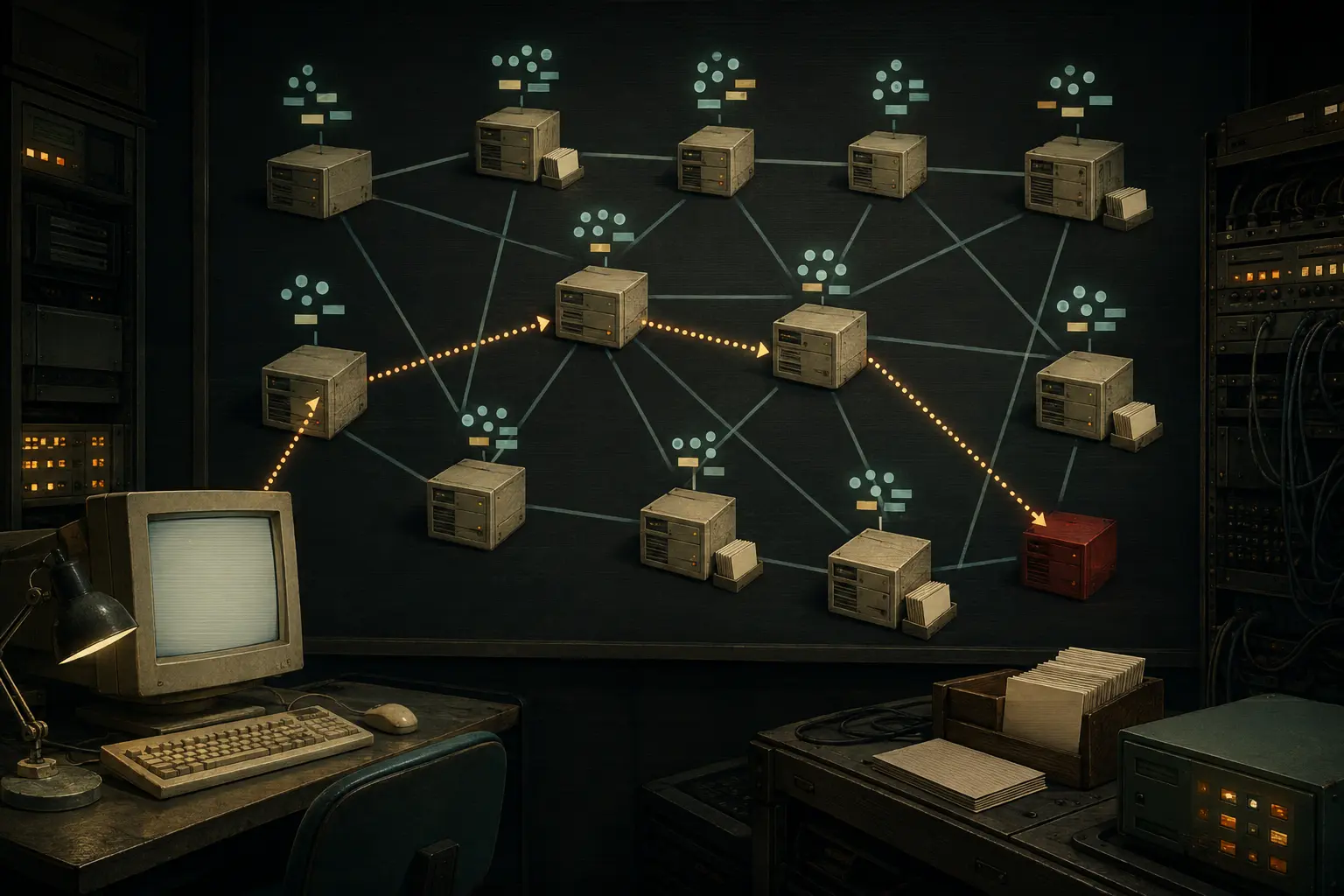
The Mesh Had No Root. The Client Paid for Completeness: RFC 1914
Two clients could ask the same question and return with different directories. One stopped after a nearby server answered; the other followed referrals through a larger graph. RFC 1914 made that divergence legible: completeness was not a property printed on the first reply. It…
History
The Index Knew the Word Existed. It Still Did Not Know the Answer.
Put three directory records through a Whois++ centroid and something peculiar happens. The word “Smith” survives, but the two people who carried it disappear. So do frequency, co-occurrence, order and the path by which either record was maintained. In 1996, that deliberate loss…

Global Cloud Services
Kentik and the data engine that turns network flows into evidence
Kentik’s network-intelligence platform depends on a proprietary analytical engine designed to retain large volumes of telemetry, add routing and business context, and return historical answers quickly enough to guide operations. Kentik Data Engine gives network teams a searchable…
History
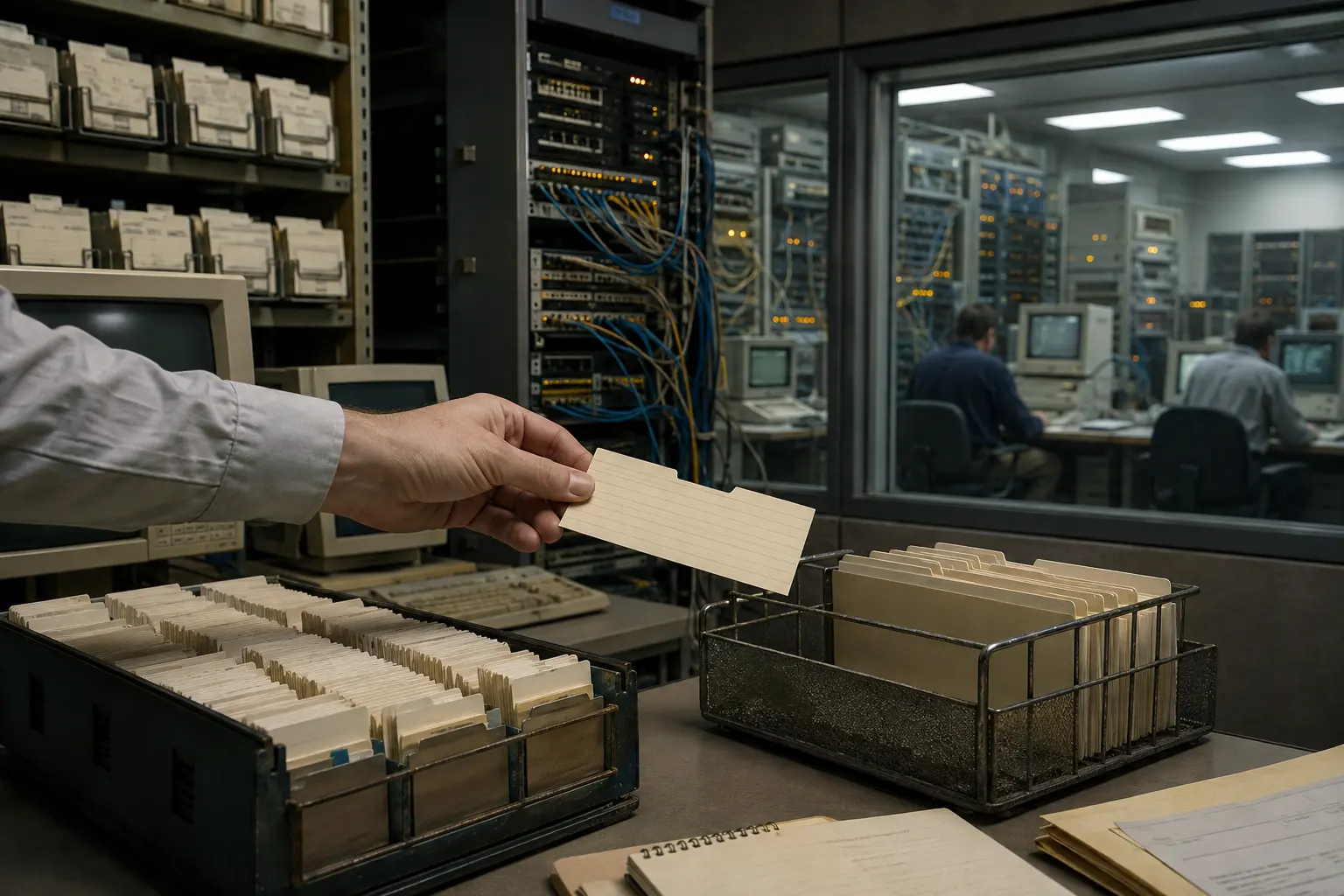
The Prefix Looked Unused. The Appeal Could Not Prove It: RFC 1917
The return form in RFC 1917 was strikingly short. Send a message, identify a network prefix and ask that its registry contact become “reserved.” On paper, the address could move from an organisation back toward the common pool in a few lines. Yet the form said nothing about…

Story
LACNIC Made Merger Transfer Fees Equal. It Did Not Make the Payment Rules Equal
A price list can make two transactions look alike long before their obligations are alike. LACNIC has put merger, acquisition and name-change transfers on the same published fee bands as ordinary IPv4 transfers and has attached both to an annual inflation clock. Yet the public…

History
The Mailbox Accepted the Voice. It Could Still Forget the Message: RFC 1911
A voice mailbox could accept an Internet message, store its sound and still forget part of what made it an Internet message. RFC 1911 did not hide that cost. Its minimum profile joined telephone-keypad systems to MIME and ESMTP while exposing the distance between accepted bytes…