
Institution Profiling / Internet infrastructure institution

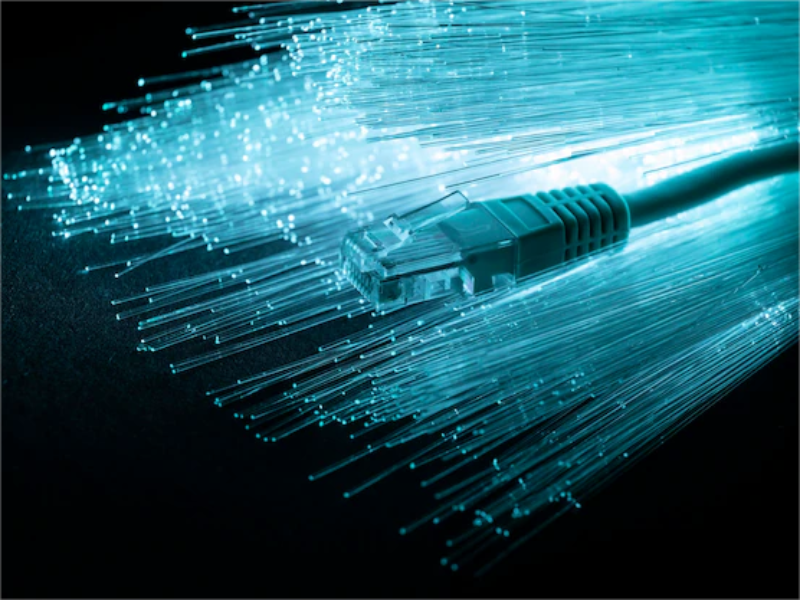
Explore the magic of fibre optic transceivers

Explore the magic of fibre optic transceivers is tracked as a internet infrastructure institution within the internet infrastructure ecosystem.

Explore the magic of fibre optic transceivers

Evidence Pack

Source records grounding the claims in this article.

CategoryInstitution Type

Explore the magic of fibre optic transceivers is tracked as a internet infrastructure institution within the internet infrastructure ecosystem.

RegionGlobal

Explore the magic of fibre optic transceivers has public-source relevance to network operations, governance, dependency mapping, or market structure.

Signal FocusInternet infrastructure institution

Explore the magic of fibre optic transceivers has public-source relevance to network operations, governance, dependency mapping, or market structure.

Content TypeProfile

Explore the magic of fibre optic transceivers is tracked as a internet infrastructure institution within the internet infrastructure ecosystem.

Primary DomainTechnology

Public-source signals support medium-impact monitoring for infrastructure visibility and dependency analysis.

TopicInternet infrastructure institution

Explore the magic of fibre optic transceivers is profiled by BTW Media because public-source evidence links it to internet infrastructure, governance, operational dependencies, or market visibility.

ImpactMedium

Public-source signals support medium-impact monitoring for infrastructure visibility and dependency analysis.

Confidence?Confidence Grade
0.90–1.00AHigh — direct sources
0.75–0.89A/BStrong
0.55–0.74B/CMedium
0.35–0.54C/DWeak–medium
0.10–0.34DWeak signal
0.00–0.09DInternal monitoring
C · 0.82

Mixed-source

Explore the magic of fibre optic transceivers is profiled by BTW Media because public-source evidence links it to internet infrastructure, governance, operational dependencies, or market visibility.

  • Fibre-optic transceivers convert signals for seamless data transfer.
  • They support fast, reliable connections in telecom and data centers.

———————

A fiber optic transceiver is essential in modern communication networks. It converts electrical signals to optical ones and back again, enabling high-speed data transfer through fiber-optic cables. These devices support internet, telecom, and enterprise networks, ensuring fast and reliable connectivity. But how do they work, and why are they so important?

Also read: When to use multimode fibre and single-mode fibre

Also read: Verizon uses AI to prevent underground fiber damage

How do fibre optic transceivers work?

Fibre optic transceivers connect electronic devices to fiber optic cables. They include a transmitter that turns electrical signals into light pulses and a receiver that converts light pulses back into electrical signals. This process enables fast, reliable data transfer over long distances with minimal loss.

Key components of a fibre optic transceiver

  • Transmitter: Converts electrical signals into optical signals via a laser or LED.
  • Receiver: Converts light signals back into electrical output using a photodiode.
  • Connector: Links the transceiver to fiber cables, ensuring smooth data flow.

Types of fibre optic transceivers

Different transceivers suit varied applications:

  • SFP (Small Form-factor Pluggable): Compact and suitable for dense networks.
  • QSFP (Quad Small Form-factor Pluggable): Handles high data rates in data centers.
  • BiDi (Bidirectional): Uses one fiber for two-way communication.

Why fibre optic transceivers matter

Fibre optic transceivers are vital for handling large data volumes with speed and efficiency. Industries like telecom, IT, and cloud computing depend on them. Without transceivers, modern networks would struggle to meet today’s demands.

Innovations in transceiver technology are also enhancing performance and reducing energy use, making them a sustainable choice for future networks.

A fiber-optic transceiver is indispensable for high-speed communication. By efficiently converting signals and supporting diverse applications, these devices form the backbone of modern networks. As digital needs grow, their importance will only increase, ensuring reliable and sustainable connectivity.

Core Entity Brief

  • Entity: Explore the magic of fibre optic transceivers
  • Subject Type: Internet infrastructure institution
  • Region: Global
  • Classification: Institution Type

Service Surface / Control Surface

  • Public records support monitoring of governance, service, and infrastructure control surfaces.

Governance and Policy Surface

  • Public-source signals support medium-impact monitoring for infrastructure visibility and dependency analysis.
  • Operational criticality: Medium
  • Time horizon: Quarter (30-120d)

Decision Trigger Matrix

  • Monitoring focuses on verified service continuity, governance changes, and relationship signals.
NowMedium priority

Current state favours active tracking due to infrastructure relevance.

QuarterMedium policy sensitivity

Public-source signals support medium-impact monitoring for infrastructure visibility and dependency analysis.

YearQuarter (30-120d) continuity dependency

Long-cycle infrastructure decisions likely to remain path-dependent.

Member Unlock

Restricted Profile Intelligence

Login is required to unlock full profile briefings and deep-dive sections.

Only for Strategy Circle

Strategic Circle Access

Open to all readers. Unlock profile briefings after joining and logging in.

Join Strategic Circle

Only for Leadership Alliance

Leadership Alliance Access

For owners and management of IP-holding companies. Login required to unlock.

Join Leadership Alliance
← BackAll Companies