
Expert: Cyber retaliation is real and threatens US systems is profiled by BTW Media because published evidence links it to internet infrastructure, governance, operational dependencies, or market visibility.
Expert: Cyber retaliation is real and threatens US systems is tracked as a internet infrastructure institution within the internet infrastructure ecosystem.
Expert: Cyber retaliation is real and threatens US systems has public-source relevance to network operations, governance, dependency mapping, or market structure.
Expert: Cyber retaliation is real and threatens US systems is tracked as a internet infrastructure institution within the internet infrastructure ecosystem.
Public-source signals support medium-impact monitoring for infrastructure visibility and dependency analysis.
Expert: Cyber retaliation is real and threatens US systems is profiled by BTW Media because published evidence links it to internet infrastructure, governance, operational dependencies, or market visibility.
Public-source signals support medium-impact monitoring for infrastructure visibility and dependency analysis.
| 0.90–1.00 | A | High — direct sources |
| 0.75–0.89 | A/B | Strong |
| 0.55–0.74 | B/C | Medium |
| 0.35–0.54 | C/D | Weak–medium |
| 0.10–0.34 | D | Weak signal |
| 0.00–0.09 | D | Internal monitoring |
Several public sources
- Cybersecurity expert Dean Gefen warns the threat of cyber retaliation against US infrastructure is immediate and not theoretical.
- He highlights cyber retaliation’s attributes: low‑cost, deniable and scalable, amid rising tensions after US strikes on Iranian nuclear sites.
What happened: Expert flags real cyber retaliation
Cybersecurity expert Dean Gefen, CEO of the workforce development firm NukuDo, warns that cyber retaliation targeting US infrastructure is no longer theoretical. He says this threat emerges amid heightened geopolitical tensions following recent US attacks on Iranian nuclear sites.
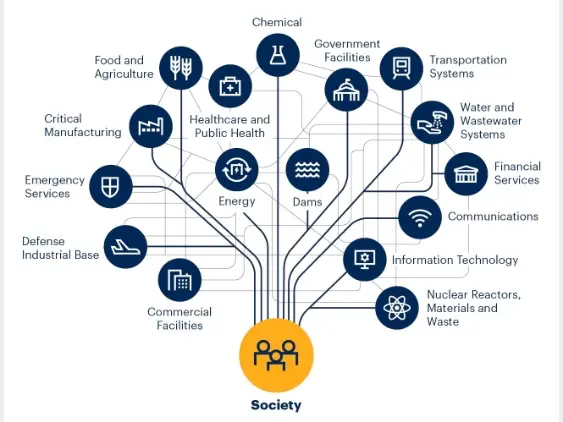
Gefen explains that cyber retaliation has become a go‑to tool in asymmetric warfare because it is low‑cost, deniable, and scalable. He adds that state‑backed actors or hacktivist groups could quickly launch disruptive digital strikes on critical services, such as energy grids and transportation systems. He urges US infrastructure operators to adopt stronger defenses.This warning was issued today by Gefen, who stresses that the threat isn’t hypothetical—it is imminent.
Also Read: Tehran cuts global internet by 97% to counter cyber threats
Also Read: Iran bans officials from using internet-connected devices
Why it‘s important
First, from a policy angle, this warning highlights a critical need for updated defense strategies in the US. If cyber retaliation is cheap and deniable, federal regulators and agencies like CISA and DHS must consider enforcing mandatory cybersecurity standards across infrastructure sectors. Absent action, national resilience may remain weak and reactive.
Second, from an industry standpoint, utility operators and transportation providers must increase investment in threat detection and incident response. As Gefen notes, cyber attacks can scale quickly with minimal cost, threatening to disrupt daily life. Proactive partnerships between private firms and government cyber‑response teams will be crucial to closing defense gaps.
Third, from a societal perspective, citizens should realize that modern warfare is no longer confined to battlefields. A cyber‑triggered blackout or transport halt could affect millions. Public awareness and preparedness—like emergency protocols and fallback systems—will help reduce panic if critical services are disrupted.
At A Glance
- Name: Expert: Cyber retaliation is real and threatens US systems
- Type: Internet infrastructure institution
- Base: Global
- Profile focus: Institution
What It Does
- Public records support monitoring of its role, services, and key relationships.
Why It Matters
- Public-source signals support medium-impact monitoring for infrastructure visibility and dependency analysis.
- Operational criticality: Medium
- Time horizon: Next quarter
What To Watch
- Monitoring focuses on verified service continuity, governance changes, and relationship signals.
Track verified source updates, role changes, and current public evidence.
Public-source signals support medium-impact monitoring for infrastructure visibility and dependency analysis.
Longer-term relevance depends on verified operating, policy, and relationship changes.
Member Briefing
Deeper Profile Context
Login is required to unlock the full profile briefing and source notes.
Only for Strategy Circle
Strategic Circle Access
Open to all readers. Unlock profile briefings after joining and logging in.
Join Strategic CircleOnly for Leadership Alliance
Leadership Alliance Access
For owners and management of IP-holding companies. Login required to unlock.
Join Leadership Alliance


