Summary
- Evelyn Berezin led the computer design of a national United Airlines system built around three processors, rapid failover and communications hubs serving roughly sixty cities.
- Those mechanisms protected availability. They did not independently validate terminal input, sale and cancellation semantics, or the consistency of the seat inventory that the system exposed.
- Berezin herself distinguished this earlier seat-and-ticket-data service from later reservation systems. Reading it as an ancestor, rather than a premature version of SABRE, preserves both its achievement and its limits.
When an airline agent asked a computer whether a flight still had space, two different promises were hidden inside the reply. The first was that the machinery would answer. The second was that the answer would agree with the airline's operational reality. Evelyn Berezin's work at Teleregister attacked the first problem with unusual clarity. Its history is more useful when it is not made to solve the second by reputation alone.
Berezin recalled beginning the design for United Airlines in 1958; the Computer History Museum dates delivery to about 1962. The central installation in Denver had to run continuously while serving a national communications network. In her oral history, Berezin described failure tolerance in seconds, not in the hours that maintenance could consume. A processor fault had to be detected, the unit removed from service and work continued elsewhere.
Three computers, not one heroic machine
The architecture used three independent processors with access to shared memory and peripheral resources. Patent US 3,253,262, assigned to Bunker-Ramo and naming Evelyn Berezin Wilenitz, Frank C. Marino and Donald W. Russell as inventors, describes a system in which any available processor could accept the next transaction. Interlocks governed access to common resources so simultaneous work did not become simultaneous corruption.
Berezin called the operating idea “fail-soft.” At designated points, machines compared their internal progress. A processor that disagreed could be taken off line, while the remaining machines continued. She remembered that one processor initially had enough capacity for the normal traffic, making the other two both operating resources and protection. Losing equipment might slow the service before it stopped it.
That last distinction matters. A full buffer could return a busy indication and force an agent to try again. A system can remain alive while offering degraded service. Availability is not a binary halo around the whole operation; it is a set of defined behaviors under failure and load.
Berezin reported that central processing was never completely down during eleven years of operation. It is an impressive recollection, but it should remain attributed as one. The frequently repeated one-second response was a requirement or public target. Berezin later said the system was never quite that fast. Neither statement needs inflation to make the architecture consequential.
Sixty cities and one common path
The processors were only the center. Roughly sixty city hubs connected local agent positions to Denver. Separate inbound and outbound paths and switching around a failed hub were meant to isolate communications failures. Teleregister had its own communications design section, and Berezin recalled that Philips personnel in Eindhoven designed equipment when available telephone technology was not fast enough.
The network also supplied a near-perfect lesson in common-mode risk. According to Berezin, supposedly separate eastbound and westbound paths were colocated on the same microwave route in Nevada. A blast interrupted that route and cut off terminals across about half the country, although the central computers kept operating. The data center was available; the service was not available everywhere. Redundancy drawn as two lines is not diversity when both lines share one physical fate.
What “reservation” meant at the time
Teleregister's own 1956 brochure reveals a staged history. Its UNISEL system displayed 33 days of flight availability in four traffic centers. When availability fell below a preset cushion, an agent still had to telephone for confirmation. The brochure then described a planned phase in which local displays would become satellites of a central Reservisor magnetic-drum store, with sales and cancellations updating an exact seat count.
That document is evidence of product direction, not proof that every proposed function arrived unchanged in United's later system. Berezin was more direct. She called her project a passenger reservation system for convenience, then distinguished it from the systems that followed: it mainly held ticket data for each seat and flight; later systems stored more information and did more.
This is why comparison with SABRE requires care. The Computer History Museum describes SABRE as a joint American Airlines and IBM project, operational in 1964, and notes that it was not the first computerized reservation system. SABRE's later transaction and passenger-record scope belongs to that team and generation. It should not be projected backward onto Teleregister, just as Teleregister's earlier work should not be erased by the later system's influence.
Availability is not inventory truth
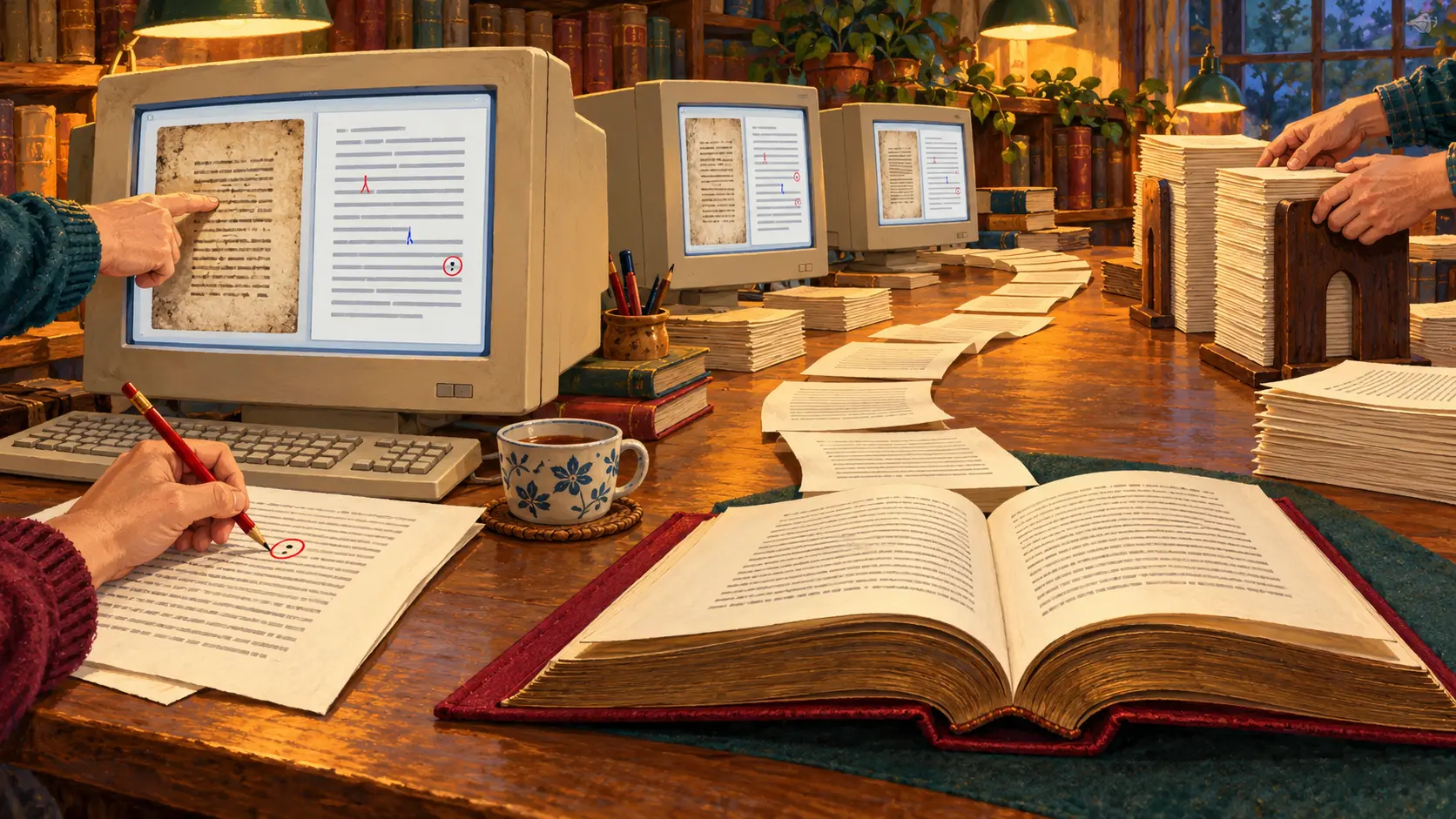
The three processors, shared-resource interlocks, overload behavior and bypass loops answer a hardware-and-service question: how can useful processing continue after particular failures? Inventory truth is a different control problem. It asks whether a sale and its cancellation are applied exactly once, whether two agents can claim the last seat, whether a retry duplicates a transaction, whether late operational changes reach the record, and whether the system can reconcile its count with what actually happened.
The reviewed sources do not establish all of those properties. A correct processor can preserve an incorrect input with perfect fidelity. Three processors can agree on stale data. A surviving communications path can deliver a duplicate request. Eleven years without a complete central outage would still not prove eleven years without an inventory discrepancy.
This does not diminish Berezin's contribution. It locates it. She led a department that converted relay designers to electronic design, worked beside a separate communications team and shipped a national online service when such systems were still being invented. Marino and Russell share the principal processing patent; Teleregister engineers, Philips designers, United operational staff and communications providers shaped the operating system around it.
The achievement was not a magical database that made airline reality true. It was an early, disciplined separation of failure domains—processors, memory access, hubs and transmission paths—so that one fault need not become a national stop. Modern systems still need that discipline. They also need the honesty to say which part of truth it does not guarantee.
Sources
- Computer History Museum, Oral History of Evelyn Berezin
- Teleregister, Special Purpose Systems brochure, 1956
- US Patent 3,253,262, Electronic Data Processing System
- US Patent 3,231,865, Information Transfer Apparatus
- Computer History Museum, Evelyn Berezin Fellow profile
- Computer History Museum, SABRE console
- IBM, SABRE history
Member Briefing
Deeper Profile Context
Sign in with the right membership level to unlock the full briefing and source notes.
Only for Strategic Circle
Strategic Circle
Open to all readers. Unlock profile briefings after joining and signing in.
Join Strategic CircleOnly for Leadership Alliance
Leadership Alliance
For qualified IP-asset owners and management; sign in to unlock alliance briefings.
Join Leadership Alliance