
Summary
- The immediate technical failure was specific: a redundant wire, disconnected at one end but left attached at the other, was neither removed nor insulated. When it contacted a relay terminal, signal WF138 could display a proceed aspect even though the track ahead was occupied.
- The wider accountability failure was organizational. Informal installation practice, weak supervision, absent or ineffective independent wire counts, inadequate separation between installation and testing, excessive workload, and deficient records allowed a simple defect to survive commissioning and enter service.
- Responsibility cannot fairly be collapsed onto one technician. The Hidden inquiry examined systemic conditions and recommended controls; later criminal proceedings under health-and-safety law addressed the British Railways Board. Neither process authorizes attributing every death, injury or later consequence to a single person or failure.
- Later RAIB investigations show that the control problem remains relevant. They do not prove that later events had identical causes or that the post-Clapham railway universally failed to learn. They show why retained competence, visible evidence and independent challenge must be continually renewed.
The event that turned maintenance assurance into a public test
On the morning of 12 December 1988, the railway south-west of London was carrying the intense commuter traffic for which the approaches to Waterloo were designed. A Basingstoke-to-Waterloo train was stopped in the vicinity of Clapham Junction after encountering an unexpected signal sequence. The following Poole-to-Waterloo train received a proceed aspect and ran into the rear of it. An empty passenger train travelling in the opposite direction then struck the wreckage. Thirty-five people died and hundreds were injured.
The collision required a large rescue operation involving railway staff, emergency services, health workers, local authorities and members of the public.
The first parliamentary statement was necessarily provisional. It recorded an accident at about 08:15, described the initial collision and the involvement of an empty train, and gave an early casualty picture that was later revised. That distinction matters: contemporaneous emergency information documents what officials knew at the time, not the settled technical explanation. The House of Commons statement on 12 December 1988 is therefore evidence for immediate chronology, governmental response and early uncertainty, while the later inquiry is the controlling source for cause.
This hierarchy of evidence is central to accountability. In the first hours, rescuers need a safe site, hospitals need casualty information, operators need route protection, and families need reliable communication. Investigators later need relay states, wiring history, staff evidence, plans, test records and an intact chain of reasoning. Those are different jobs. An organization that treats the first plausible explanation as the final one risks both operational error and injustice. Conversely, an organization that waits for perfect certainty before protecting the route or supporting victims fails its immediate duty.
Clapham became more than an account of an electrical contact because the technical mechanism was so modest compared with the consequences. The railway's signalling system was intended to fail safe: occupation of a track circuit should hold the protecting signal at danger. A single loose conductor provided an unintended electrical path that defeated that protection. The collision thus posed a hard institutional question.
Who was responsible for ensuring that design changes were accurately translated into field work, that every redundant wire was disconnected and insulated, that an independent person counted and tested the work, and that the evidence of those actions survived the pressure to return the railway to service?
The answer was distributed. Designers, installers, testers, supervisors, project planners and commissioning managers each controlled a part of the barrier. Senior management controlled resources, staffing, rules and the signals sent by production pressure. Regulators and government controlled parts of the external framework. Train crews and signallers worked within the system they were given. Rescuers managed the consequences, not the precipitating defect. Passengers had no meaningful control over any of these safeguards. Accountability therefore had to follow decision rights and evidence, not proximity to the damaged relay.
What the wiring did—and what it did not prove
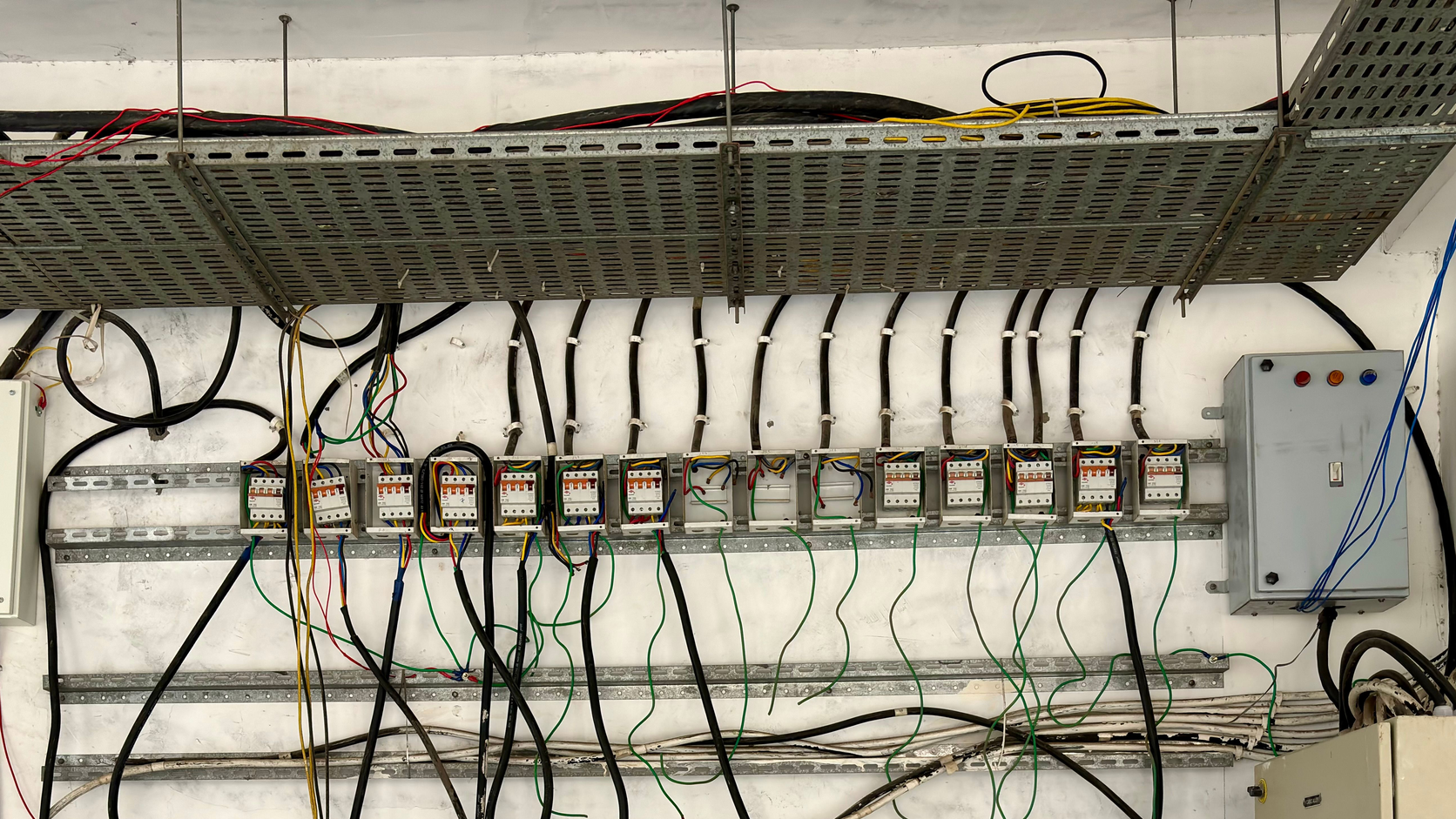
The immediate mechanism is described in the official investigation led by Anthony Hidden QC. During work associated with the Waterloo Area Resignalling Scheme, an old wire in the relay room had been disconnected from one terminal but remained connected at its other end. It was left loose and uninsulated rather than being removed or secured so that it could not contact live circuitry. Subsequent work moved the wire. It came into contact with a terminal and bypassed a relay contact, allowing the signal to show a proceed aspect when the track circuit ahead was occupied.
The Hidden inquiry report is the primary source for this sequence, the working practices that allowed it, and the recommendations that followed.
The mechanism should be stated precisely because vague language weakens learning. Calling the event merely a “signal failure” hides the change activity that created it. Calling it a random short circuit hides the known status of redundant wiring. Saying that the wire itself “caused” the whole disaster compresses installation, testing, commissioning, train movement, collision dynamics and emergency consequences into one object. The wire was the immediate physical defect. The survival of that defect into operational service was an assurance failure.
The scale of harm involved train occupancy, speed, rolling-stock behavior and the geometry of a multi-train collision.
It is equally important not to treat fail-safe design as magic. Fail-safe engineering depends on defined fault assumptions. A circuit may safely respond to loss of power or a broken conductor yet be vulnerable to an unintended feed that falsely energizes a relay. Maintenance changes can create combinations that the normal operational logic does not detect. The accountability response is not to promise that every imaginable failure has been eliminated. It is to identify credible wrong-side failure modes and require diverse checks that are capable of finding them before traffic is restored.
A wire count is one such check. It is a disciplined comparison between what the design requires and what is physically connected. It does not merely confirm that a signal lamp changes color during a functional test; it asks whether each conductor is present at the right terminal and whether conductors that should no longer exist have actually been removed or safely terminated. A functional test can pass while an intermittent loose wire is not touching. A physical count can expose the latent condition. The controls are complementary because they interrogate different failure modes.
The word “independent” also needs operational meaning. Independence is not achieved solely because a second signature appears on a sheet. A tester must be sufficiently separate from the installation task to approach it without reproducing the installer's assumptions, must have accurate design information, must know the scope and intermediate state of the work, and must have authority to stop commissioning. If the same person installs and tests, or if the tester has already helped carry out the alteration, the check loses cognitive diversity. If the test plan omits redundant wiring, formal separation alone will not save it.
That is why the later RAIB investigation at Greenhill Upper Junction is useful. It described how the Clapham report led to an urgent requirement for independent wire counts and to separation between installation and testing roles, explaining that the same person can repeat the same mistake when testing their own work. The Greenhill Upper Junction report is evidence about the legacy of the control and its later application. It is not evidence that Greenhill and Clapham had identical facts, nor may its findings be projected backward to fill gaps in the 1988 record.
Installation, testing and commissioning as a chain of custody
Safety-critical maintenance resembles a chain of custody. A design instruction begins as controlled information. It is translated into a work package, carried to a physical location, executed against existing equipment, inspected, tested and released. At every handoff, the organization must be able to answer three questions: what state was intended, what state was actually found or created, and who independently verified the difference? If any answer rests only on memory or informal assurance, the chain is broken.
For relay wiring, the physical details are unforgiving. A disconnected conductor should not remain as an ambiguous object in a crowded rack. If it must remain temporarily, its status, insulation and restraint need explicit control. A terminal may contain several wires, making visual inspection difficult. Old and new design documents can coexist during staged commissioning. Work may be divided across nights, with different people inheriting partially completed alterations. Each feature increases the need for exact marking, controlled drawings, recorded counts and clear ownership of the installation state.
The most dangerous category is unfinished work that looks finished. A signal can operate normally during many tests while a loose conductor remains close to a terminal. A relay room can appear orderly while an obsolete wire is still live at one end. A team may believe a check belongs to another team because the work boundary is defined by activity rather than equipment state. Commissioning then becomes a ceremony of signatures instead of a demonstrated argument that every safety requirement is satisfied.
A defensible commissioning record should therefore identify the authorized design version, the specific equipment and terminals altered, the installer, the independent checker, test instruments and results, anomalies and their disposition, temporary states, wire-count completion, and the person empowered to accept the railway back into service. It should make omissions conspicuous. Blank fields must not be interpretable as “not applicable,” “not done” or “done but not recorded” at the reader's convenience.
Supervision is not a substitute for independent testing, but it determines whether testing remains credible. Supervisors allocate competent people, control workload, make sure the correct drawings are available, resolve scope ambiguity and protect the tester's right to refuse handback. They should also sample the quality of completed records and investigate deviations. A supervisor who relies on reputation—“this installer always does good work”—turns experience into an exemption. Experience should instead determine where expert scrutiny is most valuable.
This is where enterprise automation can help without becoming a new single point of belief. A digital work-management system can enforce revision control, require terminal-level completion evidence, prevent the installer from approving the test, flag overtime limits and preserve an audit trail. It can cross-check that every design delta has a corresponding field verification. But software cannot see a physical conductor unless the workflow produces trustworthy observations. It cannot make a nominally independent tester psychologically independent.
It can also propagate a wrong configuration at scale if access controls, data provenance and exception handling are weak.
Automation should therefore serve a four-eye control, not replace it. The system should separate roles, preserve immutable timestamps, expose late changes, and require explicit resolution when the as-built state differs from the plan. Photographs may support but should not replace terminal counts where depth or occlusion makes an image ambiguous. Electronic sign-off should bind an accountable person to a defined claim, not invite rapid acknowledgement of a long checklist. The more the workflow is standardized, the more important it becomes to make unusual states visible.
The public record itself is part of this chain. The National Archives identifies MT 143 as containing records of the official inquiry into the Clapham Junction disaster. Its railway research guide establishes provenance and routes researchers to the archive. It does not establish the accident's cause. That boundary illustrates good evidence practice: archival metadata shows where records belong; the records and inquiry findings support substantive claims.
Workload, overtime and the limits of “human error”
The Hidden inquiry did not stop at the incorrect act. It examined the conditions in which signalling staff were carrying a heavy programme of resignalling work, including sustained overtime and insufficient rest. Fatigue does not mechanically determine a particular error, and not every person working long hours will make the same mistake. Yet repetitive work, long sequences of shifts and production pressure reduce the resilience on which informal practices already depend. When the control model assumes that skilled people will remember every step, fatigue becomes an organizational exposure.
This distinction protects against two opposite errors. The first is individualization: describing the collision as the product of one technician's poor workmanship and treating discipline as the complete remedy. The second is absolution: implying that workload erased personal agency or that no individual acts should be examined. Fair accountability does both. It describes the specific action or omission, then asks who designed, supervised and resourced the environment in which it occurred.
Overtime is especially difficult because it can serve legitimate needs. Railways must maintain systems outside traffic hours, recover from disruption and deliver complex commissioning possessions. Staff may value additional earnings, and experienced specialists can be scarce. A blanket claim that overtime itself is unsafe would be misleading. The control problem is whether the organization can see cumulative hours, travel time, consecutive duties, circadian disruption and the complexity of the task, then adjust staffing or scope before risk becomes unacceptable.
Modern guidance illustrates how the lesson has evolved beyond a single numerical ceiling. The Office of Rail and Road says employers should assess and control fatigue risk for safety-critical and other work, with a proportionate fatigue-risk management system where appropriate. Its legal-duties guidance connects fatigue governance to general employer duties, risk assessment, rail safety management and working-time requirements. This is later regulatory guidance, not a description of the law or practice in December 1988.
The ORR also warns against relying too heavily on “Hidden limits” as if compliance with numerical thresholds were sufficient. Its implementation guidance on fatigue treats shift length, rest, workload, overtime, travel and actual experience as interacting factors. The important accountability development is from a limit-only model to an evidence-based system: plan the roster, assess likely fatigue, listen to workers, monitor actual hours, investigate exceedances and adapt.
That model is directly relevant to project governance. A work package should include the human capacity needed for installation, independent checking, correction and documentation—not merely the hours needed to manipulate equipment. If a possession overruns, the tester's time cannot be treated as slack to be compressed. If the only qualified person has already worked an extended sequence, management must be able to delay, re-scope or replace rather than quietly redefine the risk as acceptable.
The accountability metric is thus not “did anyone exceed a number?” It is whether the organization knew the fatigue exposure, assigned a decision owner, established stop criteria, documented exceptions and verified that commercial or timetable pressure did not defeat the control. A weekly dashboard may display hours, but the decisive evidence lies in whether a supervisor intervened and whether leadership supported that intervention.
Supervision, records and organizational knowledge
Clapham exposed the difference between an organization that values safety and one that can demonstrate safe work. Leadership may sincerely emphasize safety while local practices normalize shortcuts. The gap appears in mundane places: drawing cabinets, loose-wire treatment, countersignatures, test scopes, staffing lists and night-work rosters. Institutional legitimacy is tested not by the strength of a safety slogan but by whether the organization makes the safe action easier, visible and mandatory when deadlines tighten.
Records matter because safety assurance has a time dimension. During installation, a record coordinates work. At handback, it supports the claim that equipment is fit for service. After an anomaly, it lets operators identify the affected scope. During investigation, it allows independent reconstruction. Years later, it teaches new staff why a rule exists. A missing record removes all four functions at once.
Good records also enable challenge across hierarchy. A tester should not need to rely on a senior engineer's recollection. A commissioning manager should be able to see unresolved test failures. A regulator should be able to follow a recommendation to objective completion evidence. A board should receive indicators that show repeat defects, waived checks and fatigue exceptions, rather than only a final count of completed projects. These information pathways convert safety from aspiration into governable state.
The later Cardiff East Junction incident shows how familiar organizational patterns can reappear in a different event. RAIB found that points made redundant during a major signalling renewal were not all secured and that normal checking did not identify the omission; it also discussed reliance on verbal assurance, project governance and possible fatigue-management weakness. The Cardiff East Junction report page is useful because it links incomplete checks, document control and commissioning pressure. It does not prove that the Cardiff team repeated the same wiring defect as Clapham or that anyone involved shared the same culpability.
Recommendation tracking provides another layer. ORR publishes responses concerning RAIB recommendations, including the Cardiff report, on its 2017 response register. A register can show correspondence and status over time, but status is not identical to effectiveness. “Implemented” may establish that an action was taken; assurance still requires evidence that the control works in practice and continues to work after personnel, contractors or technology change.
Institutional memory is therefore more than keeping the Hidden report on a shelf. It means embedding the causal logic into training, competence assessment, work design, supervision and audit. A new tester should know not only that an independent wire count is required but what failure it is meant to catch. A software developer automating work orders should understand why role separation cannot be overridden for convenience. A manager reviewing overtime should understand that a compliant average can conceal a dangerous sequence for a particular worker.
Training should include counterexamples and weak signals. If a redundant wire is found uninsulated but no wrong-side failure occurred, the organization should treat the discovery as barrier evidence, not as a harmless housekeeping issue. If a tester repeatedly receives late design changes, that is a project-control signal. If records are completed after handback, timestamps are evidence of a process gap. Learning systems should make such signals reportable without requiring an accident.
Route protection and emergency response
The crash also tested accountability after prevention had failed. Once trains collided, priorities changed: protect adjacent lines, stop further movements, establish command, release trapped passengers, triage casualties, distribute patients and maintain information for families. These tasks require coordination among railway control, police, fire and ambulance services, hospitals, local authorities and members of the public. Their performance should be evaluated separately from the signalling work that created the hazard.
The later government statement paying tribute to the response is more settled than the first day's report. When the inquiry was published, the Secretary of State recognized police, ambulance and fire personnel, doctors and nurses, railway staff, local-authority workers and members of the public. The Commons statement of 7 November 1989 also reported 35 deaths, described serious and lasting injuries, summarized the faulty wiring, and set out the government's response to recommendations. It is evidence of the official response and parliamentary accountability, not a substitute for the inquiry's detailed findings.
Route protection is a particularly important bridge between technical and emergency accountability. Signalling normally separates trains automatically. When wreckage, damaged infrastructure or unreliable indications destroy that confidence, controllers need clear authority and communication to block routes and isolate hazards. The question is not simply whether a signal was red or green after the collision, but whether the operational command recognized that the normal protection model could no longer be trusted.
Emergency evidence should be handled with care. Casualty numbers change as identities and medical outcomes are confirmed. Psychological harm may not be visible in initial hospital counts. Passenger, crew and rescuer experiences differ. It would be wrong to assign every injury to the loose wire alone, because collision mechanics, train loading, vehicle structure, location and rescue conditions shape outcomes. It would be equally wrong to separate the injuries from the system failure so completely that victim impact disappears from institutional assessment.
Compensation belongs to another evidentiary lane. Civil redress concerns individual loss, causation and legal process; emergency payments, negotiated settlements and litigation may not appear in a public inquiry report as a single comprehensive total. The sources used here do not provide a verified aggregate compensation figure or a claimant-by-claimant record. This analysis therefore does not invent one. The appropriate accountability claim is narrower: passengers and families required timely support and lawful redress, while the inquiry, criminal health-and-safety proceedings and any civil claims served different purposes.
That separation matters to victims. A public finding of systemic failure does not itself calculate a person's damages. A criminal fine does not compensate survivors. A settlement does not necessarily disclose the full institutional cause. Effective accountability needs each mechanism without misdescribing one as a substitute for the others.
Inquiry findings, prosecution and the legal boundary
The Hidden inquiry was established to investigate the causes and circumstances of the collision and to recommend change. It was not a criminal trial. Its ability to examine technical and organizational evidence in public gave it a broad learning function, but its findings must not be treated as actor-specific convictions. The legal system applies different rules of charge, proof, admissibility and defendant responsibility.
Parliament later reviewed the relationship between public inquiries and prosecutions in transport disasters. A House of Commons committee recorded that the British Railways Board pleaded guilty in June 1991 to two Health and Safety at Work etc. Act charges and was fined £250,000 plus costs, while no common-law prosecution followed. The committee's account of transport safety inquiries supports that procedural record. It should not be expanded into a claim that every criticized manager or technician was criminally liable.
The statutory duties themselves help explain why organizational accountability can differ from individual fault. The Health and Safety at Work etc. Act imposes duties on employers toward employees and persons affected by their undertaking. The official enacted text is the authoritative source for those general duties. Applying the statute to a particular defendant and incident is a judicial task; this analysis reports the recorded plea and fine rather than offering a new legal judgment.
Clapham also became part of the policy debate about corporate manslaughter. A later government consultation discussed the difficulty of attributing common-law manslaughter to a large organization and cited the disaster among cases that informed reform. The Law Commission and government consultation material provides policy history, not a retrospective conviction. Legislation enacted later cannot be projected backward to declare liability that the courts did not impose at the time.
These distinctions yield a useful accountability map. The inquiry answers what happened, why barriers failed and what should change. Health-and-safety prosecution addresses breach of statutory duty under the applicable criminal process. Civil proceedings address compensable loss between parties. Disciplinary processes assess employment rules and competence. Regulatory follow-up assesses whether recommendations and safety duties are implemented. None should borrow the evidentiary authority of another without saying so.
The map also guards against a familiar narrative error: using the inquiry's systemic findings to absolve all individuals, or using a specific installation mistake to absolve the organization. System causation and individual action coexist. A mature account identifies who controlled each barrier and evaluates the evidence appropriate to that role. It does not assign moral or legal blame by rhetorical force.
What changed, and what proof of retention should look like
The post-Clapham reforms associated with signalling work included independent wire counts, stronger separation of installation and testing, improved documentation and supervision, and controls on working hours. Their significance lies in how they change the burden of proof. Before handback, the organization must now be able to show that a person who did not perform the installation independently checked the relevant state, and that the check was documented.
But a rule's existence is only the first layer of assurance. The second is capability: do staff understand and possess the time, drawings and access needed to apply it? The third is execution: was it applied on this job? The fourth is surveillance: do audits and incident data reveal drift? The fifth is renewal: when technology or organizational boundaries change, is the rule's purpose preserved?
The 2017 collision at London Waterloo brought this renewal problem into sharp focus. RAIB identified similarities in the management of signalling modifications and expressed concern that important lessons from Clapham might be fading from the industry's collective memory. The Waterloo investigation page records the event-specific findings and recommendations. It does not establish that the post-1988 controls were absent everywhere, nor that Waterloo had the same immediate wiring mechanism.
RAIB's broader synthesis is deliberately framed as continuing learning. Its summary on wrong-side signalling failures describes Clapham's loose uninsulated wire, the changes to design, installation and testing, and several later incidents where train-control integrity was compromised. The proper inference is that controls require active maintenance. The summary does not prove universal noncompliance or a single causal template for all the cited events.
South Wingfield provides a more recent comparison. Two trains entered the same signal section after wiring work, and RAIB discussed the relevance of Clapham and other signalling events. The 2023 South Wingfield report supports the proposition that wrong-side failure prevention and testing discipline remain live concerns. Its detailed findings belong to the 2022 incident and must not be used as evidence about the actions of people at Clapham in 1988.
The regulatory response history gives one way to test follow-through. ORR's register of responses to 2023 RAIB reports links later responses for South Wingfield. Such records can demonstrate that named bodies replied and that actions were considered. They do not, by themselves, prove that every frontline job now performs the intended control under pressure.
The Office of Rail and Road's account of command, control and signalling places Clapham within the evolution of structured competence management and working-hours controls. Its signalling appendix also distinguishes Clapham from signal-passed-at-danger accidents when discussing train protection. That distinction prevents an attractive but incorrect counterfactual: Clapham was not simply a driver passing a correctly displayed red signal, so a generic SPAD control is not the same as preventing a false proceed aspect.
Proof of retained learning should therefore be event-capable. A board or regulator should be able to select a completed signalling alteration and reconstruct it from design authorization through physical installation, independent testing, fatigue review, handback and subsequent anomaly monitoring. The evidence should identify who had stop authority and show how exceptions were resolved. Random sampling is valuable because teams should not know which job will become the demonstration case.
Leading indicators should include late design changes, missing or retrospective signatures, installer-tester role conflicts, incomplete wire counts, repeat defects, unresolved drawing mismatches, excessive hours, cancelled test activities, and handbacks under time compression. Each indicator needs a threshold, a decision owner and recorded action. Counts without intervention are observation, not governance.
A practical accountability model for safety-critical change
Clapham can be translated into a control model that remains useful across relay logic, computer-based interlockings and software-enabled maintenance. The first principle is explicit state ownership. At every moment, one accountable role must know whether the asset is operational, isolated, under alteration, under test or released. Hybrid states need written boundaries and protection. “Everyone knew” is not a state-control mechanism.
The second principle is a design-to-asset reconciliation. Every intended change should create a testable delta. Every physical delta should trace to authorization. Redundant items require positive disposition: removed, disconnected at both ends, insulated and secured under a controlled temporary arrangement, or retained by design. The workflow should not allow a conductor simply to disappear from the drawing while remaining electrically ambiguous in the rack.
The third is independent challenge with competence and authority. The checker must be organizationally and cognitively able to find errors, receive the latest information, and stop release. Independence should be tested against actual participation, not job title. Where scarce expertise makes complete separation difficult, the risk requires explicit escalation and an alternative diverse check; it should not be normalized through routine waivers.
The fourth is fatigue-aware planning. Labour estimates must include verification and rework. Rosters should incorporate cumulative duties, night work, travel and task demand. Exceptions should require named authorization at a level insulated from immediate delivery pressure. Staff must be able to report fatigue without losing future work or status. The evidence should include actual hours, not only planned rosters.
The fifth is commissioning as a safety case in miniature. Handback should state the claim—this defined equipment is safe for this defined service—then link evidence to each critical condition. Open anomalies must be visible. A person accepting the handback should be independent enough to reject it and senior enough to command the operational consequence of delay.
The sixth is post-release monitoring. Intermittent wrong-side failures may leave weak traces: unusual aspects, reports from drivers, discrepancies between indications and train detection, or recurrent test anomalies. Reporting channels should preserve these signals and trigger safe investigation. A culture that punishes inconvenient reports drives evidence underground.
The seventh is recommendation lifecycle governance. Each recommendation should have an owner, intended risk reduction, deliverable, verification method and review date. Closure should distinguish action completed, control embedded and effectiveness demonstrated. When a standard is replaced or a supplier changes, the organization should map the original hazard to the successor control.
The eighth is public explainability. After a critical incident, the institution should state what is known, unknown and being protected; preserve evidence; support affected people; and explain how independent scrutiny will operate. Later reports should separate technical cause, organizational contributors, legal outcomes and remedial status. This clarity is not public relations. It is a safeguard against both premature blame and indefinite ambiguity.
The limits of comparison
Later investigations are powerful because they reveal whether the same class of barrier can weaken. They are also dangerous if used carelessly. A wrong-side signalling event can arise from different equipment, design errors, installation mistakes, software defects, documentation failures or operational conditions. Similar consequence potential does not establish identical causation.
Accordingly, the comparison in this analysis is functional. Greenhill supports the continuing importance of wire counts and role separation. Cardiff supports scrutiny of incomplete checks, verbal assurance, project governance and fatigue. Waterloo supports concern about collective memory in signalling modification. South Wingfield supports the continuing relevance of wiring integrity and testing. None is used to accuse later actors of recreating Clapham, and none proves that the entire industry forgot the inquiry.
The reverse boundary also applies. Modern digital records, risk-based fatigue systems and RAIB processes did not exist in their current form in 1988. They can illuminate what robust assurance looks like now, but they should not be described as duties that the British Railways Board violated under later law or guidance. Historical accountability must use the rules, evidence and legal processes applicable to the event, while learning may draw on later practice.
Confidence is high for the core mechanism, inquiry findings, casualty total, recorded legal disposition and the stated content of later official reports. Confidence is lower for any claim about universal implementation across the railway or the private details of civil compensation, because the selected public sources do not provide comprehensive evidence. Those limits are substantive, not ceremonial: they define what a responsible account may conclude.
Conclusion
Clapham Junction made signal maintenance an accountability test because the disaster was neither an unknowable technological surprise nor adequately explained by one bad act. A redundant wire was left in a dangerous condition. The checking system did not find it. The organization had allowed installation, testing, supervision, records and workload controls to become too weak for the risk carried by the railway.
The durable lesson is that safety-critical work must generate proof. Design changes need physical reconciliation. Redundant wiring needs positive disposition. Testing needs independence in fact, not only on paper. Commissioning needs a traceable claim supported by records. Work planning needs to protect human performance. Leadership needs indicators that expose drift before an accident. Regulators and boards need to distinguish recommendation closure from demonstrated effectiveness.
The legal and human record requires equal precision. The Hidden report is an inquiry, not an actor-specific criminal judgment. The Board's health-and-safety plea and fine are part of the legal record, not a complete allocation of loss. Civil compensation is distinct and is not quantified here without reliable public evidence. Rescuers, passengers, crews, families and staff experienced different consequences that cannot fairly be assigned to one person or control in a single sentence.
Later RAIB reports show continuing relevance, not inevitable repetition. Their warning is that institutional memory decays unless the reasons behind controls remain visible in competence, software, records, audits and everyday decisions. A railway proves it remembers Clapham not by invoking the name, but by being able to show—job by job—that no altered circuit returns to service on trust alone.