
Summary
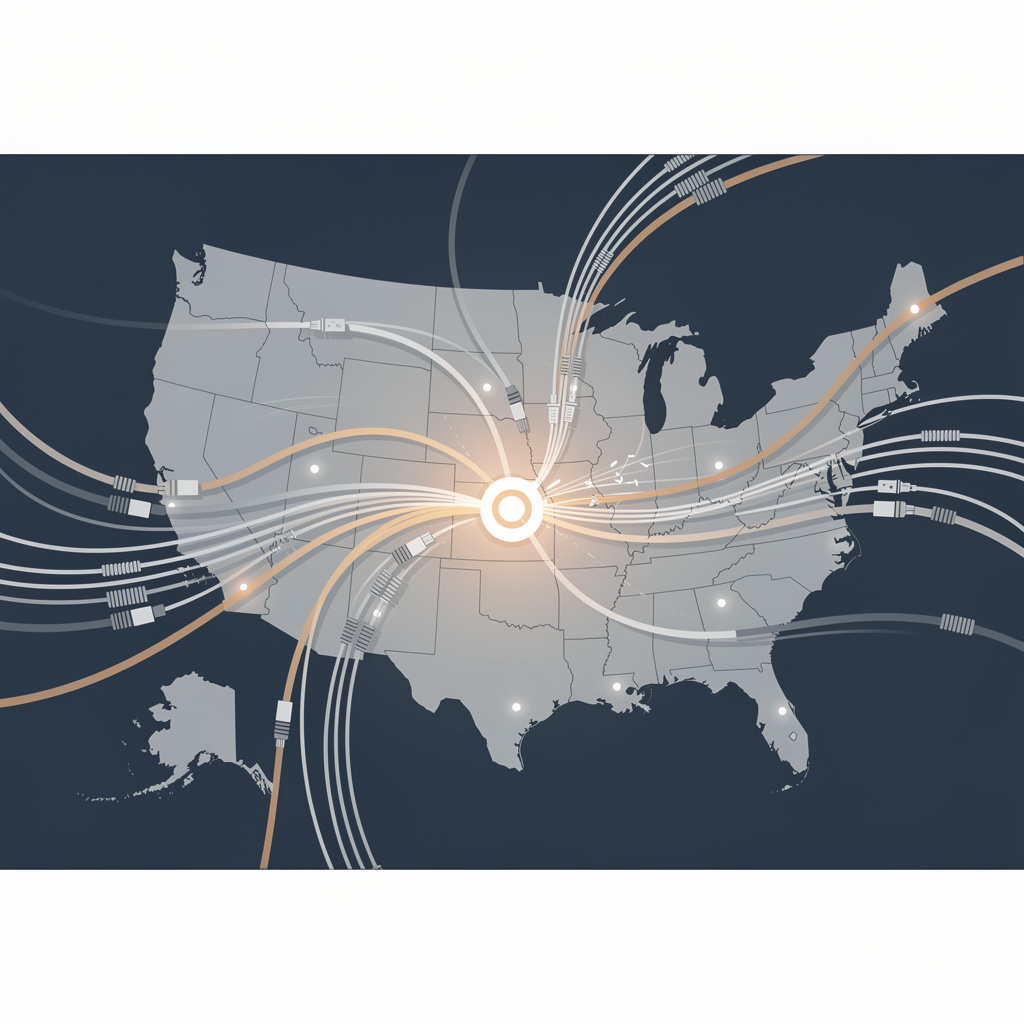
- Charter Communications and Cox Enterprises signed a Transaction Agreement on May 16, 2025 that splits the deal into an Equity Sale of Cox's commercial fiber and managed IT/cloud businesses for $3.5 billion in cash, and a Contribution of Cox's residential cable business into Charter's existing partnership, Charter Holdings.
- Total consideration to Cox Enterprises is approximately $21.9 billion — $4.0 billion in cash, $6.0 billion of convertible preferred units carrying a 6.875% coupon, and roughly 33.6 million partnership common units — against a Cox enterprise value of approximately $34.5 billion at 6.44x estimated 2025 Adjusted EBITDA, with about $12.6 billion of Cox net debt moving to the combined entity.
- Cox Enterprises is set to own approximately 23% of the combined company's fully diluted shares, and the combined company is to be renamed Cox Communications within a year of closing.
- Charter's stockholders approved the deal on July 31, 2025 with more than 99% of votes cast in favor; the FCC approved the transfer of Cox's Section 214 authorizations and wireless licenses on February 27, 2026; California's CPUC approved on August 13, 2026 subject to settlements and conditions including a $30 million digital inclusion investment.
- Closing is still expected only in mid-2026 and remains subject to remaining regulatory approvals and customary conditions. Until the transaction closes contemporaneously with the Liberty Broadband merger, no structural change in US broadband has actually occurred.
The state difference at the center of this story is easy to state and easy to miss. On May 16, 2025, Cox was a family-controlled, privately held cable operator. Today, Cox is a company that has signed away the future of that operating business in a documented transaction, has secured its shareholders' approval and the two most visible regulatory sign-offs, and still does not belong to Charter. The decisive fact is not the announcement; it is the gap between everything that has been approved and the closing that has not yet occurred.
The full picture is documented in the primary record. Charter's own announcement of the definitive agreement sets out the headline economics and the two-sided structure (https://corporate.charter.com/newsroom/charter-communications-and-cox-communications-announce-definitive-agreement-to-combine-companies). Charter's securities filings restate the same structure in greater precision (https://www.sec.gov/Archives/edgar/data/1091667/000114036125019412/ef20049175_defa14a.htm), and the company's quarterly report gives the most exact accounting of the consideration mechanics (https://www.sec.gov/Archives/edgar/data/1091667/000109166725000127/R8.htm). The investor materials quantify the enterprise value split and the pro forma ownership (https://www.sec.gov/Archives/edgar/data/1091667/000114036125019410/ef20049175_ex99-2.htm). The executed Transaction Agreement itself shows the operative payment clauses (https://www.sec.gov/Archives/edgar/data/1091667/000114036125019688/ef20049261_ex2-1.htm). The shareholder approval is documented in Charter's own announcement (https://www.sec.gov/Archives/edgar/data/1091667/000109166725000145/a073125chtr8-kexh991.htm), the FCC's order is on the public record (https://docs.fcc.gov/public/attachments/DA-26-211A1.txt), and California's approval with conditions is documented by the CPUC (https://www.cpuc.ca.gov/news-and-updates/all-news/cpuc-approves-charter-cox-merger-with-strong-consumer-protections). The FCC maintains a public transaction page for the proceeding (https://www.fcc.gov/transaction/charter-cox). The directory record for Cox Communications Inc sits in BTW's company registry (https://btw.media/en/directory/cox-communications-inc-registry-profile).
The Two-Part Transaction
The structure matters more than the headline number. The transaction is not one purchase; it is two. In the first part — the Equity Sale — Charter directly acquires Cox's commercial fiber and managed IT and cloud services businesses. In the second part — the Contribution — Cox Enterprises contributes Cox's residential cable business into Charter Holdings, Charter's existing subsidiary partnership (https://corporate.charter.com/newsroom/charter-communications-and-cox-communications-announce-definitive-agreement-to-combine-companies). This distinction is not cosmetic. A sale of a subsidiary gives Charter clean, taxable ownership of the commercial businesses. A contribution into the partnership keeps the residential cable asset inside the same partnership wrapper that already holds Charter's own systems, which is where Charter has always run its tax-efficient operating structure.
The consideration follows the same split. Under the executed agreement, Charter pays $3.5 billion in cash for the commercial-fiber-side equity interests (https://www.sec.gov/Archives/edgar/data/1091667/000114036125019688/ef20049261_ex2-1.htm). For the contribution, Charter Holdings pays $500 million in cash and issues convertible preferred units with an aggregate liquidation preference of $6.0 billion, paying 6.875% per annum, together with 33,586,045 partnership common units (https://www.sec.gov/Archives/edgar/data/1091667/000109166725000127/R8.htm). The preferred units carry an initial conversion price of $477.41 and convert at a 35% premium (https://www.sec.gov/Archives/edgar/data/1091667/000109166725000127/R8.htm); Charter also issues one new share of Class C common stock to Cox Enterprises, economically equivalent to its existing classes but voting in line with Cox's partnership units on an as-converted, as-exchanged basis (https://www.sec.gov/Archives/edgar/data/1091667/000109166725000127/R8.htm).
Add the pieces and the arithmetic in the investor materials holds together: total consideration of approximately $21.9 billion — $11.9 billion implied by the common units, $6.0 billion of preferred, $4.0 billion of cash — plus assumption of roughly $12.6 billion of Cox net debt and other obligations, producing an enterprise value of approximately $34.5 billion at 6.44x estimated 2025 Adjusted EBITDA (https://www.sec.gov/Archives/edgar/data/1091667/000114036125019410/ef20049175_ex99-2.htm). The company's announcement rounded the debt figure to approximately $12 billion (https://corporate.charter.com/newsroom/charter-communications-and-cox-communications-announce-definitive-agreement-to-combine-companies); the filings' $12.6 billion is the more precise number.
Where the Economic Power Sits
Read the consideration stack in order of seniority and the deal's real character appears. The first $4.0 billion is cash — risk-free, immediate, indifferent to what the combined company does afterward. The second claim is the $6.0 billion preferred: a senior instrument with a liquidation preference and a fixed 6.875% coupon that, if never converted, draws roughly $413 million per year from the combined company's cash flow to Cox Enterprises (https://www.sec.gov/Archives/edgar/data/1091667/000114036125019410/ef20049175_ex99-2.htm). That is a bond-like position inside a cable equity story. Only after those two claims comes the equity: the 33.6 million common units and, pro forma for the Liberty Broadband merger closing, approximately 23% of the combined company's fully diluted shares — against roughly 67% held by existing Charter shareholders excluding Cox and Advance/Newhouse, and roughly 10% held by Advance/Newhouse (https://www.sec.gov/Archives/edgar/data/1091667/000114036125019410/ef20049175_ex99-2.htm).
This ordering defines what the Cox family actually gave up and what it kept. It gave up operating control: the residential cable business is contributed into a partnership it no longer manages, the commercial businesses are sold outright, and the combined company's ~$12.6 billion of assumed Cox net debt sits on the buyer-side balance sheet. It kept a senior fixed-income claim, a large minority economic stake, and — notably — the name. Within a year of closing, the combined company is to be renamed Cox Communications, with Spectrum remaining the consumer-facing brand in Cox territories, and headquarters remaining in Stamford, Connecticut with a presence on Cox's Atlanta campus (https://corporate.charter.com/newsroom/charter-communications-and-cox-communications-announce-definitive-agreement-to-combine-companies).
The conversion mechanics cut both ways. The 35% premium and the $477.41 initial conversion price mean Cox cannot capture near-term equity upside by converting unless Charter's shares rise materially. If Cox never converts, the combined entity carries a permanent senior cash preference of roughly $413 million a year. If Cox converts, that cash drain stops — but a $6.0 billion senior claim becomes common dilution for Charter's existing holders.
The instrument is therefore simultaneously a cash-flow drag and a dilution overhang, and its resolution is one of the most consequential post-closing capital-allocation questions Charter will face.
The closing also rewrites the governance map. Charter, Cox Enterprises and Advance/Newhouse are to enter into an amended and restated stockholders agreement at closing, covering preemptive rights, voting caps and transfer restrictions (https://www.sec.gov/Archives/edgar/data/1091667/000114036125019412/ef20049175_defa14a.htm). The public filings summarized here do not specify the full voting rights attached to Cox's units, board representation, or protective provisions; whether Cox's 23% constitutes influence or mere economics is not established by the retained record, and the stockholders agreement's detailed terms will matter more than the headline percentage.
The Regulatory Ledger
Approvals have accumulated in an unusual sequence. Charter's shareholders went first: at a special meeting on July 31, 2025, more than 99% of the votes cast approved every proposal required to complete the transaction, and Charter stated it expected to complete the deal in mid-2026 subject to regulatory approvals and customary conditions (https://www.sec.gov/Archives/edgar/data/1091667/000109166725000145/a073125chtr8-kexh991.htm). The FCC followed: its Wireline Competition Bureau, with the International Bureau and Wireless Telecommunications Bureau, approved the transfer of control of Cox's domestic and international Section 214 authorizations and wireless licenses in WC Docket No. 25-233, adopting and releasing its Memorandum Opinion and Order on February 27, 2026, after a lead application filed July 15, 2025 and supplements filed August 29, 2025 and January 28, 2026 (https://docs.fcc.gov/public/attachments/DA-26-211A1.txt). The order covers FCC authorizations only; it is not an antitrust clearance. The FCC's public transaction page tracks the proceeding (https://www.fcc.gov/transaction/charter-cox).
California came next, and with strings attached. On August 13, 2026, the California Public Utilities Commission approved the merger of Cox California Telcom, LLC into Charter Communications, subject to two settlement agreements — with the Public Advocates Office and the California Emerging Technology Fund — and five additional conditions, including affordable broadband offerings, a $30 million digital inclusion investment, and consumer protections (https://www.cpuc.ca.gov/news-and-updates/all-news/cpuc-approves-charter-cox-merger-with-strong-consumer-protections). The CPUC's jurisdiction is California only, but its conditions are enforceable obligations that follow the assets into the combined company.
What has not been documented is the complete list of remaining approvals. The filings and announcements reviewed here refer to "remaining regulatory approvals and customary closing conditions" without enumerating them (https://www.sec.gov/Archives/edgar/data/1091667/000109166725000145/a073125chtr8-kexh991.htm). Whether any further state commissions, antitrust review, or other consents remain outstanding is not established by the retained sources — and that gap is exactly where near-term closing risk lives.
What Remains Conditional
Three things distinguish what has changed from what has not. First, the deal is signed, not closed: every figure in this article describes a binding agreement awaiting its conditions. Second, the transaction is contractually tied to another deal: Charter has said the Cox transaction is to close contemporaneously with the Liberty Broadband transaction (https://www.sec.gov/Archives/edgar/data/1091667/000114036125019410/ef20049175_ex99-2.htm), which means the pro forma ownership arithmetic — 23% Cox, 67% Charter holders, 10% Advance/Newhouse — is itself contingent on that companion deal closing on schedule. Third, the CPUC's settlements and conditions, including the $30 million digital inclusion commitment, become operative obligations of the combined entity; their satisfaction is a continuing requirement, not a one-time gate (https://www.cpuc.ca.gov/news-and-updates/all-news/cpuc-approves-charter-cox-merger-with-strong-consumer-protections).
The falsifiable test is simple. If the transaction closes in 2026 contemporaneously with Liberty Broadband, the consolidation becomes real: a renamed Cox Communications controlled within Charter's partnership structure, carrying the assumed debt, the preferred coupon and the reworked stockholders agreement. If the closing slips or fails — through an unresolved approval, a broken contemporaneity with Liberty Broadband, or a condition dispute — the current state persists: two separate companies, one signed agreement, and a Cox family still owning its operating business.
Nothing in the record so far indicates failure; everything in the record indicates that the outcome is still pending.
The economic consequence, once closed, is concentration. The combination unites the two largest US cable operators outside the Comcasts of the market into one entity spanning Cox's residential footprint and Charter's national systems, with the commercial fiber and managed IT/cloud businesses added on top. That is a material change in market structure for US broadband — but it is a change scheduled for mid-2026, not one that has occurred.
Member Briefing
Deeper Profile Context
Sign in with the right membership level to unlock the full briefing and source notes.
Only for Strategic Circle
Strategic Circle
Open to all readers. Unlock profile briefings after joining and signing in.
Join Strategic CircleOnly for Leadership Alliance
Leadership Alliance
For qualified IP-asset owners and management; sign in to unlock alliance briefings.
Join Leadership Alliance