
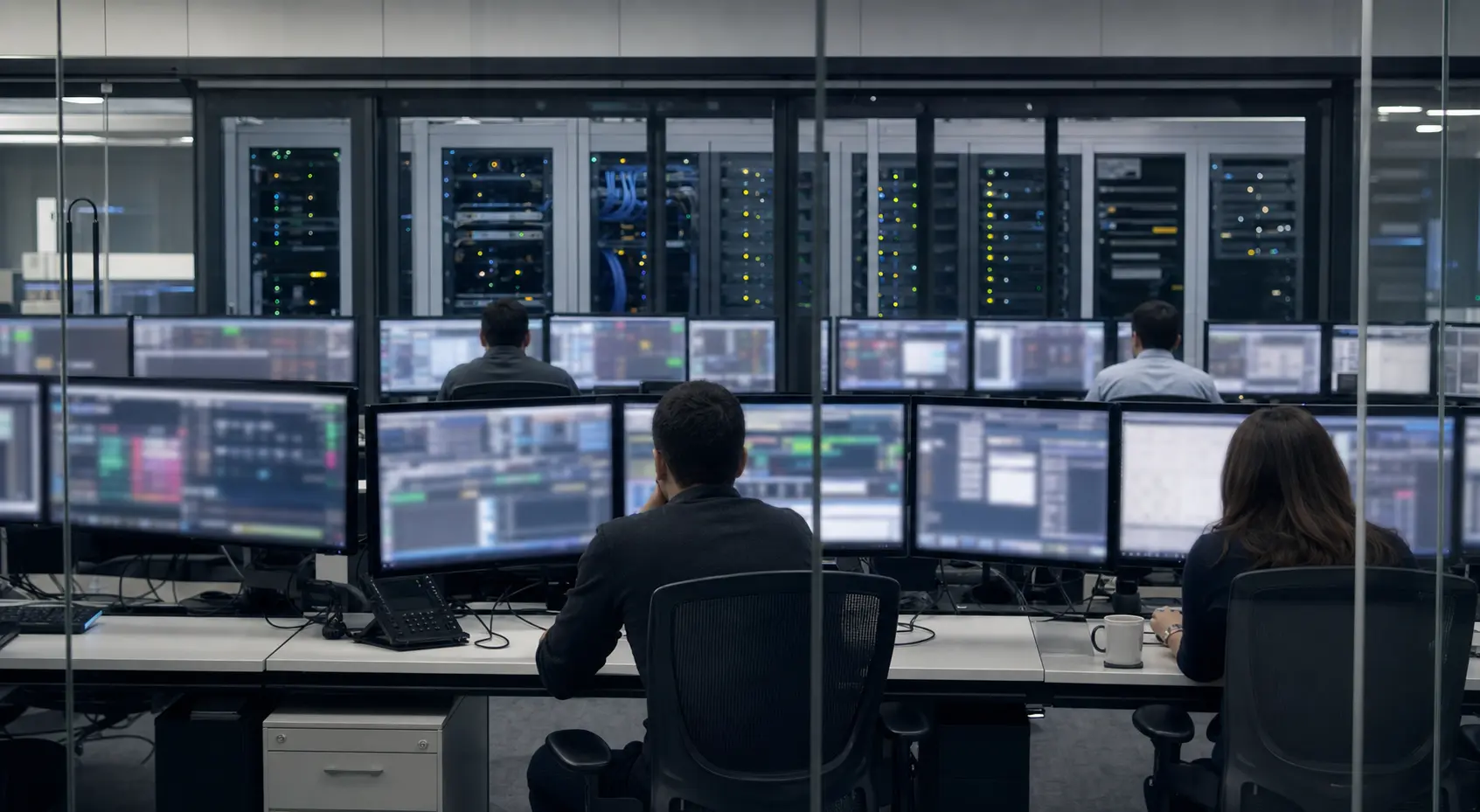
Summary
- Borsa Istanbul's paid unit is a matched securities order supported by an exchange access session and a licensed data relationship. The proof metric is early and falsifiable: matching must stay available during the trading day, and visible order-book depth must remain deep enough that serious flow can trade without fleeing to foreign venues, bilateral deals, broker internalization, bank products or delayed public data.
- The strongest public evidence is official exchange and regulatory material: Borsa Istanbul's 2024 Annual Integrated Report reported 100% session continuity, TL 225.6 trillion in total traded value across markets, BISTECH upgrades, significant trading and data revenue, and a group model that links Borsa Istanbul with Takasbank and MKK.
- The public record suggests a credible exchange-infrastructure business, but the thesis remains unproven without private or more granular public data on latency under stress, order-book depth by instrument and time of day, data-feed packet loss, member retention, outage minutes, failed settlement events, and issuer decisions against foreign or private substitutes.
A matched order buys queue priority under stress
A broker does not pay Borsa Istanbul because a trade confirmation looks elegant. A broker pays because the order can enter a regulated queue, find executable liquidity, produce a timestamped match, feed a reliable market-data product, and move into a clearing and custody chain that counterparties accept. An issuer pays because the exchange can turn a security into an investable domestic claim with continuous price formation, investor reach, disclosure channels and a venue that institutions can defend to risk committees.
In both cases, the paid unit is a matched securities order, plus the access session and market-data relationship that make the match usable.
The substitute set is concrete. A Turkish issuer can compare a domestic listing with a foreign listing route, a private placement, a bank loan or a debt instrument. A broker can compare exchange execution with over-the-counter negotiation, broker internalization, delayed or third-party data, a foreign venue for a related instrument, a government-debt platform, a crypto venue for speculative liquidity, or a bank product that offers clients yield without exchange exposure. None of those substitutes perfectly replaces Borsa Istanbul. They do not need to.
They only need to become attractive when exchange trading is slow, shallow, rule-uncertain, expensive or hard to clear.
The burden transferred to Borsa Istanbul is the burden of public matching at scale. The exchange has to maintain the matching venue, trading rules, member access, surveillance, market data, technology facilities and handoff to post-trade institutions. The buyer still owns investment risk. The exchange does not promise that the trade will be profitable. It promises that the market will be available, that orders will be handled under published rules, that price discovery will be visible, and that a matched trade can move into recognized post-trade rails.
The early proof metric is therefore not generic institutional confidence. It is matching uptime and liquidity depth. The first half is visible in session continuity: if the exchange cannot keep the trading session open through normal stress, the fee collapses into a fragile permission to wait. The second half is visible in the order book: if depth thins so much that a normal institutional order moves the price sharply or cannot be executed without crossing wide spreads, the exchange becomes a price display rather than a liquid market.
For a broker, the practical test is whether the session stays available and whether best bid and offer, traded volume, and Level 2 depth remain usable when volatility rises. For an issuer, the test is whether the venue can concentrate enough buyers and sellers after the initial listing ceremony to keep the security investable.
Borsa Istanbul's official record gives that test a starting point. Its 2024 Annual Integrated Report reported "100% Session Continuity" and said session continuity was ensured in its markets throughout 2024. The same report recorded total traded value of TL 225.6 trillion across all markets, compared with TL 78.4 trillion in 2023. That does not prove that every order met a buyer's preferred execution benchmark. It does show that the exchange's own public performance narrative is built around continuity, capacity and trading volume, which are the right variables for a matched-order business.
The public record suggests that Borsa Istanbul should be judged as operational infrastructure, not merely as a national institution. The exchange's official About page says it was founded under Capital Markets Law No. 6362 and that its activity includes creating markets and systems for matching or facilitating the matching of buy and sell orders and announcing discovered prices. That description puts matching at the center of the franchise. The economic question is whether that matching remains useful enough, fast enough and deep enough for participants who have alternatives.
Uptime is the first revenue line
An exchange's first product is the open session. Everything else depends on it. Trading fees, listing fees, market data, co-location, clearing confidence and index licensing lose value if participants cannot trust the session to remain open when it matters. A broker can forgive a thin market if the order is small and timing is flexible. It cannot forgive a regular trading system that disappears during the exact window when clients need price discovery. For an issuer, a public listing becomes less valuable if investors doubt that they can enter or exit during stress.
Borsa Istanbul's 2024 report gives unusually direct evidence on that point. It listed 100% session continuity as a key indicator and stated that session continuity was ensured in the Equity Market, Debt Securities Market, Derivatives Market and Precious Metals and Diamond Market throughout 2024. The same pages show why continuity mattered: total traded value rose to TL 225.6 trillion; the Equity Market recorded TL 34.3 trillion in traded value; the Debt Securities Market recorded TL 173.9 trillion; the Derivatives Market recorded TL 16.4 trillion; and the Precious Metals and Diamond Market recorded TL 781.9 billion.
The report also placed the Equity Market third globally in turnover velocity, sixteenth in traded value and twenty-fifth in market capitalization according to World Federation of Exchanges statistics.
Those numbers do not prove order-level execution quality. A year with full session continuity can still contain queues, latency variation, temporary instrument suspensions or periods of weak depth. But they are relevant because they show that Borsa Istanbul handled a much larger value base while publicly reporting uninterrupted sessions. In a matched-order business, that combination is more meaningful than a broad claim about institutional legitimacy. Uptime without volume is a quiet room. Volume without uptime is unstable demand. The economic case requires both.
Technology is central to that continuity claim. Borsa Istanbul's official BISTECH page says the exchange's maximum processing capacity reached 100,000 orders per second after BISTECH, while round-trip latency fell as low as microseconds under normal conditions. It also lists standard order-entry and market-data protocols, including FIX and OUCH for order entry and ITCH and TIP for market data. The 2024 report said Borsa Istanbul made comprehensive BISTECH software improvements, significantly increased instant order-processing capacity, and aimed to continue high-performance, low-latency order handling.
It also recorded BISTECH version 3.10 and 3.11 implementations across markets in 2024.
The public record supports the view that Borsa Istanbul treats uptime as a strategic and revenue variable. The same report says business continuity and technology sit at the basis of strategy, and that BISTECH extends from pre-trade risk systems and trading activity to market surveillance and post-trade functions. In the exchange's economics, that is not an engineering side story. It is the factory floor. If BISTECH fails, trading revenue, data revenue, co-location value, issuer confidence and post-trade throughput all weaken together.
The 2026 data-center announcement adds a current official signal. On June 30, 2026, Borsa Istanbul announced that a new data center would be put into service on July 1, 2026, saying the design reflected market participant demand and growth projections. The announcement said the capacity increase was expected to allow more participants to access the service and to positively affect trading volumes, liquidity and market quality.
That is almost a direct statement of the economic chain: more access capacity should support more participants; more participants should support more volume; more volume should support liquidity; liquidity should support market quality.
That chain remains a claim until measured. The test after the new data center is not whether the facility exists. It is whether more cabinets, stronger energy and cooling capacity, and access upgrades translate into lower queue pressure, more stable session continuity, better data delivery, more members using direct access, and deeper order books during stress. The exchange has identified the correct target. Market participants should ask for evidence that the target changed execution conditions.
Liquidity depth is the second proof metric
Uptime only says the market is open. Liquidity depth says whether the market is useful. A broker that can enter an order but cannot find depth is still exposed to slippage, information leakage and client dissatisfaction. An issuer with a listed security but a shallow order book has a public price, yet not necessarily a robust financing channel. A data vendor can distribute prices, but if those prices sit on a thin book, the data product becomes less valuable to active users.
Borsa Istanbul's public numbers show breadth and activity. The 2024 report listed 572 public companies, 6.8 million domestic individual investors with a balance, an Equity Market free-float rate of 42.7%, Equity Market total market capitalization of TL 13.4 trillion, and 34 initial public offerings with TL 59.5 billion of issuance volume. It also reported a 30% average share of high-frequency trading transactions in the Equity Market's total traded volume, and a 45% equivalent figure for the Derivatives Market.
Those figures point to an active microstructure where speed-sensitive participants matter, not a venue used only for occasional block trading.
Depth has to be observed at the book level. Borsa Istanbul's data-dissemination FAQ gives a useful public clue. It says Level 2 data basically contains market-depth data at five or ten levels, while Level 1 and Level 1+ provide best bid and ask information and volume information. That means Borsa Istanbul already commercializes the right kind of evidence for judging depth. The buyer of data is not only buying last price. It is buying a view of how much executable interest sits near the price.
For the broker, the falsifiable question is simple: during volatile sessions, does the Level 2 book remain deep enough that expected order size can be executed without a punitive spread or market impact? For the issuer, the parallel question is whether secondary trading remains broad enough after listing to support future financing, index inclusion, analyst attention and investor confidence. If depth survives only in a small number of index names while the rest of the market becomes episodic, Borsa Istanbul's matched-order product is strong for benchmark flow but weaker for smaller issuers.
If depth spreads across more securities, the exchange's value proposition broadens.
The 2024 official report gives both positive and cautionary signals. Turnover velocity ranking and traded value support the idea that Borsa Istanbul is one of the more liquid equity venues in its peer set. The decline from 7.7 million to 6.8 million domestic individual investors with a balance reminds readers that participation can move. The number of IPOs fell from 54 in 2023 to 34 in 2024, while IPO issuance volume fell from TL 79.3 billion to TL 59.5 billion. Those declines do not defeat the thesis. They show why exchange economics cannot be measured by one headline volume figure.
A market can have heavy trading in large names and still face pressure in new issuance or smaller-company depth.
Liquidity also has a rule component. Borsa Istanbul updated value limits applied to orders, market determination criteria, order-to-transaction ratio calculation rules, price ticks for futures contracts and market-making obligations in several segments during 2024. Those changes matter because depth is shaped by the cost and risk of posting orders. If tick sizes are too coarse, spreads can be inefficient. If market-making obligations are too weak, displayed depth can vanish. If order-to-transaction controls are too blunt, liquidity providers may reduce quoting.
If they are too lax, message traffic can crowd the matching infrastructure without improving tradeable depth.
The public record suggests that Borsa Istanbul's liquidity proposition is strongest when uptime, book depth, market-maker incentives and data products are treated as one system. A matched order is not valuable merely because two sides meet. It is valuable because many possible orders compete in a visible book, with enough continuity and rule stability that participants keep returning.
The paid order is also a rule contract
An exchange order carries a legal and rule environment. The broker is not only sending a message to a machine. It is entering a venue where membership, order types, trading halts, price limits, surveillance, disclosures, gross settlement obligations, disciplinary measures and market segmentation have been defined before the trade. That rule layer is part of what distinguishes a matched order from a private message between two counterparties.
Borsa Istanbul's official About page is explicit that the exchange was founded under Capital Markets Law No. 6362 and received its foundation and operation permit after its Articles of Association were prepared by the Capital Markets Board and approved by the relevant minister. The same page describes the exchange as a self-regulatory entity and says its mission is to provide a reliable, transparent, effective, fair, innovative, competitive and sustainable trading platform. The exchange's legal-framework page points to Capital Market Law No.
6362, Borsa Istanbul's Articles of Association, the regulation on exchanges and market operators, and Borsa Istanbul's own regulation on stock exchange activities.
The regulation on principles relating to stock exchange activities turns those broad words into operating powers. It states that listing principles are determined by the Board of Directors and approved by the Capital Markets Board. It allows temporary suspension of trading in relevant instruments under defined conditions. It requires finalized trading obligations to be performed by methods and within periods specified by law. It permits gross settlement and deposit requirements where necessary. It allows different marketplaces, markets, platforms and systems to be established, combined, closed or modified.
It also states that the exchange must procure the infrastructure required for regular and rapid transmission of trading orders, matching of orders, and announcement of executed trades.
Those powers are not just compliance furniture. They affect whether participants are willing to pay for the matched order. A broker wants to know that an unusual price movement can be handled under published rules, not improvised phone calls. An issuer wants to know that listing, disclosure and suspension rules apply to peers as well as to itself. A data buyer wants to know that the feed reflects trades and order-book conditions produced by a regulated marketplace, not an opaque pool with arbitrary reporting. A foreign investor wants to know which local authority can impose constraints and what public record describes those constraints.
Borsa Istanbul's 2024 report provides evidence of rule use. It said 492 measures were taken under the Volatility-Based Measure System in 2024, including short-selling and credit-transaction bans, gross settlement, single-price measures, order packages and one restriction on internet order transmission channels. It also said 37 measures were implemented under the Measure Management System and that 325 investors were warned and informed because their trading patterns were found to be unusual. The point is not that every measure was optimal.
The point is that the exchange's economic product includes active market surveillance and a willingness to alter trading conditions when market quality or rule compliance is at stake.
This rule layer can cut both ways. For a participant seeking maximum speed and flexibility, trading halts, gross settlement, order restrictions or changing tick rules can feel like friction. For a participant seeking a defensible public market, they are part of the price of venue credibility. The same intervention that frustrates a short-term strategy can protect the broader market from becoming a venue where liquidity disappears after a rumor. Borsa Istanbul's paid order must therefore be evaluated not just by speed, but by whether rule interventions preserve enough confidence and depth to keep serious flow inside the exchange.
The evidence supports the existence of a formal rule contract. It does not prove perfect rule outcomes. The missing proof is distributional: which investors bear the cost of interventions, which segments lose depth after restrictions, whether market-maker obligations improve quoted depth, and whether issuers and foreign investors consider the rulebook predictable enough to keep using the venue.
Clearing confidence lets a fast match become a settled claim
A fast match is only half of market infrastructure. The trade also has to settle. If the buyer cannot receive securities, the seller cannot receive cash, or counterparties cannot rely on the post-trade chain, the matching engine has produced a promise rather than a completed economic transfer. That is why Borsa Istanbul's paid unit includes clearing and custody confidence even when the customer experiences the exchange primarily through an order terminal.
Borsa Istanbul's 2024 report describes an integrated group model. It says Borsa Istanbul Group offers listing, trading, settlement and custody operations for capital-markets instruments, including equities, derivatives, fixed income securities, precious metals and diamonds, and Islamic finance products. It identifies Takasbank and MKK as group companies and says post-trade services are provided by those institutions. Takasbank has central clearing and banking licenses and offers clearing, custody, central counterparty and banking services.
MKK is the central registry organization that implements full dematerialization on the basis of rights holders for capital-markets instruments and acts as a CMB-authorized data repository.
The Central Bank of the Republic of Turkey gives a separate official confirmation of Takasbank's role. Its Takasbank page says Takasbank operates the Equity Market Clearing System and Debt Securities Market Clearing System through which clearing and settlement of Borsa Istanbul Equity Market and Debt Securities Market transactions are carried out. It also says securities delivery and receipt transactions of Borsa Istanbul members arising from buy-sell transactions are executed via Takasbank, and that payment obligations are settled by book entry by Takasbank.
MKK's own public description completes the custody side. MKK says it serves as the Central Securities Depository and Trade Repository of Turkish capital markets, offering depository, data, corporate governance and investor services. Its About page says it provides book-entry safekeeping of capital market instruments; records listed equities, mutual funds, exchange traded funds, corporate bonds and other instruments; and operates the Public Disclosure Platform.
It also states that MKK is legally authorized to issue capital-market instruments in dematerialized form, register them in beneficial-owner accounts and monitor ownership rights, with records kept in MKK books legally binding.
For the buyer of a matched order, this means the exchange is selling more than the moment of execution. It is selling a path from order entry to a recognized change in position. That path matters in stress. A broker can execute quickly, but if collateral, margin, settlement or custody arrangements are not trusted, clients will demand a discount or move to instruments whose settlement they understand better. An issuer can list domestically, but if foreign investors worry that settlement and ownership records are hard to access or hard to explain internally, the investor base narrows.
Post-trade revenue reinforces the point. Borsa Istanbul's 2024 report showed post-trade services of TL 7.246 billion and post-trade finance of TL 9.299 billion in its revenue breakdown, together larger than trading revenue. In the detailed revenue note, Takasbank interest income was TL 9.272 billion, custody and custody-related operating income was TL 5.823 billion, settlement and clearing income was TL 1.054 billion, and securities registration income was TL 625.8 million. A matched-order business is therefore financially attached to post-trade economics.
The exchange group earns from the trade, but also from the infrastructure that makes the trade final, recorded and financeable.
The public record suggests that Borsa Istanbul's matched order has a credible post-trade chain. The thesis remains unproven without granular evidence on settlement fails, margin calls, default management tests, clearing-member concentration, foreign-custodian experience, and whether settlement-cycle changes would improve or strain liquidity. Clearing confidence is a necessary condition for the paid order. It is not automatically sufficient.
Data vending turns matching into a second product
The order book creates data before it creates revenue for data vendors. Every bid, offer, trade, index calculation and market-depth update can become a paid information product. In a shallow market, data is a weak add-on. In an active market with domestic and international users, data becomes a second economic unit. Borsa Istanbul's evidence supports that view.
The exchange's Data Dissemination page says Borsa Istanbul market data are disseminated on a real-time, delayed and end-of-day basis through licensed data vendors. It says Borsa Istanbul data products are provided through the BISTECH system, direct connections in the Istanbul data center, the London Equinix LD5 point of presence and authorized infrastructure providers. The Data Distribution Agreement page says a license is required to distribute Borsa Istanbul real-time data.
The 2024 report gives the commercial scale. Data, membership and technology revenue reached TL 2.507 billion, or 9% of total revenue. Within that category, data vending income was TL 1.217 billion, technology income TL 724 million, terminal income TL 311 million, membership TL 116 million and license income TL 139 million. The report said Borsa Istanbul signed contracts with 42 new institutions in data distribution and index fields, bringing the number of institutions authorized to distribute Borsa Istanbul data to nearly 260. It also reported 5 million data package subscriptions reported by data distribution companies.
This is the market-data version of the matched-order thesis. Participants pay for order execution because the market is useful. Data users pay because the market's prices, volumes and depth are useful beyond the moment of execution. A delayed public price may satisfy a casual observer. A broker, market maker, algorithmic trader, risk desk or index product provider needs timely depth, best bid and offer, volumes, index levels and data-quality assurances.
The technical FAQ explains why data delivery has its own operational burden. Data vendors receive market data through connections to Borsa Istanbul equipment; Borsa Istanbul's responsibility is described as reaching the end of the Ethernet cable or network demarcation point, while vendors are responsible beyond that point for receiving, carrying and backing up data. The page also describes recovery limits, multicast package-loss testing, required technical and functional conformance, main and backup data connections, and Level 2 depth.
That structure shows a clear boundary: Borsa Istanbul sells access to official data, but vendors must operate their own downstream resilience.
The data business is also a locality business. Borsa Istanbul can distribute its own market data from Istanbul and via a London point of presence. That matters for foreign users, but it does not convert the exchange into a global substitute for larger European or US venues. It gives international participants a route into Turkish price discovery. Data sovereignty and locality are therefore part of the value proposition: the primary record of Turkish market depth is generated locally, governed locally and monetized through licensed channels, while still being exported to global users.
The public record supports data vending as a meaningful revenue stream. The thesis remains unproven without data-feed performance metrics: packet-loss rates, recovery frequency, latency distribution, customer churn, distributor concentration, revenue by domestic versus international user, and whether data buyers keep paying when liquidity in smaller instruments falls.
Delivery is expensive because speed must be shared fairly
Borsa Istanbul's cost structure is not simply servers and staff. It is the cost of making speed sellable without making the venue unfair. Low latency has value because participants compete for queue position. But if one group can buy arbitrary advantage without published access rules, other participants discount the venue. The exchange has to sell speed, capacity and co-location while preserving enough fairness that liquidity continues to concentrate in the public market.
The official Technology Services page shows how that balance is packaged. It says Borsa Istanbul's co-location service lets customers place equipment in the Borsa Istanbul data center where the exchange's market systems are also located, giving them faster and more reliable access. It says the service targets members, high-frequency and algorithmic firms, service providers and other participants seeking high access speed. Under normal conditions, the page lists round-trip latency around 100 microseconds with FIX and 60 microseconds with OUCH.
It also says Borsa Istanbul provides the same cabling length from each cabinet to the trading system within its co-location service.
That last detail is economically important. Equal cabling length is a fairness design choice. It does not make every participant equal, because firms still differ in hardware, code, strategy, risk limits and capital. But it prevents the exchange from turning physical placement inside its facility into an uncontrolled hierarchy. A co-location product can command fees only if participants believe the rules for speed are known and durable.
The primary data-center page adds the infrastructure burden. It lists secure and reinforced cabinets, round-the-clock secure access and monitoring, redundant Tier 3+ cabling, redundant power, redundant cooling, and 1G/10G network connections directly connected to the data dissemination and trading system infrastructure. These are not decorative features. They are the physical cost of selling session continuity, market access and official data.
The current new data-center announcement should be read in that context. Borsa Istanbul said the new facility would serve members, domestic and foreign investors, service and infrastructure providers and data dissemination agencies. It also said the new cabinets would have enhanced energy and cooling capacity. That is a public admission that market infrastructure scales through mundane constraints: cabinet space, power, cooling, connectivity and resilience. A national exchange may talk about capital-market development, but a broker's order still depends on the capacity of the room where the market systems and access equipment live.
Delivery is expensive for another reason: the exchange must serve very different users at once. A high-frequency market maker cares about microseconds and order-to-transaction rules. A retail investor cares that a broker app shows a reliable price. An issuer cares about a stable listing environment. A data vendor cares about feed quality and licensing. A clearing member cares about margin, settlement and default rules. A regulator cares about surveillance and public confidence. A co-location buyer cares about fair access to speed. All of those users rely on the same core venue.
That is why uptime and depth should be assessed together. An exchange can protect uptime by throttling or constraining activity, but if the constraints damage depth, execution quality suffers. It can encourage depth by welcoming high message traffic, but if that traffic strains systems or creates unfairness, session continuity and confidence suffer. Borsa Istanbul's 2024 updates to BISTECH, order-to-transaction calculation rules, value limits, market-making obligations and data-center capacity are all signs that it is working along this trade-off. Public evidence cannot prove that it always gets the trade-off right.
The substitute set is real
The easiest mistake is to treat Borsa Istanbul as an unavoidable domestic institution. It is important, but not immune. Its substitutes operate at different layers. A large issuer may consider a foreign listing if it wants deeper international capital, a different investor base or a currency profile that domestic trading cannot provide. A company may choose bank finance or private debt if public-listing obligations feel too burdensome.
A broker may internalize order flow where rules permit, route related exposure to a foreign derivative, use an OTC transaction for size, or sell clients a bank deposit product when market volatility makes equity exposure harder to defend.
The exchange's defense is concentration. A public market is valuable when enough investors, issuers, brokers, market makers, data users and post-trade institutions coordinate around the same venue. Borsa Istanbul's 2024 record shows strong concentration in domestic capital-market activity: 572 public companies, millions of domestic investors with balances, large traded value, extensive data subscriptions, and a group structure that links trading with clearing, custody, public disclosure and data. The more that ecosystem concentrates, the harder it is for a substitute to replicate.
But substitutes attack weak spots. If uptime fails, a foreign venue or OTC route becomes more attractive for urgent exposure. If depth thins, a broker may prefer block negotiation. If disclosure and rule decisions feel unpredictable, an issuer may prefer private capital. If data costs rise while depth quality weakens, users may rely on delayed or third-party data. If currency risk dominates, investors may prefer government debt, bank deposits or foreign instruments.
If sanctions and compliance pressure complicate cross-border finance, some investors may avoid the venue while others may prefer a local venue precisely because it provides a domestically governed record.
This is where institutional legitimacy must be tied to operating proof. A Turkish exchange with official legal standing matters because regulated domestic claims need a venue. But the buyer still asks a practical question: did the exchange reduce the total cost of execution, information, clearing and compliance relative to alternatives? A matched order earns its fee when it lowers that combined cost. It loses power when the venue adds ceremony without depth.
Borsa Istanbul's market mix helps. Equity trading alone would make the exchange more exposed to IPO cycles and equity volatility. The Debt Securities Market, Derivatives Market, Precious Metals and Diamond Market, data products, technology services, membership and post-trade functions diversify the revenue and operating surface. In 2024, debt-securities traded value dominated total traded value, and Takasbank interest income was the largest single service-revenue item in the detailed note. That means the exchange group is not only an equity-listing story. It is a broader domestic market-infrastructure story.
The substitute risk remains especially relevant for foreign participants. Borsa Istanbul's London data point of presence helps distribute data internationally, and MKK's foreign central securities depository links improve access to Turkish market instruments. But foreign investors still compare settlement familiarity, currency exposure, geopolitical risk, sanctions screening, custody links, index inclusion and liquidity with other markets.
Borsa Istanbul can win that comparison for Turkish exposure only if the local venue offers something substitutes cannot: official domestic price discovery with usable depth and reliable post-trade recognition.
The evidence supports Borsa Istanbul's relevance as local paid market infrastructure. It does not support complacency. The exchange's value is renewable only if participants continue to experience the matched order as cheaper, faster, deeper and more legally useful than the available substitutes.
Network records only show a public edge
Borsa Istanbul has a visible internet and registry surface, but that surface should stay in its lane. Public network records can show that an organization has registered resources, public routing and reachable services. They cannot prove matching-engine architecture, internal data location, cyber governance, member access quality, private links, data-feed performance, trading uptime or liquidity.
RIPE public registry records identify Borsa Istanbul A.S. through ORG-BIA39-RIPE. BGP.Tools lists AS29144 as Borsa Istanbul A.S., active under RIPE, with several originated IPv4 prefixes and upstream connectivity. Those records are relevant because they show a bounded public network surface associated with the exchange. They are not proof that a broker's order traveled over that public route, that BISTECH depends on that autonomous system, or that the exchange's data center meets a particular private resilience standard.
The same boundary applies to the official technology pages. A public page can state that market data is available through a London point of presence, that co-location has redundant components, or that time-server infrastructure uses double redundancy. That is useful procurement evidence. It does not prove actual packet loss on a given trading day, private leased-line diversity, data-feed recovery success, or member-specific experience. For those claims, the relevant evidence would be service reports, member logs, incident notices, independent audits, contractual service levels and operational history.
This boundary matters because exchange infrastructure can look more measurable than it is. A route table is precise, but it may measure the wrong thing. A latency number is precise, but it may describe normal conditions rather than stress. A co-location brochure is precise about cabling and cabinet service, but it may not describe the behavior of the matching engine during a volatile open. A market-depth feed is precise, but its value depends on whether posted size is durable enough to execute against.
The available evidence is consistent with Borsa Istanbul operating a serious public technology and access surface. It is not enough to infer service quality beyond the stated public facts. The article's thesis therefore rests on official exchange and regulatory records first, and uses network records only as limited evidence that the institution has a public internet footprint aligned with its role as market infrastructure.
The evidence gaps sit where participants feel pain
The most important missing evidence is not abstract. It is the information a broker, issuer or data buyer would ask for before renewing commitment to the venue. How many minutes of unplanned matching interruption occurred by market and by cause? What were the latency distributions at the open, close, auction windows and volatility spikes? What was the fill rate and market impact for common institutional order sizes? How did Level 2 depth behave in BIST 30 names compared with smaller companies? How often did market data vendors request recovery, and how often did recovery limits matter?
How many member access incidents were attributable to the exchange side rather than to vendor networks?
The clearing questions are equally practical. What were settlement-fail rates by market? How often were collateral calls missed? How concentrated is clearing exposure among members? How did default-management tests perform? How quickly can a stressed participant's obligations be contained without damaging market depth? How would a shorter settlement cycle affect brokers, custodians, market makers and foreign investors? The public record shows a formal post-trade structure, but it does not quantify all of these outcomes.
Issuer evidence is also incomplete. Borsa Istanbul reports the number and volume of IPOs, but a buyer of the exchange story needs more. How many issuers considered foreign or private alternatives before choosing the domestic market? How many newly listed companies retained trading depth after the first year? How often did secondary offerings follow successful liquidity? Which sectors found domestic listing attractive, and which preferred private capital? How did disclosure burden compare with the cost of bank finance or private debt?
Data economics are under-disclosed from the outside. The annual report gives data vending income, authorized distributor counts and data package subscriptions. It does not show revenue per distributor, churn, international share, latency guarantees, quality credits, distributor concentration or the share of data revenue tied to Level 2 depth. A data business can look strong while the most sophisticated users concentrate among a small number of vendors and instruments.
The same is true for the 2026 data center. The announcement ties capacity to access, volume, liquidity and market quality. That is the correct hypothesis. The evidence to test it would be utilization, cabinet uptake, new participant count, co-location revenue, latency distribution, market-maker participation, peak-message handling, order-book depth and stress-day continuity after the launch. Without those metrics, the announcement remains a credible investment signal rather than proof of improved market quality.
These gaps do not make the thesis weak. They prevent overclaiming. The public record supports the view that Borsa Istanbul is a serious exchange infrastructure operator with substantial market activity, official rule authority, recognized post-trade links, data commercialization and current investment in access capacity. The thesis remains unproven without participant-level evidence that uptime and depth changed outcomes when the venue was under pressure.
The practical verdict is uptime plus depth, not prestige
Borsa Istanbul's matched order earns money when it does work that substitutes cannot do as well. It concentrates Turkish securities trading under official rules. It keeps sessions available. It lets participants see executable depth and pay for richer data. It links a trade to clearing, custody and legally recognized ownership records. It gives issuers a domestic public market and gives brokers a rule-governed venue for client flow. It sells speed and access while trying to preserve fairness through published technical services and market rules.
The evidence supports the core infrastructure claim. Official records show 100% session continuity in 2024, large traded value, BISTECH capacity upgrades, market-surveillance activity, material trading and data revenue, post-trade integration with Takasbank and MKK, and a 2026 data-center expansion explicitly tied to participant access, liquidity and market quality. Those are the right ingredients for a matched-order business.
The public record suggests that the economic unit should be priced as a bundle: matched order, access session, official market data and post-trade handoff. A broker that pays only for confirmation misses the point. The confirmation is the output. The value sits in the open session, the queue, the book, the rules, the data and the settlement chain. A data vendor that pays only for a feed also misses the point. The feed is valuable because the underlying order book is active and legally meaningful.
The risk is that the strongest proof remains operational and partly private. If session continuity weakens, if order-book depth concentrates too narrowly, if co-location capacity fails to expand meaningful participation, if data quality lags user needs, if rule interventions feel unpredictable, or if clearing confidence is shaken, the substitute set becomes more attractive. Foreign venues, OTC deals, broker internalization, bank products, government-debt instruments, crypto venues and delayed data all gain when the public matching venue feels expensive relative to its delivered certainty.
That is why the early metric should stay stubbornly concrete. Borsa Istanbul should be judged first by whether matching stays up and liquidity depth stays usable. Institutional trust, national importance and public-sector continuity matter only after those facts are visible. The paid order is an uptime business because the market must be open. It is a liquidity business because the order must meet depth. Everything else is valuable only if those two promises hold when participants most need the exchange.