
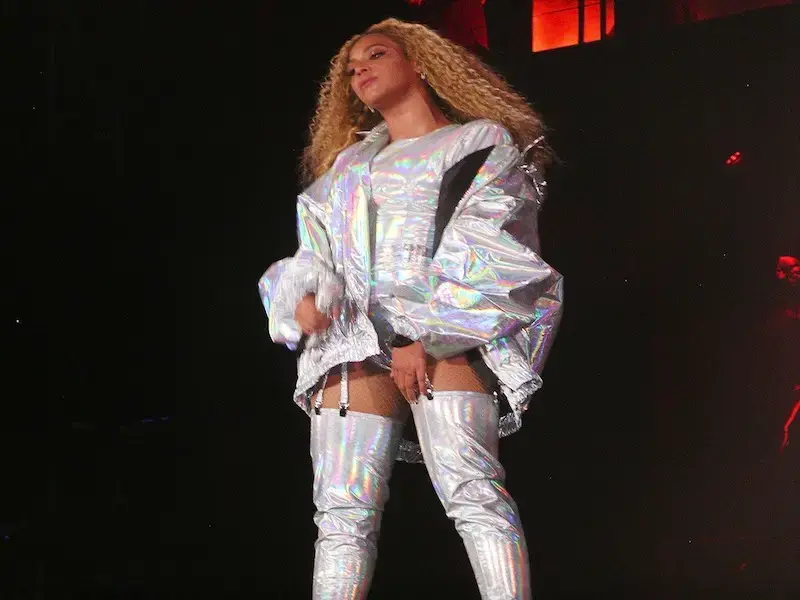
- During a press conference for Cowboy Carter, Beyoncé made a surprise statement against the growing presence of artificial intelligence in music.
- The central backlash against AI-generated art comes from the way this technology works.
At the press conference for Beyoncé’s new album Cowboy Carter, Beyoncé made a surprise statement against the growing presence of artificial intelligence in music.
How Artificial Intelligence Generated Art Works
“The joy of creating music is that there are no rules,” said Beyoncé. “The more I see the world evolving the more I felt a deeper connection to purity. With artificial intelligence and digital filters and programming, I wanted to go back to real instruments.”
The central backlash against AI-generated art comes from the way this technology works.
AI-driven music generators can create new tracks in minutes and mimic an artist’s voice to a convincing degree. In the future, artists might be replaced by AI. They can produce a song in a very short time, but inevitably there is a lack of human emotions.
Also read: OpenAI’s GPT store fails to meet expectations
AI affects the artist’s work
Artists such as Beyoncé understandably feel strongly about this issue. Many AI models are trained to be created by artists without their permission.
Large language models and diffusion models both require sprawling databases of text, images, and sounds to be able to create AI-generated works.
Some of the most well-known AI companies, such as Open AI and Stability AI, use datasets containing copyrighted artwork without consent.
Beyoncé’s unexpected critique of AI technology resonates with this narrative. It reveals a parallel truth, artists’ creations are once again being appropriated without consent, transformed into something different, and devoid of proper acknowledgment or compensation for their cultural contributions.
Critics oppose AI-generated art primarily because of the mechanics behind the technology. AI-driven music generators can quickly generate original tracks and mimic an artist’s voice with extreme accuracy.
This is often attributed to the AI’s training of artists’ catalogues, potentially putting their livelihoods at risk.