
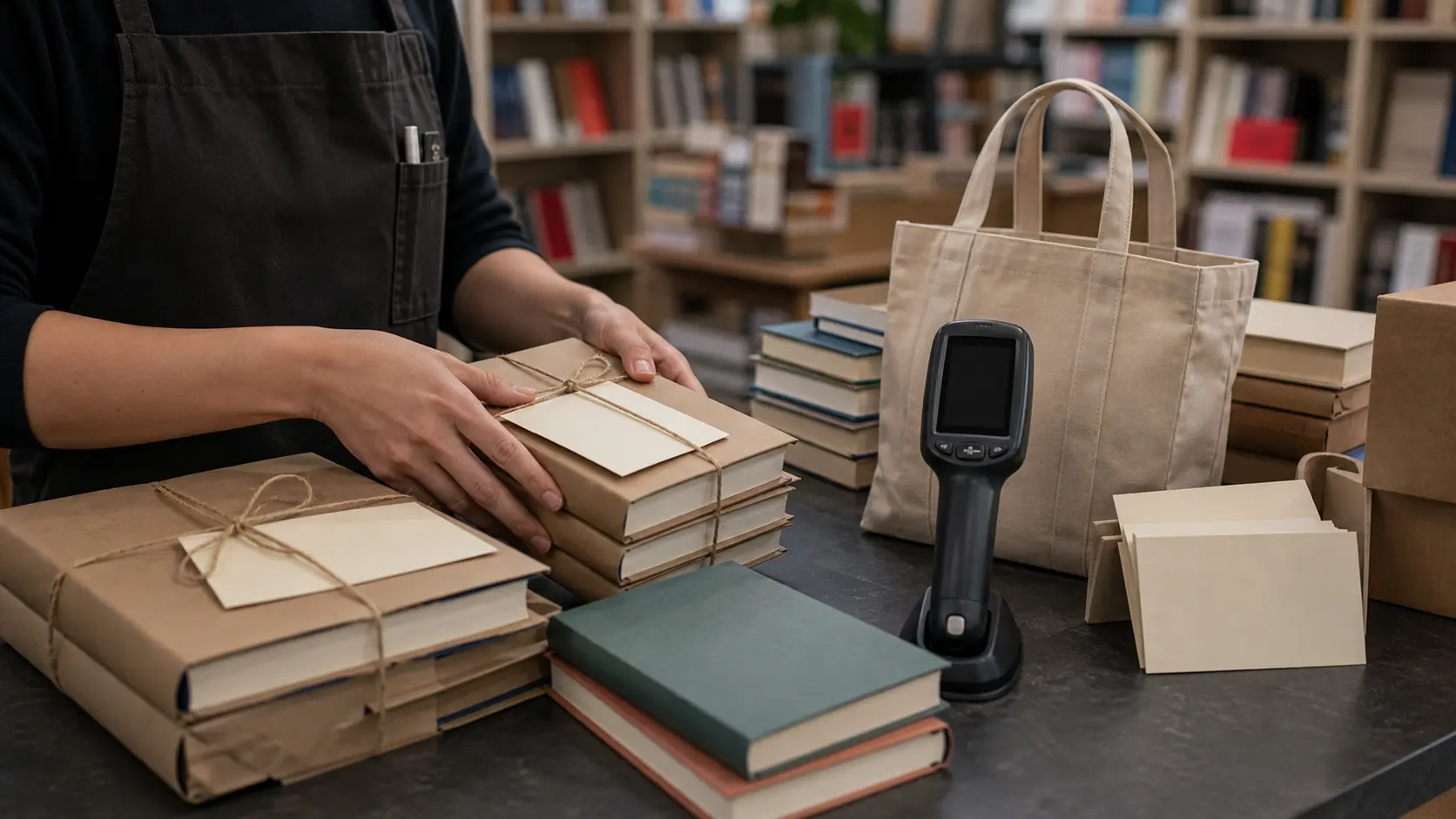
Summary
- Barnes & Noble's pickup order is best understood as an economic unit rather than a nostalgic store feature: the customer buys reserved inventory, store labor, payment and account trust, pickup convenience, return optionality and membership continuity.
- The same order spends money before revenue is secure. Barnes & Noble says Buy Online, Pick Up in Store orders are held for five days, billed only when picked up, require a ready notification and photo ID, and carry no additional pickup fee (https://help.barnesandnoble.com/hc/en-us/articles/5147371842971-Picking-Up-Your-Order; https://help.barnesandnoble.com/hc/en-us/articles/5324135242267-Pricing-and-Payment).
- Public evidence shows the machinery needed for that promise. Barnes & Noble says it has about 700 bookstores, an online bookstore at BN.com, NOOK, Paper Source, Elliott Advisors ownership and James Daunt as CEO (https://www.barnesandnobleinc.com/about-bn/). Its last public annual report before privatization described 627 stores, 16.4 million square feet, two major distribution centers, BookMaster store inventory technology and Buy Online, Pick Up in Store available across stores (https://www.sec.gov/Archives/edgar/data/890491/000119312519176078/d703316d10k.htm).
- The evidence also bounds the conclusion. Barnes & Noble is private, so current store-level pickup margin, pick accuracy, attach rate, return cost, shrink, cancellation rate, paid-member conversion and labor minutes per order are not publicly disclosed; any claim about pickup profitability must stay conditional.
- Public domain, DNS and ARIN records are useful boundary evidence only. At lookup time, barnesandnoble.com used Akamai nameservers, www.barnesandnoble.com resolved through shops.myshopify.com to a Shopify-registered ARIN network, and mail routed through Proofpoint-style hosts; those facts do not prove the internal order-management, payment, fraud, inventory or customer-data architecture (https://rdap.verisign.com/com/v1/domain/BARNESANDNOBLE.COM; https://dns.google/resolve?name=www.barnesandnoble.com&type=A; https://rdap.arin.net/registry/ip/23.227.38.74; https://dns.google/resolve?name=barnesandnoble.com&type=MX).
A pickup order sells certainty before it sells a book
The Barnes & Noble pickup order begins as a promise of certainty. The customer is not just buying a paperback, a hardcover release, a manga volume, a toy, a game, a journal, a cafe impulse item or a membership-linked discount. The customer is buying the right to avoid an unnecessary trip, avoid a delivery wait, and believe that the item shown online is actually available at a selected store. That is a different product from a shelf sale. It is a small service contract wrapped around retail inventory.
Barnes & Noble's own pickup page makes the service promise explicit. The company tells customers that store pickup lets them order ahead and have the item waiting, that they can pay online and pick up at a local store, or reserve online and pay in store, and that they should receive a text or email when the order is ready (https://www.barnesandnoble.com/h/in-store-pickup). Its help page adds the controls: after an order is filled, the customer receives a ready message with pickup instructions; pickup may not be ready until the following day depending on order time and store closing time; the customer must bring the ready notification and a photo ID; and the store holds the order for five days (https://help.barnesandnoble.com/hc/en-us/articles/5147371842971-Picking-Up-Your-Order).
Those details are the real unit of analysis. A shelf sale lets a shopper bear much of the search cost: walk the aisles, ask a bookseller, check the table, decide whether a substitute is acceptable, and pay only after holding the item. A pickup order reverses that burden. The retailer must reserve the item, communicate readiness, prevent the same unit from being sold to another shopper, handle the customer's account and tender, and decide what happens if the customer never arrives. The customer sees convenience. Barnes & Noble sees a time-limited claim on store inventory.
The payment rule is especially revealing. Barnes & Noble says it enters payment information during the normal online checkout flow, but for Buy Online, Pick Up in Store orders it bills the customer only once the order is picked up from the store. If the customer does not pick it up within five days, the order is canceled and the payment method is not billed. The company also says there are no additional fees or charges associated with the pickup program (https://help.barnesandnoble.com/hc/en-us/articles/5324135242267-Pricing-and-Payment).
That makes the pickup order a working-capital and labor bet. Barnes & Noble can win if the shopper arrives, buys the reserved item, adds something else, uses the visit to renew loyalty, and leaves with a better impression of the store. Barnes & Noble loses if employees spend time picking, staging and verifying an item that is never collected, if the inventory file was wrong, if the item was damaged or misplaced, if a store walk-in would have bought that unit at the same or a better margin, or if the pickup visit ends in a return or service dispute.
The point is not that pickup is bad. It may be essential. In a market where Amazon, mass retailers and independent bookstores all compete on availability, convenience and recommendation, a national bookstore chain needs to let a reader convert online intent into a local trip. The point is that pickup is not free traffic. It is a designed service in which inventory accuracy, staff time, platform availability and customer trust have to be priced against an order that may not become revenue until the shopper reaches the counter.
The store network is the asset and the cost base
Barnes & Noble's store network is the reason pickup can work at all. The company's corporate about page describes Barnes & Noble as the largest retail bookseller in the United States, with approximately 700 bookstores across the country, plus BN.com, NOOK, SparkNotes and Paper Source. It also states that the company is owned by Elliott Advisors (UK) Limited and run by CEO and bookseller James Daunt, and that Barnes & Noble Education is an independent public company not affiliated with the bookseller (https://www.barnesandnobleinc.com/about-bn/).
That current corporate statement matters because it separates Barnes & Noble's pickup economics from campus bookstore economics and from a public-company reporting model. The relevant company is a private trade bookseller with a large physical footprint and an online storefront. The customer-facing product is local access to inventory, staff and a membership account. The investor-facing evidence is limited because the company no longer publishes full public financial statements.
The last public annual report before the 2019 privatization still helps size the operating machine. As of April 27, 2019, Barnes & Noble reported 627 bookstores in 50 states, an e-commerce site, digital reading products and NOOK. It described an omni-channel distribution platform and said its Buy Online, Pick Up in Store initiative allowed customers to place an order online and pick it up within one hour at the selected store, with the option available in all Barnes & Noble stores around the country (https://www.sec.gov/Archives/edgar/data/890491/000119312519176078/d703316d10k.htm).
The same filing described stores ranging from 2,800 to 60,000 square feet, an overall average store size of about 26,000 square feet, and 16.4 million square feet of store base. It also said each store had an average comprehensive title selection of about 66,000 items, and that all stores gave customers access to millions of online books by offering an option to have a book sent to the store or shipped directly to the customer. That combination is powerful, but expensive: local assortment, national selection, store handling and online ordering have to be kept coherent.
For the pickup order, store count cuts both ways. A dense network makes pickup useful because the customer can choose a nearby branch and avoid shipping time. It also multiplies the cost of wrong promises. Each location needs trained employees, receiving discipline, shelf and back-room controls, a pickup handoff routine, local hours, customer-service judgment and a way to handle exceptions. A chain can advertise one pickup program, but it operates hundreds of local service desks.
That is why a pickup order should not be treated as a pure web conversion. The online click activates the store. The store has to find the item, hold it, protect it from ordinary shelf traffic, handle the customer ID step, decide whether a coupon applies, and absorb the conversation if the item is not there. The customer may judge Barnes & Noble by a single counter interaction, but the cost behind that interaction includes lease, labor, systems, receiving, returns and the opportunity cost of tying up inventory for five days.
Inventory accuracy is the first margin test
Pickup profitability begins with a binary question: is the item really there? Barnes & Noble can spend heavily on web design, membership and marketing, but a pickup order collapses if the store file says available and the bookseller cannot find the copy. In that case the company has not merely missed a sale. It has converted customer intent into a wasted trip and a service failure.
The last public annual report shows why this is hard in bookselling. Barnes & Noble said its stores averaged about 66,000 titles, and that store inventories were customized by buyers, allocation managers and store managers who could respond to local demand through a wholesaling network and distribution centers. It also said the company bought physical books from more than 500 publishers and more than 30 wholesalers or distributors, with the top five suppliers accounting for about 70% of retail book purchases during fiscal 2019. Most physical book purchases were returnable for full credit, consistent with industry practice (https://www.sec.gov/Archives/edgar/data/890491/000119312519176078/d703316d10k.htm).
That is a complex inventory world. Books are not identical grocery units. Titles have formats, editions, covers, signed copies, boxed sets, local author demand, school reading cycles, seasonal spikes, preorder behavior and social-media demand waves. A store can have one copy left, but it may be on a display table, in a returns cart, at the cash wrap, in a customer's hand, on a misplaced shelf, damaged, stolen, or just received but not yet processed. The pickup promise asks the system to distinguish all of those states fast enough to support a ready message.
Barnes & Noble's historic technology language is relevant but not conclusive. The 2019 annual report described BookMaster as a proprietary bookstore inventory management system that integrated point-of-sale features with a data warehouse-based replenishment system and improved communications and real-time access across bookstores, distribution centers and wholesalers. It said Product Master helped achieve higher in-stock positions and better productivity at the bookstore level through efficiencies in receiving, cashiering and returns processing (https://www.sec.gov/Archives/edgar/data/890491/000119312519176078/d703316d10k.htm).
Those systems are exactly the kind of controls pickup needs. The public filing, however, is old. It proves that Barnes & Noble had store inventory and replenishment systems before going private. It does not prove current pick accuracy, current system architecture, current exception rate or current labor minutes per pickup order. Since 2019, the company has changed ownership, management approach, store footprint and likely parts of its commerce stack. The public evidence supports the need for inventory accuracy, not a current numeric grade.
The cost of inaccuracy is also asymmetric. If Barnes & Noble holds too little inventory for pickup, customers see unavailable items and choose delivery or a competitor. If it holds too much, stores tie up capital and space, increase markdown risk and increase returns to publishers. If it promises inventory too aggressively, the pickup program damages trust. The profitable middle requires store-level files that are accurate enough for online demand without turning booksellers into full-time order auditors.
Store labor turns convenience into a service expense
The pickup order spends labor before it earns revenue. Someone has to receive the digital order, locate the item, verify that it is the correct edition, stage it, mark it unavailable for ordinary sale, issue or trigger the ready communication, handle the customer at pickup, check identification, complete tender when needed and return the item to stock if the customer does not arrive within the hold window. That work may be quick on a quiet weekday morning. It is not free during a Saturday rush, a holiday season or a new-release week.
The 2019 annual report gives a useful staffing proxy. Barnes & Noble said each store generally employed a store manager, one assistant store manager, two sales and inventory managers, a cafe manager and an average of 31 booksellers, with many stores also employing a community business development manager. It also said field management included regional vice presidents and district managers supervising multiple store locations (https://www.sec.gov/Archives/edgar/data/890491/000119312519176078/d703316d10k.htm). The exact current staffing model is not public, but the filing shows that store operations were labor-intensive even before the latest pickup and loyalty cycle.
Labor has two roles in the pickup unit. The first is operational: find the item and complete the handoff. The second is commercial: use the visit to create additional value. Barnes & Noble's best outcome is not merely a reserved book leaving the store. It is a customer who walks past a table, joins or uses Rewards, buys a cafe drink, adds a gift, asks a bookseller for a recommendation and returns because the local store feels useful. That upside is why store pickup can be worth more than shipping. It brings online intent into a physical retail environment.
But the upside is not guaranteed. A pickup customer may enter, show ID, collect the order and leave in under two minutes. If Barnes & Noble has promised no added pickup fee, the labor cost must be covered by merchandise margin, loyalty economics, reduced shipping expense, better customer retention or store traffic benefits. If the customer was already going to visit the store, pickup may simply shift the same sale into a more labor-managed format. If the customer would otherwise have chosen paid delivery, pickup may save shipping subsidy but consume store payroll.
The pickup promise also competes with bookseller work that is central to Barnes & Noble's turnaround story: curation, local displays, events and recommendation. A bookseller who is staging pickup bags is not at that moment shelving new releases, handselling a title, resetting a table or helping a walk-in shopper. The labor tradeoff matters most because Barnes & Noble has emphasized local store autonomy and bookseller judgment under private ownership. Pickup is valuable only if it supports that local model rather than draining it.
Seasonality sharpens the test. Holiday books, toys, gift cards and cafe visits can make pickup particularly attractive, because customers value certainty and speed. The same season raises labor cost, shrink risk, queue pressure and return volume. A five-day hold during peak demand may reserve an item for a customer who never arrives while another customer would have bought it immediately. The economics depend on cancellation rate, attach rate and labor scheduling, none of which Barnes & Noble discloses publicly.
Payment, identity and membership make the order an account product
A Barnes & Noble pickup order is also an account product. The customer may pay online, reserve online and pay in store, earn stamps, use rewards, apply eligible online coupons, maintain a Premium or Rewards membership, track orders and use the same email address across account and membership records. The item may be physical, but the trust layer is digital.
Barnes & Noble's pickup pricing page says customers enter payment information during checkout as normal, but are billed only once the order is picked up. It says the price billed is the price displayed on BN.com, online-designated coupons can apply, in-store-only promotions do not apply, and coupons cannot be applied to pickup orders after they have been picked up. It also states that there are no additional fees for the pickup program (https://help.barnesandnoble.com/hc/en-us/articles/5324135242267-Pricing-and-Payment).
Those rules reduce customer friction, but they create control needs. The system must authorize or store tender information without final billing until pickup. It must know whether the order has been picked up. It must avoid charging customers whose orders expire. It must handle card failures, fraud screening, account updates, text-message consent and price or coupon disputes. It must also prevent a pickup desk from becoming a weak point for account abuse, which is why the ready notice and photo ID requirement matter (https://help.barnesandnoble.com/hc/en-us/articles/5147371842971-Picking-Up-Your-Order).
Membership makes the order more valuable and more complicated. Barnes & Noble's membership page says Premium Membership costs $39.99 a year and provides a 10% everyday discount on eligible purchases in Barnes & Noble and Paper Source stores and online at BN.com, free standard shipping, cafe drink size upgrades, a tote bag, exclusive offers and Rewards benefits. Rewards Membership is free and gives one stamp for every $10 spent on eligible items in a single transaction; every 10 stamps convert to a $5 reward usable in stores and online (https://www.barnesandnoble.com/membership/).
The help center repeats the same cross-channel structure. Premium members get 10% off the BN price of almost everything in stores and on BN.com, earn stamps, receive free standard shipping with no minimum purchase requirement, and pay a $39.99 annual fee. Rewards members earn stamps with no annual fee, and every 10 stamps become a $5 reward. Barnes & Noble also says membership information links automatically to the BN.com account using the same email address (https://help.barnesandnoble.com/hc/en-us/articles/5196658819099-Member-Benefits-Summary; https://help.barnesandnoble.com/hc/en-us/articles/12691280666523-Premium-Rewards-Membership-Overview; https://help.barnesandnoble.com/hc/en-us/articles/5194192058011-Update-Membership-Account).
This is why a pickup order can be more than a no-fee convenience. If the pickup visit increases membership retention, pulls a free Rewards customer toward Premium, encourages an app login, or produces an additional basket, it can justify labor that a single book margin would not cover. If it merely fulfills a low-margin reserved item for a nonmember who would have paid for shipping or bought elsewhere, the unit economics are weaker.
The public evidence does not reveal the membership economics around pickup. Barnes & Noble does not disclose how many pickup customers are Premium members, how many use rewards at pickup, whether pickup customers attach cafe or gift purchases, how often pickup orders convert to future visits, or how fraud and chargebacks compare with ordinary online delivery. Those unknowns are not small. They determine whether the pickup counter is a loyalty engine or a service desk with thin gross margin.
Returns can turn a pickup win into a second handling cost
A completed pickup order is not necessarily a finished order. Returns remain part of the economic unit. Barnes & Noble says Buy Online, Pick Up in Store items are subject to the same return policy as other items purchased from BN.com, and that a placed pickup order cannot be canceled by the customer except through non-pickup expiration after five days (https://help.barnesandnoble.com/hc/en-us/articles/5324252880155-Cancels-or-Returns).
The broader return policy shows why this matters. For BN.com purchases, Barnes & Noble says eligible items may be returned for a refund within 30 days after delivery, with refunds to the original form of payment for the purchase price and applicable taxes. Shipping fees are not refunded. Customers can bring BN.com returns to a Barnes & Noble store with a packing slip, order confirmation email or billing summary email and the original form of payment, or ship the item back to the returns department. Items must be in original condition; shrink-wrapped or sealed products must be unopened; several categories, including magazines, newspapers, used books, digital content, gift cards and opened shrink-wrapped items, are not returnable except under specified conditions (https://help.barnesandnoble.com/hc/en-us/articles/5324602017691-Refund-and-Return-Policies).
That policy protects customers, but it can double the store's work. A pickup order may require picking, staging and handoff, then later inspection, refund handling, reward adjustment, restocking or nonreturnable exception handling. If the item is a gift, if the original tender is unavailable, if the customer used Shop Pay, if the item is a textbook, or if the order included rewards, the return path can change. Each variation adds training and exception cost.
Returns also affect loyalty accounting. Barnes & Noble's help center says returning or canceling items can reduce stamp balances depending on the value of the return, and rewards applied to returned items go back to the rewards balance, with balances adjusted within 24 hours of the return being processed (https://help.barnesandnoble.com/hc/en-us/articles/12875414401307-How-Returns-Affect-Stamps-Issuance-and-Rewards-Redemption). That is a sensible control, but it means the pickup order reaches into a ledger of stamps, rewards, payment, inventory and customer account status.
The return question is central to pickup profitability because Barnes & Noble sells categories with different return risks. A hardcover bestseller and an unopened toy are not the same as a magazine, a gift card, digital content, a damaged sealed product or a bulk order. The store employee has to identify the category, apply the rule and manage the customer's expectation. A no-fee pickup promise can attract volume, but returns decide how much of that volume survives as margin.
Public evidence does not show return cost per pickup order. It does not show whether pickup customers return less because they inspect items in store, or more because the store is convenient for return trips. It does not show whether pickup increases exchanges and add-on sales, or whether returns mostly consume counter time. A disciplined conclusion has to stop there: return optionality is part of what the customer buys, and return handling is part of what Barnes & Noble must fund.
Shipping alternatives set the hidden price of pickup
Pickup competes with delivery. For Barnes & Noble, that means the pickup order must be compared with shipping cost, warehouse handling, delivery time, free-shipping thresholds and membership promises. The company can save money if pickup shifts an order from subsidized delivery to store collection. It can lose money if pickup turns a low-margin online order into extra store labor without meaningful add-on revenue.
Barnes & Noble's member shipping policy makes the comparison visible. Premium and legacy members receive free standard shipping on eligible BN.com orders within the United States with no minimum purchase amount. Rewards members receive free shipping for eligible items totaling $60 or more. Barnes & Noble says the standard shipping time is 3-6 business days once the package has left the warehouse, delivery times are not guaranteed, and exclusions apply to categories including gift cards, gift certificates, magazines, digital products, membership, oversized or overweight items and items not identified as eligible (https://help.barnesandnoble.com/hc/en-us/articles/5178360128283-Member-Free-Shipping).
That policy gives pickup its economic role. Pickup offers speed and certainty when shipping is too slow, excluded, too expensive or not desirable. For a Premium member, however, shipping may already be free. The pickup visit must therefore justify itself through immediacy, local service, add-on purchases, returns convenience, lower warehouse parcel cost or membership stickiness. For a free Rewards member below the $60 shipping threshold, pickup may be the cheapest way to avoid shipping cost, but it still consumes store labor.
The 2019 annual report described two major distribution centers: about 1.145 million square feet in Monroe Township, New Jersey, and about 600,000 square feet in Reno, Nevada, for roughly 1.745 million square feet of distribution center capacity. It said those centers shipped merchandise to stores and online customers, and that using company distribution centers rather than wholesalers lowered distribution costs per unit, increased inventory turns and improved product margins (https://www.sec.gov/Archives/edgar/data/890491/000119312519176078/d703316d10k.htm).
Those distribution facts matter because pickup is not simply store versus web. A pickup item may already be in the selected store, may need to be sent to the store, or may be better shipped from a distribution center. Each route has a different cost. Store inventory is fast if accurate, but ties up shelf space. Ship-to-store may reduce home-delivery cost but adds handling and customer delay. Direct delivery may avoid store labor but adds parcel cost and delivery uncertainty. The profitable channel depends on the item, customer, membership status, inventory position and time promise.
The public evidence does not show Barnes & Noble's current internal routing logic. It does not reveal whether a given pickup item was sourced from store inventory, a warehouse, a wholesaler or another location. It does not reveal carrier rates, warehouse pick cost, store pick cost or lost-sales effects. What it does prove is that Barnes & Noble's customer promise spans stores, BN.com, distribution centers, membership and shipping policy. The pickup order is the point where those systems must agree.
Leases, shrink and seasonal demand decide whether convenience scales
A pickup order depends on a local store being worth keeping open. The lease, fixtures, utilities, staffing and shrink controls are not allocated visibly to the customer, but they sit beneath every ready message. Barnes & Noble's 2019 store base of 16.4 million square feet is a reminder that the pickup network is built on real estate, not just software (https://www.sec.gov/Archives/edgar/data/890491/000119312519176078/d703316d10k.htm).
The chain's current expansion changes the question. Public market reporting in 2025 and 2026 described Barnes & Noble as opening dozens of stores and moving from the decline of the 2010s into a renewed store buildout. Axios reported on July 2, 2026 that Barnes & Noble said it had more than 700 brick-and-mortar locations, up from fewer than 600 in 2023, and planned to open 60 stores in 2026 (https://www.axios.com/local/atlanta/2026/07/02/barnes-noble-new-bookstore-atlanta). The Wall Street Journal reported in June 2026 that the chain was on track to open 60 new locations in the year and expected 740 U.S. stores by year-end, up from 627 in 2019 (https://www.wsj.com/business/media/barnes-and-noble-book-store-strategy-25c67016).
Expansion gives pickup more local reach, but it also raises the hurdle. Smaller, locally tailored stores may be better for community retail, but they have less space to absorb slow-moving pickup holds, staging areas and back-room exceptions. Large stores may handle more inventory, but carry higher occupancy cost. A pickup order is profitable only when the store's local demand, labor plan and inventory depth fit the promise.
Shrink is another hidden cost. Public sources do not disclose Barnes & Noble's shrink rate or whether pickup items have higher or lower shrink exposure than ordinary shelf items. The mechanism is still clear. A reserved item must be protected from theft, misplacement, damage and ordinary sale. Photo ID lowers the risk that the wrong person receives the order, but it also adds a handoff step. If pickup staging is too loose, the store loses trust and inventory. If it is too controlled, the store adds labor and queue time.
Seasonality magnifies every tradeoff. In November and December, pickup can be a valuable promise for gift buyers who need a specific title today. It can also overload stores with holds, substitutions, cancellations, returns, gift receipts and customer questions. A five-day hold for a holiday item is not neutral if demand exceeds supply. The reserved unit may satisfy the customer who placed the order, but it may also block an immediate sale to a customer physically present in the store.
That does not mean Barnes & Noble should avoid pickup. It means pickup should be judged as a store-level operating discipline. The same policy can be profitable in one location and costly in another. A suburban store with ample parking, strong membership adoption and high add-on traffic may turn pickup into profitable visits. A cramped urban store with high labor pressure, high shrink risk and fast inventory churn may find the same no-fee promise much harder to monetize.
Public technical records show service surfaces, not the retail core
Public network-resource evidence helps define the outer edge of Barnes & Noble's digital dependency, but it should not be exaggerated. At lookup time on July 5, 2026, Verisign RDAP showed BARNESANDNOBLE.COM registered on August 10, 1995, expiring on August 9, 2026, last changed on August 5, 2025, and using Akamai nameservers (https://rdap.verisign.com/com/v1/domain/BARNESANDNOBLE.COM). Google Public DNS showed www.barnesandnoble.com resolving through shops.myshopify.com to 23.227.38.74 (https://dns.google/resolve?name=www.barnesandnoble.com&type=A). ARIN RDAP identified that IP address inside the Shopify NET-23-227-32-0-1 registration (https://rdap.arin.net/registry/ip/23.227.38.74).
The same DNS service showed barnesandnoble.com mail routing to mxa-00189e01.gslb.pphosted.com and mxb-00189e01.gslb.pphosted.com, and TXT records that included Microsoft, Apple, Google, Facebook, GlobalSign and SPF-related entries (https://dns.google/resolve?name=barnesandnoble.com&type=MX; https://dns.google/resolve?name=barnesandnoble.com&type=TXT). Verisign RDAP for BARNESANDNOBLEINC.COM showed the corporate domain registered on September 18, 1998, expiring on September 17, 2026, last changed on February 13, 2026, and using nameservers under barnesandnoble.com (https://rdap.verisign.com/com/v1/domain/BARNESANDNOBLEINC.COM).
These records are economically relevant because pickup depends on public web access, order status, account sign-in, email and text communication, store pages and customer support routes. A local store cannot complete the service promise if the customer cannot place the order, receive the ready message, verify order status or resolve account issues. The public internet surface is part of the retail promise.
But these records are not proof of the internal core. They do not show the order-management system, payment gateway, fraud controls, inventory database, point-of-sale implementation, loyalty account database, customer-data warehouse, SMS vendor, pickup staging workflow, uptime history or contract terms. They also do not show whether a visible third-party service handles all traffic or only part of the public storefront. A DNS record is a boundary signal, not a map of the business.
That caution matters for investors and operators. It is tempting to treat a modern retail pickup program as a cloud story because the customer starts online. Barnes & Noble's own evidence points to a more mixed reality: a public web surface, store systems, distribution centers, bookseller labor, payment controls, membership logic and physical inventory. The pickup order fails if any one layer overpromises what the others cannot deliver.
The private-company boundary keeps the answer conditional
Barnes & Noble's last public filing period gives useful baselines, but it cannot answer the present margin question. SEC company facts for the fiscal year ended April 27, 2019 show revenue of about $3.553 billion, cost of merchandise sales, buying and occupancy of about $2.480 billion, operating income of about $16.5 million, net income of about $3.8 million, assets of about $1.706 billion and accrued liabilities for unredeemed gift cards of about $215.5 million (https://data.sec.gov/api/xbrl/companyfacts/CIK0000890491.json). Those figures show a low-margin, asset- and occupancy-heavy retailer before Elliott took it private.
The ownership change is documented in the SEC record. Barnes & Noble's August 7, 2019 Form 8-K said affiliates of Elliott Associates and Elliott International formed the parent and merger subsidiary, accepted the tendered shares at $6.50 per share, merged the acquisition vehicle into Barnes & Noble, and left Barnes & Noble as a wholly owned subsidiary of the parent. It reported aggregate consideration of about $488.3 million for all equity securities, excluding related fees and expenses, and said trading of common stock on the New York Stock Exchange was suspended before market open on August 7, 2019 (https://www.sec.gov/Archives/edgar/data/890491/000119312519214770/d764069d8k.htm). A later Form 15 covered termination of registration or suspension of duty to file reports for the common stock (https://www.sec.gov/Archives/edgar/data/890491/000119312519224090/d10747d1512b.htm).
That is why the pickup order cannot be priced with a current public margin table. Since 2019, Barnes & Noble has been private, rebuilt parts of its store strategy, changed store count, acquired or operated alongside Paper Source, redesigned membership, expanded pickup and shipping promises, and reportedly accelerated new-store openings. Public evidence can show policy, scale and dependency. It cannot show current contribution margin.
The missing metrics are exactly the ones that would settle the thesis. Store-level pickup margin would show whether no-fee pickup covers labor. Pick accuracy would show whether the inventory file is good enough for the promise. Attach rate would show whether pickup visits create extra basket value. Return cost would show how much gross margin survives after reverse handling. Cancellation rate would show how much labor is spent on orders that never become revenue. Shrink rate would show whether staged inventory is safer or riskier than shelf inventory. Premium member share would show whether pickup reinforces paid loyalty.
Without those metrics, the strongest conclusion is conditional. A Barnes & Noble pickup order is profitable when it converts online intent into a reliable store visit, preserves inventory trust, deepens membership, reduces shipping subsidy, drives add-on purchases and keeps returns manageable. It is expensive when it turns store labor into unpaid reservation work, exposes inventory errors, shifts delivery cost into payroll, creates return loops, or uses local stores as warehouses without enough basket lift.
The same boundary applies to customer chatter. Retail forums, review pages and social posts can reveal the kinds of friction customers notice: a title shown as available but not found, a ready message arriving later than expected, confusion between pickup and shipping, or frustration after a return exception. Those posts can help an analyst ask better operating questions, but they cannot establish Barnes & Noble's actual pick accuracy, refund cost or service reliability across hundreds of stores.
The article therefore treats customer chatter as a market signal only and relies on official policy, filings, public resource records and named market reporting for factual claims.
That conditional answer is still useful. It explains why Barnes & Noble's pickup promise is strategically important and financially demanding at the same time. The store is not just a romantic retail artifact. In the pickup unit, it is a miniature fulfillment node, customer-service desk, returns counter, loyalty gate, payment handoff point and local marketing surface. The economics are attractive only if all of those roles reinforce one another.
The test is whether pickup traffic pays for the promise
The pickup order turns Barnes & Noble's turnaround into an operational test. A chain with about 700 stores can offer local convenience that a pure online retailer cannot match in the same way. A strong bookseller culture can turn a pickup visit into discovery. A national membership program can make a single purchase part of a recurring account relationship. A large supplier and distribution base can support breadth. Those are real advantages.
The same advantages create cost. More stores mean more leases, more staffing plans, more inventory files and more local exceptions. Broader selection means more chances that the exact edition is wrong. Membership benefits mean more account and reward logic. Free shipping for Premium members changes the pickup comparison. Return policy means the order can come back. Public web dependencies mean a store-level promise can fail through an online surface before any bookseller sees the customer.
The right question, then, is not whether Barnes & Noble should be a bookstore chain or an e-commerce company. It is whether each pickup order justifies the combined cost of both. The customer buys confidence: the item is available, the store will hold it, the account will work, the price is clear, the employee will find it, the return rule is knowable and the brand will remember the customer's loyalty status. Barnes & Noble earns the order only after it delivers that confidence cheaply enough.
Public evidence proves the shape of the promise. It proves the five-day hold, billing at pickup, photo ID, no added pickup fee, return policy, membership discounts, rewards, free-shipping alternatives, large store base, distribution capacity, supplier concentration and visible digital service surfaces. It also proves the limit: current pickup profitability is not publicly disclosed.
That boundary should make the analysis sharper, not weaker. Barnes & Noble's pickup order is profitable only if the store is more than a parcel counter. It must be accurate enough to be trusted, staffed enough to be useful, local enough to create add-on demand, disciplined enough to handle returns, and integrated enough that membership and account continuity feel natural. If those conditions hold, pickup turns the store network into an advantage. If they do not, it turns the same network into fulfillment cost with a bookstore front door.