
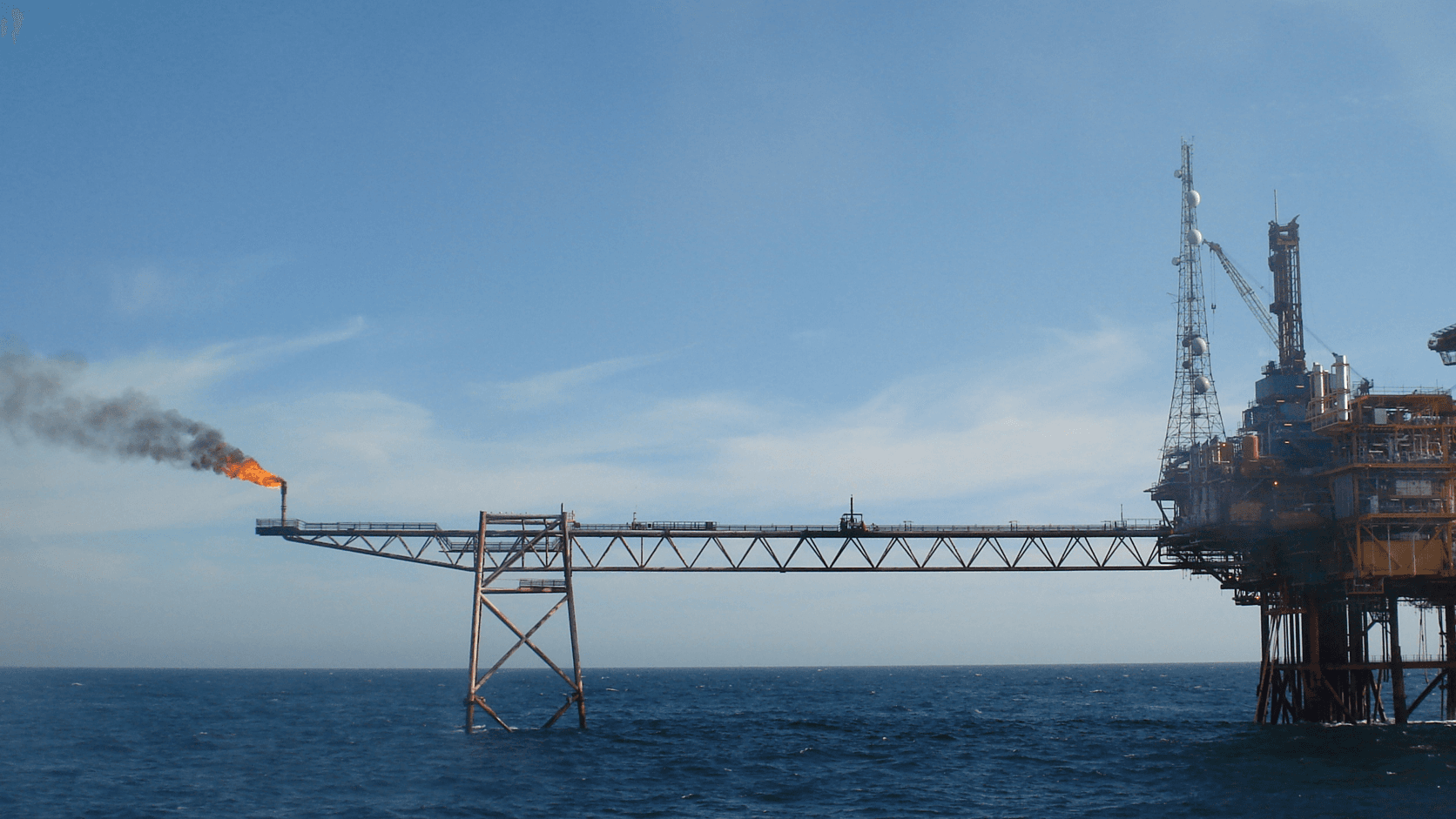
Summary
- Confirmed event: At about 22:00 on 6 July 1988, an explosion occurred in Piper Alpha's gas-compression area. Fires fed by oil and then by large connected gas inventories overwhelmed the platform. Of 226 people on board, 61 survived; 165 on Piper Alpha and two rescuers from a standby vessel died.
- Inquiry finding: Lord Cullen concluded on the balance of probabilities that condensate escaped from a blind-flange assembly where pressure safety valve PSV 504 had been removed from condensate injection pump A. The night shift attempted to restart the pump without knowing that the valve was absent because the permit and handover system did not transmit the plant's actual condition.
- Accountability boundary: The trigger involved a temporary mechanical closure, but the root cause was broader: an operator-controlled system tolerated weak permit display, no reliable cross-referencing, deficient shift handover, inadequate training and audit, vulnerable fire protection, hazardous inter-platform dependencies and uncertain emergency command.
- Legal posture: Cullen conducted a statutory public inquiry and expressly used the civil balance-of-probabilities standard for a reconstruction built largely from inference. The inquiry was not a criminal trial. Crown counsel later decided that the evidence did not support criminal proceedings under the higher criminal standard.
- Uncertainty: The precise leak evolution, ignition source and every individual's knowledge cannot be reconstructed with certainty. Much physical evidence was destroyed, important personnel died, and some alternatives could not be eliminated absolutely. Those limits narrow responsible claims; they do not erase the documented control failures.
- Repair test: The post-Piper regime replaced a fragmented, heavily prescriptive model with operator safety cases, independent regulatory assessment, goal-setting duties, major-accident prevention, emergency-response requirements and workforce participation. Current inspection and hydrocarbon-release data show substantial institutional repair, but also show that control of work and maintenance remain recurring offshore weaknesses.
The accountability issue begins with plant state, not paperwork
A permit-to-work system is often described as an administrative control. On a live hydrocarbon installation, that description is dangerously incomplete. A permit is one component of the operating system that says what equipment is unavailable, what has been opened or isolated, what work remains incomplete, who controls the boundary, what other work conflicts with it and what must happen before the plant can be returned to service. If that state is not authoritative across the control room, the worksite and the next shift, a formally signed permit can coexist with a physically unsafe plant.
The official Cullen Inquiry Volume One provides the primary factual and causal record. Its central permit finding was not an abstract observation made after the event. Pump A was known to be under maintenance. A different, safety-critical fact was not known to the night-shift production team: its pressure safety valve had been removed and the open relief-line connection had been closed only with a blind flange pending completion. The permits for the pump work and the valve work were separate. They were not reliably cross-referenced or displayed together where the production decision was made.
That distinction explains why “there was a permit” is not a defence. The control objective was to prevent restart while any related component made restart unsafe. The system instead made knowledge dependent on where a paper copy happened to be, what the outgoing shift remembered, and whether an incoming supervisor knew to search for another permit. Cullen found that suspended permits could be held outside the control room, performing authorities did not always leave their copies at the job, and related jobs were not systematically linked.
A night-shift supervisor looking at the pump permit could therefore see apparent permission to proceed while missing the separate status of the pressure-relief path.
Modern regulator guidance retains that lesson. The UK Health and Safety Executive's permit-to-work principles say a permit does not itself make a job safe; it is a formal communication between plant management, supervisors, operators and those doing the work. The guidance requires relevant information to be communicated when work crosses a shift, related permits to be cross-referenced, permits to be displayed, handback to be controlled and users to be trained. HSE's detailed HSG250 permit-to-work guidance uses Piper Alpha to show why reliance on memory, fragmented display and informal suspension are incompatible with high-hazard work.
These current sources are not retroactive legal standards for 1988. They are evidence of the institutional lesson drawn from the event. The historical accountability assessment must rest on what the inquiry found about Piper Alpha's actual arrangements and the duties and authority then in place. The present guidance helps define the control objective that the failed arrangements were supposed to achieve: one trustworthy plant state, handed from person to person without losing safety-critical conditions.
Operational control was distributed, but it was not ownerless
Accountability becomes distorted when every entity is placed in one undifferentiated chain. Different actors controlled different barriers.
Occidental Petroleum (Caledonia) Ltd., as operator, controlled the platform's management system, operating procedures, permit design, training expectations, contractor integration, maintenance standards, audit, fire-protection policy and emergency organization. Offshore management controlled production decisions, permit authorization, shift arrangements, local emergency command and the immediate condition of safety systems. Maintenance teams controlled the faithful description, suspension and physical security of unfinished work within the system given to them.
Production personnel controlled the decision to return equipment to service, but their decision quality depended on the information architecture and supervision the operator supplied.
The operators of connected installations controlled production and shutdown on their own platforms. Their decisions affected Piper because pipelines and risers contained large hydrocarbon inventories and because continued production could sustain or aggravate the fire. They did not control the initial release on Piper. Piper's offshore installation manager did not directly control their installations. The systems were physically interdependent while authority remained organizationally separated, so emergency arrangements needed explicit, rehearsed rules for a major event on a neighbouring platform.
The Department of Energy controlled the public inspection and regulatory layer then in force. It did not operate Piper's pumps, issue its permits or command its evacuation. Cullen nevertheless found that official inspections had not exposed obvious weaknesses and that the regulator had concentrated too little on whether the operator's management controls worked in practice. This is an oversight accountability issue, distinct from operational causation.
Search-and-rescue services, standby vessels and individual workers controlled still narrower parts of the response. Their bravery or initiative could not restore destroyed power, make smoke-filled routes passable or reconstruct a command system after the platform was already engulfed. Accountability should not be displaced downward merely because the final physical act was performed by a technician or production operator. A high-hazard system is designed precisely because no one person can hold every dependency in memory.
The government's formal statement on the report said the inquiry placed primary responsibility on the operator and identified communication and management-control failures beneath the immediate cause. It also accepted that regulatory inspection had not sufficiently tested management systems. That November 1990 parliamentary statement is an official account of the government's response, not a substitute for the inquiry's detailed evidence. Together, the two records support a layered allocation: direct operational control rested with the operator and its offshore command; connected operators controlled escalation inputs from their installations; government controlled the quality and structure of oversight.
Before 6 July: a production platform had become an interdependent hub
Piper Alpha began as an oil-production platform. Later modifications brought gas conservation and compression functions onto an installation whose layout and fire strategy had not been conceived for the final combination of hazards. Oil and gas processing occupied modules separated by fire walls that did not provide the same protection against explosion. High-pressure gas pipelines linked Piper to other North Sea installations and shoreward systems. Risers brought the stored energy of long pipelines into the platform's structure.
That history matters because an emergency shutdown does not make all hydrocarbon inventory disappear. Closing valves may stop new production, yet gas already contained in a long, high-pressure pipeline remains available to a rupture. If a riser fails on the inventory side of an isolation valve, the fire can be fed by the line even after local shutdown. Depressurization capacity, valve location, passive protection and the time required for connected installations to stop production become survival variables.
The inquiry found that Piper's major-hazard assessment and fire planning had not kept pace with this developed configuration. A large hydrocarbon event could disable the controls needed to fight it. Structural steel and critical risers were exposed to escalating heat. Firewater arrangements were vulnerable, and diesel fire pumps that could have started automatically were routinely placed in manual mode during diving operations because of concern about drawing divers into seawater intakes. Manual start then required a person to reach equipment that the explosion and fire could make inaccessible.
The known problem was not only hardware. Deluge nozzles had suffered blockage, and their effectiveness was a long-running management issue. The platform's emergency exercises did not adequately rehearse the loss of the offshore installation manager, control room, power and conventional evacuation routes. Neighbouring platforms had not adequately practised the pipeline and production decisions required when another installation was catastrophically impaired.
This is the first root-cause layer. The accident's initiating release arose from unfinished maintenance, but the disaster's scale depended on a platform and network in which one explosion could remove command, active protection and communications while large external inventories remained connected. The design did not merely fail after the trigger; it determined how few independent barriers remained.
Modern law divides these obligations more explicitly. The Offshore Installations (Prevention of Fire and Explosion, and Emergency Response) Regulations 1995 address fire and explosion prevention, detection, control, mitigation and emergency response. The Offshore Installations and Wells (Design and Construction, etc.) Regulations 1996 address integrity and safety-critical elements. The Offshore Installations and Pipeline Works (Management and Administration) Regulations 1995 address management and administration. These later instruments do not prove a breach in 1988; they show how the repaired regime converted interdependent barriers into explicit continuing duties.
The day-shift maintenance created two states that the night shift had to join
On 6 July, condensate injection pump A was unavailable for maintenance while pump B carried the duty. Separate work was undertaken on a pressure safety valve associated with pump A. The valve, identified in the inquiry as PSV 504, was removed for overhaul. A blind flange was fitted at the open connection. The valve work was not finished when the day shift ended.
The decisive control problem was not that the plant could never tolerate a removed valve. It was that the temporary condition had to remain positively known and physically secure until the valve was replaced and the equipment formally handed back. The open connection was at elevation and not readily visible from the pump level. The pump and valve activities were represented by separate permits. A production supervisor assessing whether pump A could run needed to know both states.
Cullen found serious deviations from Occidental's own permit procedure. Permits did not consistently identify precise equipment locations. Performing authorities could receive permits without a proper face-to-face issue. Copies were not reliably posted at worksites. Suspended permits were kept in the Safety Office rather than made immediately visible in the control room. Related permits were not cross-referenced. Mechanical isolation and tagging practices were inconsistent. Outstanding permits had accumulated, some for long periods. The practical system therefore depended on personal familiarity and memory.
Shift change magnified those defects. The permit for the incomplete valve work was suspended. The inquiry found no effective handover that brought the absent pressure safety valve to the incoming production team's attention. Relevant maintenance information was not entered in a way that reliably reached the night shift. The incoming maintenance supervision did not perform the site and permit checks that could have preserved the boundary. The operational shift did not conduct a structured review of all current and suspended work before taking control of the plant.
This was not a single unforeseeable lapse in an otherwise verified system. Cullen examined broader permit practice and found recurring departures from written procedure, inadequate formal training and weak monitoring. Workers had previously raised dissatisfaction with shift information. A fatal accident on Piper in September 1987 had already exposed concerns involving permit and handover arrangements, yet the system was not fundamentally corrected before July 1988. That earlier event is evidence of notice and an ineffective learning process. It is not a criminal finding about the July disaster and should not be treated as one.
HSE's dedicated shift-handover guidance now cites Piper Alpha as a case in which handover failure contributed to a major accident. It defines effective handover as preparation by the outgoing personnel, two-way exchange between outgoing and incoming personnel, and cross-checking by the incoming personnel. It favours face-to-face communication supported by written information, with sufficient time and explicit management commitment. HSE's safety-critical communications guidance likewise treats communication as a designed risk control, not an assumed social skill.
The supported inference is strong but bounded. Had the absent valve been accurately recorded, displayed, cross-referenced and discussed, a competent production team would not ordinarily have restarted the pump. Cullen reached substantially that conclusion. It does not follow that every person involved knew of the hazard or consciously ignored it. The evidence instead shows that the system failed to make knowledge survive the transition between maintenance, production and shifts.
21:45 to 22:00: the trigger emerged from a recovery decision
At about 21:45, pump B tripped. Condensate injection was important to continued production, so the night shift considered bringing pump A back into service. The control room knew pump A had been maintained and was electrically isolated. Personnel located the permit associated with the pump work, removed or cleared relevant isolation tags and proceeded toward restart. They did not locate or know about the separate suspended permit showing that PSV 504 was absent.
This was the point at which the latent information failure became an operating decision. “Restart” was not simply the final action of one worker. It was a control transaction that should have required a complete status check: pump work complete; all associated pressure protection restored; process and electrical isolations reconciled; every related permit closed or expressly transferred; worksite inspected; equipment released by the parties who controlled the maintenance boundary. The system provided no reliable consolidated gate.
When pump A was admitted to service, Cullen concluded on the balance of probabilities that condensate leaked from the blind-flange assembly at the removed PSV 504 connection. The inquiry considered the configuration, witness observations, process behaviour and alternative explanations. It found a leak from a non-tight blind flange the probable source. The amount of condensate forming the flammable cloud was estimated, not directly measured. The precise way in which the flange had been left or had changed under pressure could not be established with certainty.
Gas alarms and witness observations indicated a rapidly developing release in the gas-compression module. Operators had only minutes, perhaps less, between recognition of abnormal conditions and the initial explosion at about 22:00. The exact ignition source was not identified. Any claim that a particular switch, hot surface or individual act ignited the cloud would exceed the evidence.
This chronology separates four causal terms that are often collapsed:
- Trigger: admission of condensate to pump A while the PSV 504 connection was temporarily closed by a blind flange that the inquiry found was not leak-tight.
- Detection failure: no authoritative equipment-state control stopped the restart before pressure was applied; gas detection then provided too little usable time to prevent ignition.
- Root cause: the operator's permit, handover, training, supervision and audit arrangements did not preserve or verify safety-critical plant status across organizational and shift boundaries.
- Contributing conditions: the platform's developed layout, vulnerable control and firewater systems, external pipeline inventories, weak emergency preparation and delayed decisions on connected installations made one release capable of becoming a mass-fatality disaster.
There is an important distinction between a plausible alternate scenario and a disputed fact. Cullen considered other release explanations, including mechanisms involving process blockage, but regarded them as less likely. The finding was expressly probabilistic because the physical scene was devastated and direct witnesses to the final control-room decisions did not survive. The official HSE inquiry index preserves both report volumes so readers can examine the evidence and recommendations rather than turning a qualified reconstruction into certainty.
Current HSE safe-isolation guidance reinforces the engineering principle at stake: isolation and reinstatement require an organized lifecycle, defined responsibilities, verification and control of changes. Again, this later guidance should not be projected backward as the legal test. It demonstrates why the Piper failure cannot sensibly be reduced to the torque on one set of bolts. A temporary closure became catastrophic only because the operating system allowed the connected equipment to be declared ready without reconciling all work and isolations.
22:00 to 23:20: escalation turned an initiating accident into a catastrophe
The first explosion occurred in the southeast area of Module C at about 22:00. It damaged process equipment, walls, power and control systems. A crude-oil fire developed in Module B. Emergency shutdown actions occurred, but shutdown could not undo the physical damage or remove the inventories already in pipelines and process equipment.
The explosion was therefore the start of the fatal sequence, not its full explanation. About twenty minutes later, the Tartan gas riser ruptured and produced an intense jet fire. Further pipeline or riser failures followed as heat attacked the installation. Cullen reconstructed major escalation at roughly 22:50 and again around 23:20 involving other connected gas systems. Each failure increased heat, smoke and structural damage while reducing the possibility of organized rescue.
The exact timing matters for accountability. An early shutdown on a connected platform could stop additional production entering a line, but it could not instantly discharge the line's existing inventory. Cullen found that the available gas-pipeline depressurization arrangements were too limited for a late shutdown to materially extinguish the fire once a full-bore riser rupture occurred. It would therefore be wrong to claim that one remote button at 22:00 would certainly have saved Piper.
It is also wrong to treat connected-platform decisions as irrelevant. On Claymore, the offshore installation manager knew that Piper was in a major emergency but initially continued production while checking pressures and awaiting clearer authority or instruction. Personnel urged shutdown. Cullen found that production should have been stopped earlier, at the latest after the scale of the Tartan rupture was evident. Tartan personnel similarly did not initially appreciate how their continuing production could affect Piper's fire.
Earlier shutdown could have reduced continuing feed or delayed escalation, although the inquiry did not find that it would certainly have prevented the riser failures or the eventual loss.
This is a classic interdependence failure. Each installation optimized decisions within its own control room while the physical network transmitted consequences across organizational boundaries. The emergency was outside the rehearsed mental model. Pipeline check valves, pressure readings and assumptions about another platform's systems substituted for a shared emergency rule: when a connected installation has lost command and is sustaining a major fire, stop feeding the network unless a demonstrably safer action exists.
Modern HSE material on pipeline riser emergency shutdown valves expressly identifies Piper Alpha as the event that highlighted the critical function of riser ESD valves. Valve provision, location, inspection and maintenance are now treated as a distinct barrier. But an ESD valve is not a complete answer. The accountability test includes upstream inventory, downstream inventory, rupture location, passive fire protection, depressurization capacity, communications and the authority to stop production before equipment is heat-damaged.
The initial blast also demonstrated destructive coupling inside Piper. Main electrical power and much instrumentation were lost. Control-room capacity deteriorated. Firewater did not establish a protective response. Even where local emergency shutdown valves moved, fires could be fed on the wrong side of them. Walls intended to resist fire did not prevent explosion pressure from propagating damage. The accommodation block, treated as a place of refuge, was progressively threatened by smoke and heat without the protection, command or escape assurance expected of a survivable refuge.
This escalation sequence changes the accountability allocation. The maintenance and permit failures explain why the release occurred. They do not alone explain 167 deaths. The death toll arose from a chain in which the release ignited, the explosion disabled protection and command, oil fire exposed gas risers, pipeline inventories fed extreme fires, connected production decisions did not arrest the threat early, and people in accommodation received no timely organized route to safety. Accountability must follow each controlled barrier rather than being concentrated at the first failed permit.
Emergency command and evacuation failed when they were most needed
At the initial explosion, about 200 people were off duty or otherwise in the accommodation areas. Many assembled in the galley or remained within the accommodation, expecting instruction or helicopter evacuation. There was no effective general announcement or organized abandon-platform order. Smoke entered and escape conditions deteriorated. The offshore installation manager and much of the command structure were in or near the control room, where the initial event caused catastrophic disruption.
Cullen found that the platform's system of command was almost entirely inoperative. There was no systematic attempt to lead those in accommodation to alternative escape routes. People waited because training and emergency arrangements had taught them to expect command, muster and helicopter evacuation, yet the emergency had removed the people and systems through which that command normally operated. Some individuals and small groups eventually chose their own routes, using ladders, ropes, hoses, walkways and jumps to the sea.
The survivor distribution is revealing. Sixty-one people survived: 39 of the 62 who had been on shift, but only 22 of the much larger off-duty population. On-shift personnel were dispersed around the platform and some had immediate access to open deck or escape choices. Those concentrated in accommodation were exposed to smoke and delay. The inquiry concluded that the failure to provide instructions to leave the accommodation contributed materially to the death toll.
This is a response failure, but it should not be personalized without evidence. An offshore installation manager carried command authority, yet a resilient emergency system cannot assume that one named leader, one control room and one communications route will survive the initiating event. It needs deputy command, distributed alarms, protected communications, survivable muster areas, alternative routes, personal escape equipment and rehearsed authority to act when ordinary command is gone.
The fatality evidence also needs precision. The inquiry recorded 165 deaths associated with Piper Alpha and two deaths among a standby-vessel rescue crew, making 167. It recovered 135 bodies from Piper; 30 people from the platform were not recovered. For cases where a cause could be determined, inhalation of smoke and combustion products predominated. Some died after attempting escape, including by drowning or injury. It is not responsible to assign an exact cause to the unrecovered or to turn aggregate pathology into a claim about any identifiable victim.
Post-Piper regulation formalized the survival objective. HSE research on temporary refuge impairment traces the requirement that offshore installations provide a place where people can remain protected long enough for evacuation or escape. Current fire, explosion and emergency-response strategy treats prevention, detection, control, mitigation, evacuation, escape and rescue as linked duties. The sequence is crucial: a temporary refuge is not safe because it is labelled as such; its performance must be demonstrated against foreseeable smoke, heat, explosion and loss of services.
A causal ledger prevents hindsight from becoming accusation
Forensic accountability is strongest when categories are explicit.
Confirmed facts. Pump A was under maintenance; PSV 504 was removed and a blind flange installed at its connection; the separate valve work remained incomplete at shift change; pump B tripped; the night shift attempted to restart pump A without awareness of the missing valve; an explosion occurred at about 22:00 in Module C; oil and gas fires escalated; command, power, fire protection and evacuation were severely impaired; 167 people died and 61 survived. These points are supported by records, physical reconstruction and convergent witness evidence accepted by the inquiry.
Inquiry finding based on supported inference. Condensate most probably escaped through the blind-flange assembly at the PSV 504 location after pump A was admitted to service. Cullen applied the balance of probabilities, not scientific certainty or the criminal standard. The location and mechanism were inferred from process evidence, condition evidence and witness accounts because the decisive equipment and personnel evidence was largely unavailable.
Unknowns. The record does not establish the exact ignition source; the exact tightness history of every flange fastener; every conversation in the final minutes; the subjective knowledge of all individuals; or a complete counterfactual showing precisely how many people would have survived under each earlier shutdown or evacuation decision. Those are material limits, not invitations to speculation.
Disputed or alternative claims. Alternative leak mechanisms were examined. Cullen did not declare every alternative physically impossible; he found the PSV 504 blind-flange route more probable. Claims that remote depressurization alone could quickly remove the gas fire, or that one connected-platform shutdown certainly would have prevented the disaster, conflict with the inquiry's inventory and timing analysis. Claims that the permit failure was an isolated clerical mistake conflict with evidence of recurrent permit, training, handover and audit weaknesses.
Trigger. The trigger was the introduction of condensate pressure to a pump assembly whose relief connection was not safely restored or reliably closed.
Root cause. The root cause was a management-control failure: the operator did not ensure that permits, isolations, equipment status and shift handover formed a verified system that prevented unsafe recommissioning. That system failure included inadequate training, weak compliance monitoring, poor cross-referencing, fragmented permit location and limited public evidence response to prior warning signs.
Contributing conditions. Contributing conditions included the platform's modified process layout, inadequate resistance to explosion escalation, vulnerable firewater and deluge arrangements, exposure of risers and structures, immense connected pipeline inventories, limited public evidence inter-platform emergency planning, weak command resilience and inadequate evacuation preparation.
Detection failure. The first and most important detection failure occurred before the leak: the operating organization did not detect that the proposed restart conflicted with suspended valve work. Process gas detection then indicated a release only shortly before ignition, when prevention options were limited.
Response failure. Local command and communications collapsed; firewater was unavailable or ineffective; connected platforms did not all stop production at the earliest justified point; no timely, systematic direction moved people from threatened accommodation to escape; and the rescue model was overwhelmed by fire and smoke conditions.
Recovery and repair evidence. The inquiry produced 106 recommendations. Government transferred offshore safety regulation to HSE, created a safety-case regime, consolidated major-hazard duties, strengthened emergency and escape requirements, introduced verification of safety-critical elements and formalized workforce involvement. Those are structural repairs. Their durability must still be tested against inspection findings, hydrocarbon-release rates, maintenance backlogs, permit performance and enforcement outcomes.
This ledger protects both fairness and prevention. It avoids unsupported claims of intent, recklessness, fraud or criminality. It also blocks the opposite error: using uncertainty about the final ignition or a particular person's memory to dismiss well-supported organizational failures that existed before the release.
Operational accountability and legal findings are different records
Lord Cullen's inquiry was established under statutory authority to determine the circumstances and causes and to make recommendations. It gathered extensive evidence, reconstructed the plant and heard from witnesses and experts. The first report volume contains the factual and causal analysis; Volume Two addresses the wider safety regime and recommendations.
The inquiry was not empowered to convict. Cullen expressly explained that, where direct evidence was unavailable, he decided factual questions on the ordinary civil balance of probabilities. That standard asks what is more likely than not. A criminal prosecution would require admissible evidence proving the charged offence beyond reasonable doubt, with all elements and the responsibility of the accused established under the law applicable at the time.
The distinction had a concrete result. In December 1991, the Lord Advocate told Parliament that Crown counsel had reviewed the evidence and concluded that criminal proceedings should not be taken. The official written answer on the prosecutorial decision emphasized the evidential destruction, deaths of key personnel, inferential nature of the reconstruction and difference between the inquiry and criminal standards. No criminal trial therefore adjudicated guilt for the disaster.
That disposition must be preserved accurately. It does not convert the inquiry's findings into allegations of crime, and it does not mean the permit, management, design or oversight failures were imaginary. It means criminal liability was not established in court because prosecutors did not commence proceedings. Organizational accountability can be demonstrated through control, knowledge systems, audit failures and causal contribution even when individual criminal responsibility cannot be proved.
Likewise, parliamentary debate is evidence of government position and public-policy response, not a judicial verdict. The March 1991 Commons debate records concern about the operator, regulators, survivors and reform, but statements by individual members must not be promoted to factual findings. The initial 7 July 1988 ministerial statement is valuable for contemporaneous response, while necessarily preceding the investigation.
Compensation, insurance and civil arrangements also should not be collapsed into causal proof. A payment may settle claims without adjudicating every disputed fact. Conversely, the absence of a criminal charge does not allocate the economic or managerial burden of repair. This analysis therefore confines legal statements to the inquiry's mandate, the government's formal response, the prosecutorial decision and enacted reforms.
The Cullen repair changed who had to prove safety
Before Piper, offshore regulation was divided among agencies and leaned heavily on detailed prescriptions and installation-by-installation inspection. Cullen concluded that this structure could produce formal compliance without adequate examination of how an operator identified and controlled major hazards. His recommendations moved the regime toward one safety regulator and a goal-setting model in which the operator had to present a coherent case for safe operation.
The Offshore Safety Act 1992 supported the institutional transfer and enforcement structure. The first offshore safety-case regulations followed in 1992. The official post-implementation review of the 2005 Safety Case Regulations describes those original regulations as implementing Cullen's central recommendation and changing the approach from prescriptive compliance to goal-setting control of major-accident hazards.
A safety case is not a certificate that an installation is safe forever. It is the operator's structured demonstration that major hazards have been identified, risks reduced as low as reasonably practicable, safety-critical elements defined, management arrangements established and emergency measures integrated. HSE accepts a case for regulatory purposes after assessment, but acceptance does not transfer the operator's duty to the regulator or guarantee performance. Changes, deterioration, new knowledge and actual operating experience must feed back into the case.
The current Offshore Installations (Offshore Safety Directive) (Safety Case etc.) Regulations 2015 apply the modern external-waters regime, while the 2005 regulations remain relevant in internal waters. HSE's offshore health and safety law guide summarizes the present duties: operators prepare safety cases, prevent uncontrolled releases, maintain structures and wells, protect the temporary refuge and prepare emergency plans. HSE's operations notice on safety cases describes periodic review and the regulator's power to require review when circumstances demand it.
Current safety-case assessment principles test the quality of the operator's major-hazard demonstration. They cover management systems, risk assessment, control of major accidents, integrity, evacuation, escape and rescue. The principles preserve the core Cullen allocation: an operator cannot outsource understanding of its own hazards to an inspector, while the regulator must independently challenge the demonstration rather than accept polished documentation at face value.
Verification adds another layer. Safety-critical elements need performance standards and independent verification so that an operator cannot rely solely on its own assurance chain. Workforce participation matters because permit work, alarm response, isolation difficulties and maintenance backlog are often visible first to those doing the work. HSE's offshore worker-involvement guidance traces elected safety representatives and committees to the post-Cullen effort to make worker knowledge part of risk control.
The repaired allocation is therefore three-sided. Operators own hazards and must demonstrate control. Independent verifiers challenge the integrity of safety-critical elements. The regulator assesses, inspects and enforces, including the management system behind visible hardware. Workers need protected channels and formal standing to test whether the written case matches the installation. Removing any side recreates part of the pre-Piper blind spot.
Evidence of repair is real, but it is not a declaration of completion
The strongest evidence that lessons were institutionalized is not commemorative language. It is durable machinery: legislation, accepted safety cases, assessment criteria, competent-authority arrangements, inspection programs, verification findings, release reporting, enforcement and periodic revision.
HSE and the Offshore Petroleum Regulator for Environment and Decommissioning now operate as the competent authority for offshore major-accident hazards. The Offshore Major Accident Regulator authority statement explains that combined structure. HSE's incident-reporting guidance links reporting to major-hazard oversight and records how hydrocarbon-release data implement a Cullen recommendation. These mechanisms create comparable evidence that was weak or fragmented before 1988.
There is measurable progress. HSE's Offshore Statistics and Regulatory Activity Report 2024, published in 2025, recorded no offshore worker fatalities in the reporting year. It also recorded 125 inspections covering 102 installations, 20 investigations, 78 safety-case assessments and formal enforcement notices. Those data demonstrate an active regulatory system and a radically different survival record from Piper.
The same report prevents complacency. It recorded 92 hydrocarbon releases and hundreds of non-compliance findings. Only about 70 percent of inspection topics received broad or full compliance ratings; the remainder included poor, very poor or unacceptable performance. Maintenance and control of work were among the most frequent problem areas. Those are not proof that another Piper event is imminent. They are evidence that the exact organizational disciplines exposed in 1988 remain live control problems.
Earlier HSE inspection work reached a similar conclusion. The KP3 asset-integrity report examined management of safety-critical systems across the ageing offshore fleet and found substantial variation between written arrangements and delivery. The subsequent KP3 review tracked indicators including hydrocarbon releases, verification non-conformities and safety-critical maintenance backlog. These programs are repair evidence because they test operating reality, not because every result is favourable.
Enforcement supplies another test. A regulator willing to prohibit work, require improvement or prosecute can make the safety case consequential. A recent example is HSE's official record of a 2025 Shell UK prosecution following a major hydrocarbon release. The event was unrelated to Piper and must not be used as evidence about Occidental in 1988. Its relevance is institutional: major releases continue, and modern emergency and fire-protection duties can lead to criminal enforcement where evidence proves a specific breach.
The most honest repair assessment is therefore mixed. The UK created a sophisticated major-hazard regime directly shaped by Cullen. It has persistent data, specialist inspection and enforceable operator duties. Yet recurring control-of-work findings, maintenance weaknesses and hydrocarbon releases show that a legal architecture does not automatically create a reliable plant state. The safety case succeeds only when the lived installation reflects it at the moment a permit is suspended, a shift changes or production pressure demands a restart.
What a durable permit and handover repair must prove
Piper Alpha's lesson can be translated into evidence tests that apply beyond paper permits and beyond offshore oil and gas.
One equipment identity. Every permit, isolation, alarm, maintenance order and control-room display must refer unambiguously to the same equipment and boundary. A pump and its relief path cannot be managed as unrelated entities when either one makes the other unsafe to operate.
One visible operating state. Active, suspended and incomplete work must be visible where restart authority is exercised. The authoritative status cannot depend on searching another office, finding a person, recognizing handwriting or remembering a conversation. Digital systems can improve access, but only if field conditions, isolations and handback are verified rather than converted into easy clicks.
Conflict logic. Related permits need explicit cross-reference and blocking conditions. If a pressure safety valve is removed, the associated pump should be administratively and physically prevented from returning to service until an authorized test confirms restoration. The system should reject incompatible actions, not merely warn someone who is already under production pressure.
Two-way shift transfer. The outgoing shift must prepare the status; outgoing and incoming personnel must discuss deviations, suspended work, overrides, alarms and degraded barriers; the incoming shift must cross-check records and critical sites. Time for this process is a planned production constraint. A signature without exchange and verification is evidence of completion only on paper.
Controlled handback. Maintenance completion, removal of tools and temporary closures, restoration of guards and relief devices, isolation removal and operational testing need separate confirmations by competent roles. No one should infer that closure of one permit closes every related job.
Independent sampling. Supervisors and auditors need to observe permits in use, compare control-room records with field conditions, sample old suspended work and test whether workers can explain current plant state. Cullen's criticism of superficial assurance remains relevant: absence of reported problems is not evidence that the process works.
Barrier status under production demand. Management should measure how often work is extended, permits accumulate, overrides remain, isolations deviate, critical maintenance is deferred and restart is attempted under an upset. Those leading indicators reveal pressure on the system before a release does.
Network emergency authority. Connected installations need predetermined thresholds for stopping production, isolating pipelines and sharing status when one node loses command. Exercises should assume failed communications and conflicting local incentives. The accountable person on each installation must know when authority to protect the network becomes a duty to act.
Command succession and self-escape. Emergency arrangements must work when the control room and primary leaders are unavailable. Protected alarms, deputy authority, trained area leadership, survivable refuge, multiple routes and individual escape competence are not redundant extras. They are the response system for the very accident that removes ordinary command.
Regulatory closure evidence. An inspection finding is not repaired when a response letter is submitted. Closure should show physical correction, revised operating control, competence assessment, field verification and sustained performance. Recurrence across installations should trigger sector-wide intervention, not isolated paperwork.
These controls also expose a modern automation risk. A permit application can create a clean audit trail while concealing an incorrect asset relationship, an unverified field state or a handover performed by selecting “accept.” Enterprise software is accountable only to the extent that it preserves safety semantics. The useful automation question is not whether the system is paperless; it is whether an unsafe restart becomes technically, procedurally and visibly difficult.
Counterfactuals identify leverage without claiming certainty
Counterfactual analysis is useful when it stays tied to evidence.
If the PSV 504 permit had been cross-referenced to the pump permit and displayed in the control room, the restart probably would not have occurred. If the outgoing and incoming maintenance and production roles had performed a structured handover and site check, the absent valve probably would have been discovered. If the blind flange had been installed and verified as a pressure-rated isolation, the exact release route Cullen found would not have existed. These are strong prevention counterfactuals because each directly interrupts the initiating mechanism.
If gas detection or operator response had isolated the release before ignition, the explosion might have been avoided, but the available interval was very short. If firewater had started automatically and deluge had been fully effective, it might have delayed escalation, but the initial explosion may already have damaged relevant systems. If connected production had stopped immediately, the fire's later feed might have been reduced or delayed; existing pipeline inventories would still have remained. These are plausible mitigation counterfactuals with greater uncertainty.
If the temporary refuge had remained tenable, command succession worked and alternative escape had been directed promptly, more people likely would have escaped. It is not possible to calculate a defensible exact number. Conditions changed rapidly, routes differed and individual locations are incompletely known. The proper conclusion is that evacuation failure increased exposure and the death toll, not that one instruction guarantees a specific survival count.
Counterfactuals also discipline accountability. The operator had direct leverage over permit design, training, audit, firewater policy, emergency organization and the platform safety system. Connected operators had leverage over feed and shutdown. The regulator had leverage over inspection depth and the legal model. Individual workers had much less leverage over system design and external inventories. Responsibility should scale with both causal contribution and practical power to install the missing barrier before the event.
What remains uncertain, and what evidence could change the assessment
Confidence is high in the broad chronology, the failed transfer of PSV status, the initial explosion area, the escalation through oil and pipeline-fed gas fires, the collapse of command and the systemic permit weaknesses. Those conclusions rest on the formal inquiry's extensive record and are consistent with the government's accepted response.
Confidence is lower in the exact leak geometry over time, ignition source, precise content of unrecorded conversations, and quantified effect of each possible earlier shutdown or escape instruction. A complete original permit set, contemporaneous control-room and maintenance logs, preserved alarm and process data, a recoverable blind-flange assembly, or new authenticated recordings could change details of the initiating reconstruction. Much of that evidence was destroyed or never created, so uncertainty is likely permanent.
Additional archived corporate evidence could refine organizational accountability: board and senior-management papers on major hazards; complete internal audit findings and closure records; training matrices; contractor-competence assessments; correspondence about blocked deluge, fire-pump mode and permit backlog; and evidence of how the 1987 fatal accident was escalated and learned from. Such material could show stronger notice, better corrective action or different authority than the public record establishes. It should be assessed before making any new claim about an individual or a legal duty.
Current installation-level evidence could change the judgment about durability of repair. Useful evidence would include anonymized permit-conflict rates, failed reinstatement checks, shift-handover audit results, overdue safety-critical maintenance, verification non-conformity closure times, impairment of temporary refuges, riser-valve test performance, emergency-exercise outcomes and repeated findings by operator. Aggregate national data reveal patterns but cannot prove the condition of a particular installation.
No later evidence should erase procedural posture. A newly located document might support civil, regulatory or historical conclusions; it would not retrospectively create a criminal conviction. Any allegation of criminal conduct, intent or personal liability would still require identification of the applicable law, admissible proof, a responsible defendant and the relevant standard of proof.
Accountability conclusion
Piper Alpha made permit-to-work handover an accountability test because the disaster exposed the difference between possessing safety procedures and controlling a hazardous plant. The inquiry's most probable initiating sequence began when pump A was restarted without knowledge that PSV 504 was absent and its connection was not leak-tight. That was a preventable plant-state failure produced by fragmented permits, inadequate handover, weak training and limited public evidence audit.
The catastrophe then grew through design vulnerability, unavailable fire protection, pipeline inventories, delayed network decisions and a command-and-escape system that did not survive the first explosion.
The evidence supports primary organizational accountability for the operator-controlled system, contributing operational accountability where connected installations controlled continued production, and oversight accountability for a regulatory approach that did not adequately test management performance. It does not support inventing criminal intent or treating the inquiry as a conviction. Cullen's balance-of-probabilities findings and the later decision not to prosecute must stand together.
The lasting repair was to require operators to demonstrate major-hazard control, regulators to challenge that demonstration, verifiers and workers to test it against physical reality, and emergency systems to remain functional after ordinary command is lost. The remaining limitation is equally clear: no safety case, permit database or inspection count proves safety by existence alone. Proof lies in whether the next incomplete job is visible to the next shift, whether an unsafe restart is blocked, whether connected operators act before escalation and whether people can escape when every expected layer has already failed.