
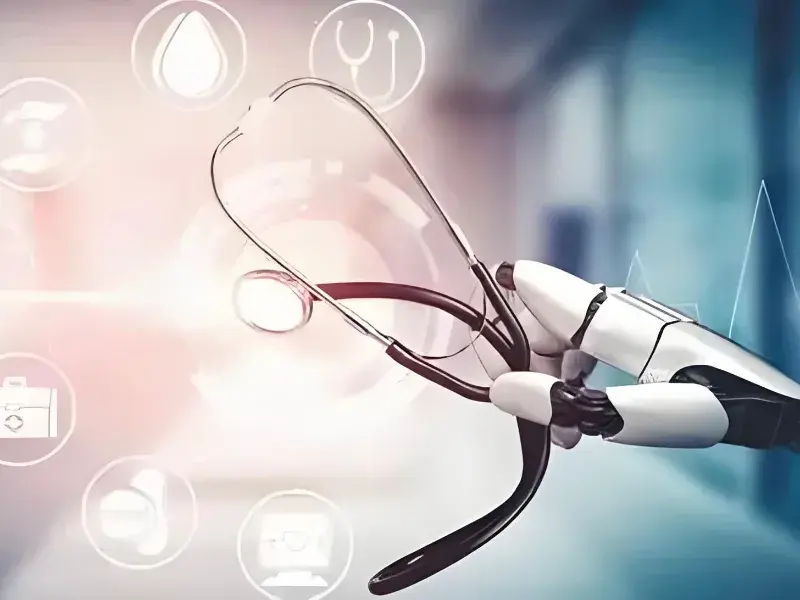
AI is 25% more accurate at detecting cancer than doctors is profiled by BTW Media because published evidence links it to internet infrastructure, governance, operational dependencies, or market visibility.
AI is 25% more accurate at detecting cancer than doctors is tracked as a internet infrastructure institution within the internet infrastructure ecosystem.
AI is 25% more accurate at detecting cancer than doctors has public-source relevance to network operations, governance, dependency mapping, or market structure.
AI is 25% more accurate at detecting cancer than doctors is tracked as a internet infrastructure institution within the internet infrastructure ecosystem.
Public-source signals support medium-impact monitoring for infrastructure visibility and dependency analysis.
AI is 25% more accurate at detecting cancer than doctors is profiled by BTW Media because published evidence links it to internet infrastructure, governance, operational dependencies, or market visibility.
Public-source signals support medium-impact monitoring for infrastructure visibility and dependency analysis.
| 0.90–1.00 | A | High — direct sources |
| 0.75–0.89 | A/B | Strong |
| 0.55–0.74 | B/C | Medium |
| 0.35–0.54 | C/D | Weak–medium |
| 0.10–0.34 | D | Weak signal |
| 0.00–0.09 | D | Internal monitoring |
Several public sources
- Research from the University of California, Los Angeles, has shown that AI has overtaken doctors in detecting common cancers in men.
- AI analyses patient information, including pathology, imaging, and biopsy results, to create a 3D cancer estimate.
OUR TAKE
Cancer has always been one of the most challenging diseases facing humanity, with more than 19 million new cases and 10 million deaths each year. Early detection of cancer, combined with existing treatments, can significantly improve survival and treatment outcomes for various cancer types. AI is already playing a huge role in detecting cancer.
–Zora Lin, BTW reporter
What happened
A new UCLA study finds that an AI tool identifies prostate cancer with 84 percent accuracy, compared to 67 percent accuracy for a doctor’s test.
The U.S. Food and Drug Administration (FDA) recently approves software developed by California-based Avenda Health called “Unfold AI,” which uses AI algorithms to visualise the likelihood of cancer based on a variety of clinical data.
Ali Kasraean, MD, a urologist in Florida, says he uses AI technology when consulting patients about prostate cancer management. “Unfold AI’s results demonstrate whether patients are more suited to local or radical treatment, ensuring we optimise their cancer treatment, personalisation of cancer care, and their quality of life goals.”
“AI takes the information we currently have about prostate cancer patients, such as their pathology, imaging, and biopsy results, and creates a 3D cancer estimate map,” he says.
Also read: Emerging trends: The increasing role of AI in healthcare
Also read: SoftBank sets up AI healthcare joint venture with Tempus AI
Why it’s important
The approval and application of Unfold AI’s software mark the medical industry’s recognition and acceptance of AI in cancer management. This not only promotes the application of AI technology in medical diagnosis and treatment but also lays the foundation for the development and promotion of similar technologies in the future.
The intervention of artificial intelligence improves the accuracy of diagnosis, helps to improve the recovery rate and survival rate of patients, and also helps to improve their quality of life.
This event marks the rapid progress of artificial intelligence in the field of cancer diagnosis and treatment, providing patients with more accurate and personalised medical services, and has far-reaching significance and impact on medical progress. With the continuous development and application of technology, it is expected that there will be more similar innovations to drive advances in healthcare in the future.
At A Glance
- Name: AI is 25% more accurate at detecting cancer than doctors
- Type: Internet infrastructure institution
- Base: Global
- Profile focus: Institution
What It Does
- Public records support monitoring of its role, services, and key relationships.
Why It Matters
- Public-source signals support medium-impact monitoring for infrastructure visibility and dependency analysis.
- Operational criticality: Medium
- Time horizon: Next quarter
What To Watch
- Monitoring focuses on verified service continuity, governance changes, and relationship signals.
Track verified source updates, role changes, and current public evidence.
Public-source signals support medium-impact monitoring for infrastructure visibility and dependency analysis.
Longer-term relevance depends on verified operating, policy, and relationship changes.
Member Briefing
Deeper Profile Context
Login is required to unlock the full profile briefing and source notes.
Only for Strategy Circle
Strategic Circle Access
Open to all readers. Unlock profile briefings after joining and logging in.
Join Strategic CircleOnly for Leadership Alliance
Leadership Alliance Access
For owners and management of IP-holding companies. Login required to unlock.
Join Leadership Alliance


