
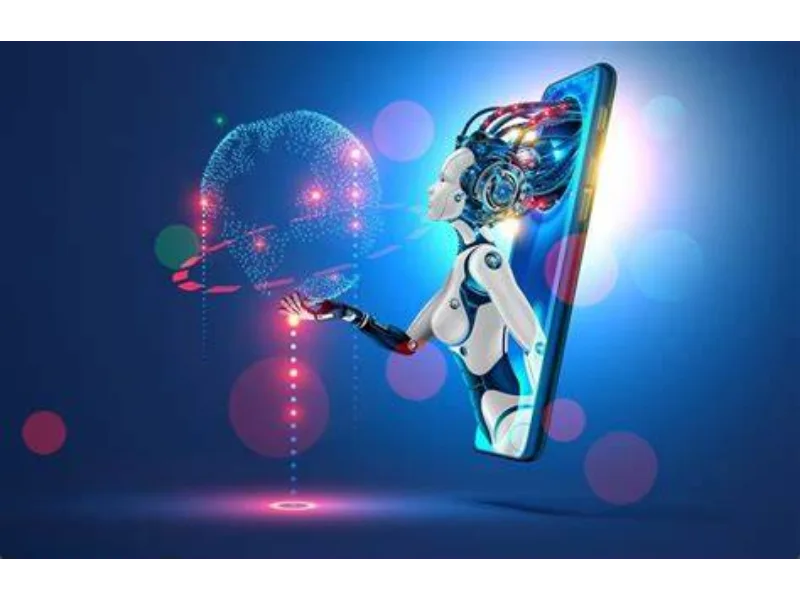
- T Phone can generate tailored interfaces in response to user queries and commands.
- T Phone has the ability to consolidate multiple tasks into a single consistent experience.
- By automating routine tasks and providing real-time assistance, AI-powered interfaces have the potential to free up time for more meaningful pursuits, enhancing overall quality of life.
At the Mobile World Congress, held in Barcelona, a groundbreaking collaboration between Deutsche Telekom and Brain.AI has unveiled the T Phone, a revolutionary concept that could potentially redefine how we interact with smartphones in the future. Incorporating generative and interactive AI technology, the T Phone aims to streamline tasks and eliminate the need for traditional apps on mobile devices.
Enhanced user experience through AI
With the T Phone, users can simply activate the AI assistant with a dedicated button and issue commands in natural language, allowing the device to dynamically create interfaces on the fly based on contextual understanding. This innovative approach enables seamless navigation through tasks without the hassle of switching between multiple applications.
Jerry Yue, CEO of Brain.AI, demonstrated the capabilities of the T Phone by effortlessly booking a flight from Barcelona to Los Angeles using voice commands. The device not only presented a list of flight options but also facilitated the payment process within the same interface, showcasing the potential for AI to enhance user experience and streamline complex tasks.
Also read: Intel aims for over 100 million AI PCs globally by 2025
The future of smartphone apps
Tim Hoettges, CEO of Deutsche Telekom, boldly predicts the eventual demise of phone apps within the next decade, attributing this shift to the transformative power of AI. He envisions a future where AI-driven interfaces like the T Phone will render traditional apps obsolete, offering a more intuitive and personalized user experience.
Ziad Asghar, from Qualcomm, praised the T Phone’s ability to consolidate multiple tasks into a single consistent experience, highlighting its potential to revolutionize how we interact with smartphones. By harnessing the computing power of Qualcomm’s Snapdragon 8 chipset, the T Phone demonstrates the feasibility of on-device AI computation for enhanced performance.
Also read: Meta to launch new AI language model Llama 3 in July
Adaptability and intelligence of T Phone
The concept of “anything to anything” functionality showcased by Yue underscores the adaptability and intelligence of the T Phone, as it generates tailored interfaces in response to user queries and commands. This fluid and responsive interaction model represents a significant departure from the app-centric paradigm that has dominated the smartphone industry for years.
The integration of AI into everyday devices like the T Phone heralds a new era of productivity and efficiency. By automating routine tasks and providing real-time assistance, AI-powered interfaces have the potential to free up time for more meaningful pursuits, enhancing overall quality of life.
Industry experts anticipate further advancements in generative AI and interactive technology, paving the way for more sophisticated and intuitive devices. The transformative impact of AI on consumer electronics is poised to reshape the way we engage with technology, offering a glimpse into a future where seamless human-machine interaction is the norm.