
Institution Profiling / Internet infrastructure institution

6 benefits of using Alternating Current (AC) for power distribution

6 benefits of using Alternating Current (AC) for power distribution is tracked as a internet infrastructure institution within the internet infrastructure ecosystem.

6 benefits of using Alternating Current (AC) for power distribution
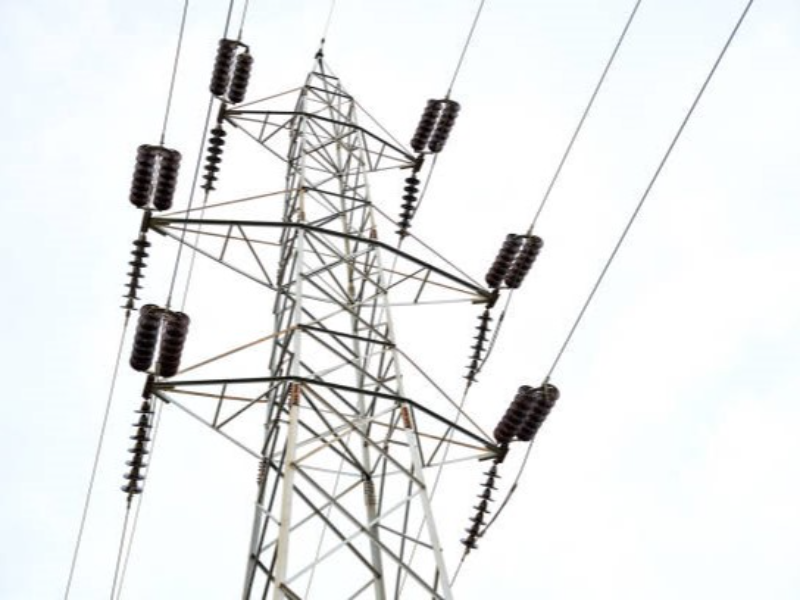
Caption: 6 benefits of using Alternating Current (AC) for power distribution visual context for BTW intelligence coverage. · Source context: Existing article media was retained or restored as the subject-specific visual basis. · Relevance reason: 6 benefits of using Alternating Current (AC) for power distribution is the primary subject or event subject; the image supports the article's market reading. · Image provenance: Existing curated article image retained because it is subject- or event-specific and not a generic pool placeholder.

Sources

Public references used for this article.

External references will appear here after editorial citation review.

CategoryInstitution

6 benefits of using Alternating Current (AC) for power distribution is tracked as a internet infrastructure institution within the internet infrastructure ecosystem.

RegionGlobal

6 benefits of using Alternating Current (AC) for power distribution has public-source relevance to network operations, governance, dependency mapping, or market structure.

Signal FocusInternet infrastructure institution

6 benefits of using Alternating Current (AC) for power distribution has public-source relevance to network operations, governance, dependency mapping, or market structure.

Content TypeProfile

6 benefits of using Alternating Current (AC) for power distribution is tracked as a internet infrastructure institution within the internet infrastructure ecosystem.

Primary DomainTechnology

Public-source signals support medium-impact monitoring for infrastructure visibility and dependency analysis.

TopicInternet infrastructure institution

6 benefits of using Alternating Current (AC) for power distribution is profiled by BTW Media because published evidence links it to internet infrastructure, governance, operational dependencies, or market visibility.

ImpactMedium

Public-source signals support medium-impact monitoring for infrastructure visibility and dependency analysis.

Confidence?Confidence Grade
0.90–1.00AHigh — direct sources
0.75–0.89A/BStrong
0.55–0.74B/CMedium
0.35–0.54C/DWeak–medium
0.10–0.34DWeak signal
0.00–0.09DInternal monitoring
Limited confidence (72%)

Several public sources

6 benefits of using Alternating Current (AC) for power distribution is profiled by BTW Media because published evidence links it to internet infrastructure, governance, operational dependencies, or market visibility.

  • Alternating Current (AC) is the preferred method for power distribution due to its ability to easily transform voltage levels and minimise energy loss over long distances.
  • The practicality and cost-effectiveness of AC systems make them the dominant choice for both residential and industrial power distribution.

In the realm of power distribution, the choice between alternating current (AC) and direct current (DC) has long been settled in favour of AC. This preference isn’t arbitrary; it is grounded in significant practical advantages that make AC the backbone of modern electricity grids. This blog explores what AC is and why it is used for power distribution, focusing on its efficiency, ease of transformation, and overall practicality.

What is AC?

1. Definition: Alternating current (AC) refers to an electric current that periodically reverses direction, unlike direct current (DC), which flows in one direction only.

2. Characteristics

Periodic variation: AC voltage alternates in a sinusoidal pattern, characterised by its frequency (usually 50 or 60 Hz depending on the region).

Voltage amplitude: The voltage in an AC system varies from zero to a maximum value in a cyclic manner.

Historical background: The widespread adoption of AC was largely due to the pioneering work of Nikola Tesla and George Westinghouse, who demonstrated its superiority for long-distance power transmission compared to DC, which was initially promoted by Thomas Edison.

Also read: Are all EV chargers the same? EVs’ types and standards

Also read: 3 different levels of EV chargers

Why use AC for power distribution?

1. Efficient voltage transformation: One of the most significant advantages of AC is the ease with which voltage levels can be transformed. Using transformers, AC voltage can be increased (stepped up) for transmission over long distances and then decreased (stepped down) for safe use in homes and businesses. This ability to transform voltage is crucial for minimising energy loss due to resistance in the wires.

2. Reduced energy loss: When transmitting electricity over long distances, higher voltages are preferred because they reduce the current in the transmission lines, thereby minimising energy losses. AC can be easily stepped up to very high voltages (hundreds of kilovolts), transmitted over long distances, and then stepped down to usable levels. This capability is not as straightforward or efficient with DC.

3. Economic and practical: Infrastructure cost: The infrastructure for AC power distribution, including transformers and transmission lines, is well-established and cost-effective. The extensive global adoption of AC means economies of scale, reducing the overall cost of power distribution.

4. Maintenance and reliability: AC systems are generally more reliable and easier to maintain. The technology has been refined over more than a century, leading to highly dependable and robust systems.

5. Supports large-scale generation and distribution: AC power systems are well-suited to the centralised generation and distribution models that dominate today’s power landscape. Large power plants, whether fossil-fuel based, nuclear, or renewable, generate AC, which can then be distributed efficiently across the grid.

6. Compatibility and standardisation: Most electrical devices and appliances are designed to operate on AC power, making it the standard for residential and industrial applications. This universal compatibility further cements the practicality of AC for power distribution.

At A Glance

  • Name: 6 benefits of using Alternating Current (AC) for power distribution
  • Type: Internet infrastructure institution
  • Base: Global
  • Profile focus: Institution

What It Does

  • Public records support monitoring of its role, services, and key relationships.

Why It Matters

  • Public-source signals support medium-impact monitoring for infrastructure visibility and dependency analysis.
  • Operational criticality: Medium
  • Time horizon: Next quarter

What To Watch

  • Monitoring focuses on verified service continuity, governance changes, and relationship signals.
NowMedium priority

Track verified source updates, role changes, and current public evidence.

QuarterMedium policy sensitivity

Public-source signals support medium-impact monitoring for infrastructure visibility and dependency analysis.

YearNext quarter outlook

Longer-term relevance depends on verified operating, policy, and relationship changes.

Member Briefing

Deeper Profile Context

Login is required to unlock the full profile briefing and source notes.

Only for Strategy Circle

Strategic Circle Access

Open to all readers. Unlock profile briefings after joining and logging in.

Join Strategic Circle

Only for Leadership Alliance

Leadership Alliance Access

For owners and management of IP-holding companies. Login required to unlock.

Join Leadership Alliance
← BackAll Companies