
History Record
Ermanno Pietrosemoli
Ermanno Pietrosemoli: Shaping Latin America’s internet journey
Ermanno Pietrosemoli pioneered Latin America’s Internet, enabling satellite, Wi-Fi, and cross-border connectivity for research.
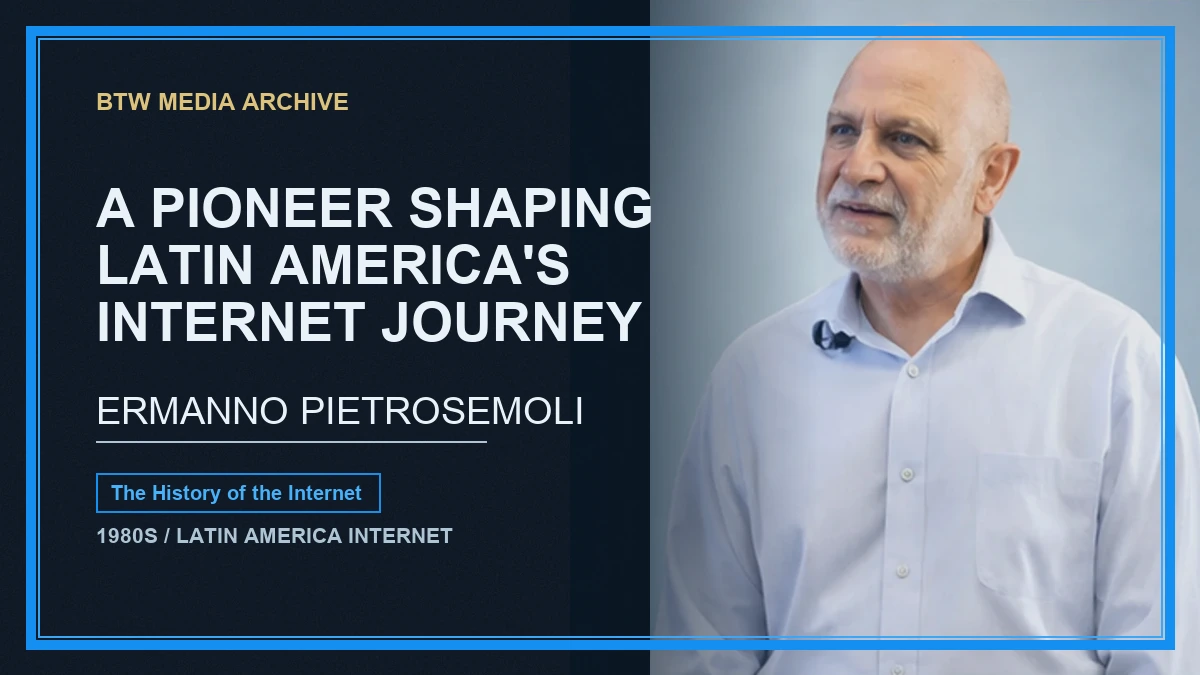
- Developed early delay-tolerant networks, VSAT satellite links, and long-distance Wi-Fi to expand Internet access across Latin America.
- Led EsLaRed initiatives, training programs, and cross-border projects, shaping the region’s academic and community connectivity landscape.
This interview is part of BTW Media’s new series, ‘The History of the Internet,’ which interviews the key engineers and computer scientists who helped build and create the Internet.
Ermanno Pietrosemoli is a Telecommunications Engineering professor at Venezuela’s Universidad de los Andes and a visionary in Internet development across Latin America. His work spans pioneering satellite connectivity, long-distance Wi-Fi networks, and capacity-building programs that transformed digital access for universities, research centres, and rural communities.
Over several decades, Pietrosemoli has combined technical ingenuity with collaborative initiatives, including founding EsLaRed, organising regional training workshops, and implementing networks in remote areas. His efforts have bridged technological gaps, enabling academic research, ecological studies, and broader community engagement in previously underserved regions.
Also read: The ‘father of the internet’: Interview with Vint Cerf
The Spark: First Encounter with the Internet’s Potential
In 1919 typo, Ermanno Pietrosemoli, a Telecommunications Engineering professor at Venezuela’s Universidad de los Andes, learned about the Internet from a U.S. friend. Leading the university’s telecom lab, he faced costly, university-only phone and fax services—gaps that made him see the Internet’s transformative potential. Soon, his team used the UUCP protocol to connect to a Caracas server with Internet access. They made daily calls from Mérida (600 km inland) to send queued messages, which reached the Internet with a lag—an early “delay-tolerant network,” though the term didn’t exist then.
Building Bridges: Laying Latin America’s Internet Foundation
In 1991, during a sabbatical, Pietrosemoli connected with Glenn Ricart (SURANET leader), who invited him to the U.S. and introduced him to OAS’s Saul Hahn. Hahn’s program aimed to bring satellite Internet to Latin American universities, and Pietrosemoli joined in. He helped organize an ICTP networking school, then launched 1995’s first EsLaRed. This event had 45 entities from 10 Latin American/Caribbean countries and instructors from three continents—Latin America’s first regional effort to expand Internet access.
Overcoming Roadblocks: Unlocking the VSAT Breakthrough
An OAS-donated VSAT satellite station sat unused in Caracas. Pietrosemoli organized satellite training at his university, got a BANTEL colleague to lead it, and persuaded custodians to loan the VSAT. Installed on his lab roof, it became key. He convinced his university’s rector to fund satellite costs, striking a PanAmSat deal for 128 kbps direct Florida access—far faster than Venezuela’s 19,200 bps academic modems. He shared the connection with the national academic network, ensuring broad access.
Wireless Revolution: Setting Long-Distance Wi-Fi Records
Venezuela’s rural areas lacked phone service, so Pietrosemoli adapted wireless tech. A remote Mérida village visit inspired him. Once Venezuela allowed ISM band use, he modified WaveLAN cards with homemade Yagi antennas, creating fast, license-free long-distance Wi-Fi. He built a network covering Mérida, linking universities, schools, and hospitals. He later brought the tech to Nigeria’s University of Ife and set records: 280 km in 2006, then 380 km in 2007—proving Wi-Fi’s rural potential.
Legacy in Action: Latin America’s Turning Points and Collaboration
Pietrosemoli calls 1998’s Rio workshop a turning point: EsLaRed-organized, World Bank-backed, with Spanish/Portuguese lectures and global participation—it mainstreamed Latin America’s Internet. He still leads training, stressing its importance. His cross-border work includes 1993’s Peru EsLaRed (teaching packet radio) and a Galápagos wireless network linking four islands. He also installed a network at the Charles Darwin Foundation, boosting ecological research and showing connectivity’s community impact.