
摘要
- ONFIBER 销售 50、120、200 和 350 Mbps 的住宅光纤套餐,以及 30、40 和 50 Mbps 的天线套餐。其地址核查工具对这两种可用性形式进行了区分。这是混合接入服务的重要证据,但它并不是路由分布图、容量审计指标或服务质量的衡量标准。
- LACNIC 将 AS28447 与 ONFIBER SA DE CV 绑定。RIPEstat 指出该 ASN 处于宣告状态,并在 2026 年 7 月 8 日至 22 日的观察期内,列出了 6 个 IPv4 前缀、1,280 个 IPv4 地址以及 1 个 IPv6 前缀。这使得 ONFIBER 在公共路由层变得可见,但并未透露其底层的物理路径。
- RIPEstat 目前在 AS28447 旁观察到 AS270158 和 AS274406,而 PeeringDB 将 ONFIBER 记录为 Cable/DSL/ISP 网络,并标明其一般政策为开放(Open)。这两个来源都无法证明合同层面的上游关系、独立的出口、承载的流量、空闲容量或故障转移性能。
- 在营销的接入方案与可用的实际连接之间,存在着许多悬而未决的问题:光纤路由深度、天线回传、汇聚点、备用电源、上游安排、用户密度、故障隔离、备件和修复能力。这些并不是否定 ONFIBER 的理由。它们是判断其韧性(而非仅仅是可用性)所需的必要证据。
服务提供商层层显现
误解区域接入服务提供商最简单的方法,就是将所有层面的可见性混为一谈。一个正常运行 of 零售网站可以表明该公司正在销售服务;注册局记录可以表明某个自治系统号(ASN)已分配给特定组织;路由收集器可以表明与该编号相关联的前缀正在被宣告;网络目录可以展示该运营商如何向潜在的互联合作伙伴描述自己。这些观察结果虽然重要,但任何一个都不能替代其他观察。
ONFIBER 在上述每个层面上都有证据支撑。面向消费者的层面始于清晰的接入产品:光纤套餐、天线套餐、基于地址的覆盖范围核查,以及独立的商业方案。管理层面始于 LACNIC 对 AS28447 的记录。路由层面则呈现在 RIPEstat 中,该 ASN 在其中可见且处于宣告状态。面向互联的层面出现在 PeeringDB 中,其网络名称为 ONFIBER SA DE CV,分类为 Cable/DSL/ISP。
这种多重交汇足以让该公司不仅仅是目录上的一行名字。其零售身份和路由身份指向同一个组织。一端是公开销售的产品套餐,另一端是可观测的互联网数字资源。对于其用户最终需要将流量从本地接入链路传输到更广泛互联网的服务提供商来说,这是建立一个清晰运营界面的开端。
这仅仅是开始。这些来源照亮了服务的不同边缘,而不是中间的路径。它们没有展示哪些光纤纤芯、管道、电线杆、天线链路或聚合设备承载着特定地址的流量;没有展示两条表面上的路径是否共享相同的物理跨越或电源;也没有展示夜间由谁接收故障报告、有哪些备件可用,以及恢复需要多长时间。因此,一家服务提供商可能在物理上是真实的、路由上是可见的、商业上是活跃的,但从公开证据来看,其韧性仍无法评估。
正确的结论既不是盲目相信,也不是全盘否定。AS28447 赋予了 ONFIBER 一个可衡量的互联网存在。其网站为该 ASN 提供了市场背景。未完成的任务是将这些可见的边界与有关接入路由及维护其可用性的修复组织的证据联系起来。
ONFIBER 的网站路径中也存在两个公开的 PDF 文件,但本文不依赖其文本。仅凭它们的 URL 无法确立授权范围、确切覆盖面、法律条款或监管义务。
产品菜单展示两种接入承诺
ONFIBER 的套餐展示版块将光纤和天线服务进行了分离。光纤菜单提供了 50、120、200 和 350 Mbps 的档位;天线菜单则提供了 30、40 和 50 Mbps。这些数字是官方提供的名义速率,而不是独立测量的速度,但这两个菜单之间的区别比单个档位标签更为重要。
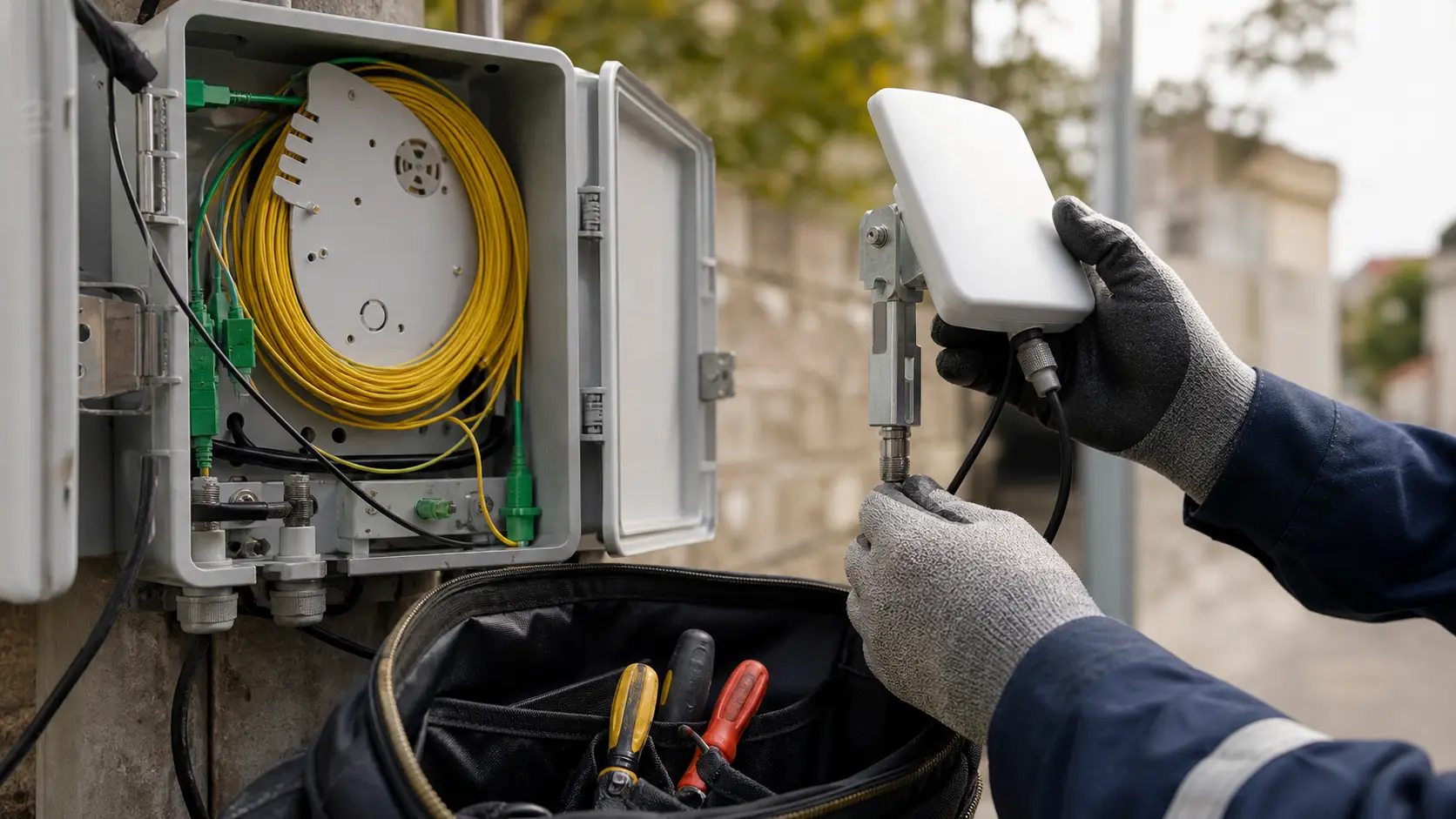
这表明该公司并没有将每个地址都视为相同的工程问题。光纤连接和基于天线的连接虽然最终可以提供相同的客户结果——互联网接入,但它们依赖于截然不同的接入路径。光纤服务需要通往用户场所或其直接服务点的物理路径。天线服务则需要通往天线接入系统的可用链路,并在该链路之后提供回传到网络其余部分的能力。网站并未详细描述这些架构,因此替 ONFIBER 随意假设是不妥当的。然而,这确实明确了一点,即接入方式是服务套餐中的一个变量。
这个变量改变了买家解读速率档位的方式。标称速率描述的是销售的服务类别。它不披露容量是如何共享的、流量是如何汇聚的、路径是否有备用方案,或者当服务组件不可用时会发生什么。如果一个是通过光纤接入,另一个是通过天线接入,那么即使购买了相同标签套餐的两位客户,也可能具有完全不同的依赖性。甚至两个光纤用户在到达路由边缘之前,也可能经过不同数量 of 共享设施。
套餐档位也几乎无法说明标称容量与可复制性能之间的区别。公开页面并未提供经过审计的吞吐量分布、延迟、丢包测量或高峰期表现。它们没有说明广告中宣传的档位如何映射到上游容量。在公开渠道中,没有依据可以将这些方案称为配置不足或具备韧性工程设计的方案。这些证据仅支持一个较窄的观察结论,即 ONFIBER 销售多种光纤和天线服务级别。
这就是为什么不能将产品可见性视为网络实际证明的原因。菜单告诉客户他们可以购买什么,但并没有告诉基础设施分析师该服务是如何构建的。它们的价值在于界定了一个需要更深层证据来检验的承诺:提供哪种接入方式、提供什么服务级别,以及当链路停止履行该承诺时,背后有什么样的运营系统提供保障。
地址核查是边界,而非覆盖地图
覆盖范围查询功能要求用户检查地址,并区分了光纤可用性与天线可用性。这是一种合理的零售边界。接入网络在本质上具有本地性,运营商不能仅凭城市名称来推断服务可用性。地址核查的存在表明 ONFIBER 预期可用性会在更精细的级别上存在差异。
但地址核查不应被放大为它本身并不支持的地理覆盖主张。它并不展示完整的服务足迹;没有展示光纤建设的边缘在哪里、天线服务可以安装在何处、覆盖了多少场所以及有多少地址拥有活跃客户。某个位置的肯定回答仅能证明,在当前规则下,该公司的销售系统认为该地址是可服务的。否定回答可能反映了物理可达性、容量、数据质量或商业决策。在没有更多信息的情况下,这一机制无法被逆向推导为路由地图。
在讨论韧性时,这种区别尤为重要。覆盖范围和路由多样性是不同的属性。服务提供商可能能够通过一条路径到达某个地址,但没有其他备用路径。它也可能在较高层具有多个逻辑路由,但最终汇聚在同一个接入网段上。公开的核查工具并不暴露这些依赖关系。它回答的是销售问题,而不是故障域问题。
它也无法确立确切的地理边界。ONFIBER 的公开立足点位于阿瓜斯卡连特斯,其“关于我们”部分提到,它利用光纤和天线解决方案来覆盖其他提供商可能无法到达的区域。这是关于其市场定位的主张,而不是针对每个服务存在地点的审计边界。在没有经过验证的路由清单或完整覆盖数据集的情况下,对市政、街区、铁塔或走廊进行更广泛的陈述只能是推测。
因此,对于潜在客户来说,核查工具只是业务准入的开始。接下来的问题取决于核查给出的答案:提供的接入是光纤还是天线?路径的哪些部分是共享的?需要进行哪些安装工作?适用于该地址的服务和恢复承诺是什么?公开版面可以引导对话,但其本身无法回答工程问题。
商业连接提高了证明标准
ONFIBER 的商业服务版块不仅重复了住宅速率方案,还将网络连接与销售点(POS)系统、在线计费、终端和云服务放在一起,并使用了支持和监控等词汇。这种定位之所以重要,是因为这些应用将互联网链路转变为了一种运营依赖。
家庭连接不稳定时,后果可能会很严重并带来干扰。但当商业连接支撑着支付受理、开票或云系统访问时,中断还可能导致交易和日常管理停滞。网站正确地认识到商业买家是通过网络所支持的工作来看待连接性的。然而,使用场景越重要,就越需要将营销语言与运营证据区分开来。
支持可以意味着很多事情:报告事件的渠道、延长的服务时间、主动观察、升级到网络团队,或合同规定的恢复流程。监控可以指提供商的核心系统、单个客户链路,或者仅仅是查看设备是否响应的能力。公开版面并未定义其范围,也没有公布经过验证的可用性、修复时间表现、升级目标,或者监控警报与派遣维修人员之间的关系。
缺乏这些细节并不意味着这些能力不存在。这只是意味着公开宣称的内容尚未转化为可测试的运营承诺。商业买家应当要求将这些转化为书面承诺:监控什么、通知谁、事件计时何时开始、涵盖哪些故障、状态如何沟通,以及第二条接入路径是否真正独立于第一条。仅凭速率档位,这些问题一个也无法回答。
光纤与天线混合的产品组合使这种审查更加具有针对性。提供光纤的商业地址可能具有与提供天线接入的地址不同的故障和恢复特征。备份选项(如果有)可能会与主服务共享汇聚、上游连接或电源。将两种链路称为不同的技术并不能证明它们是相互独立的。有价值的商业对话应该围绕共享单点故障展开,而不仅仅是客户现场安装了多少个盒子。
因此,ONFIBER 的商业主张是进一步仔细审视的理由,而不是假定某种结果的理由。它确定了该公司希望支持的应用。路由与修复证明将展示该提供商打算如何保持这些应用的连接。
AS28447 将名称锚定在公共互联网上
ONFIBER 公开记录中最为有力的非营销证据始于 AS28447。LACNIC 的 RDAP 服务将该自治系统号与 ONFIBER SA DE CV 绑定。该记录包括日期为 2022 年 11 月 11 日的注册事件以及随后的最新变更事件。RIPEstat 独立地将该身份显示为 `AS28447 - ONFIBER SA DE CV` 并标明该 ASN 处于宣告状态。
自治系统号之所以重要,是因为它被用于向其他网络表达路由政策的边界。其公共可见性表明 ONFIBER 不仅是在展示一个接入品牌,而且一个冠有其法定名称的网络身份正在参与路由系统。这比标志、域名或套餐展示版面所能支持的主张更有力。
注册日期仍需谨慎对待。它只是登记了注册记录中的一个事件。它不一定是公司成立的日期、服务开始的日期或其当前网络架构投入使用的日期。最新变更事件同样仅显示行政记录发生了变化;在没有对每次变更进行详细、核实的说明之前,不应将其解读为运营里程碑。
ASN 同样不揭示最后一公里的形态。边界网关协议(BGP)描述的是自治系统之间以及通往外部前缀的可达性。它不识别通往家庭的光纤路由、天线连接背后的回传、汇聚点的位置或任何物理资产的所有权。即使特定接入网段受损,路由身份也可能保持可见。相反,即使通往更广泛互联网的路由不可用,本地接入网络也可能保持电气活跃。
这种分离对于理解 ONFIBER 至关重要。AS28447 为分析师提供了可以随着时间推移进行具体观察的内容:宣告的前缀、路由状态和相邻的 ASN。它支持对面向互联网边缘 of 提问,但无法回答关于安装密度、路由多样性、恢复实践或客户体验的问题。ASN 提高了提供商的可见性,但并没有让所有的依赖关系随之变得可见。
七条路由条目需要仔细解读
RIPEstat 的已宣告前缀视图列出了在 2026 年 7 月 8 日至 7 月 22 日的观察期内,AS28447 的 7 个条目:`203.142.5.0/24`、`38.158.203.0/24`、`200.76.118.0/24`、`38.158.202.0/23`、`38.158.202.0/24`、`38.226.104.0/24` 和 `2806:3f6::/32`。路由状态视图将可见资源概括为 6 个 IPv4 前缀、1,280 个 IPv4 地址、1 个 IPv6 前缀和 65,536 个 IPv6 `/48`。
这些数据数据之所以有用,恰恰是因为它们是有边界的。它们显示了在指定期间与 AS28447 相关联的一组可观测路由。同时存在 IPv4 和 IPv6 非常重要。该 ASN 目前正处于宣告状态这一事实同样重要。为了进行持续覆盖,可以对这一界面的变化进行监测,而不是从营销中进行推断。
These entries should not be casually added together or translated into customer scale. `38.158.202.0/23` and `38.158.202.0/24` overlap: one is a covering block and the other a more specific route within it. A list of route objects is therefore not the same thing as a list of disjoint address holdings. RIPEstat's aggregate of 1,280 IPv4 addresses is the more appropriate summary supplied by the routing-status view, but even that number describes address-space visibility, not active subscribers or simultaneous sessions.
The IPv6 /32 deserves the same restraint. Saying that it corresponds to 65,536 possible /48s describes the structure of the address space in RIPEstat's summary. It does not mean ONFIBER has allocated that many customer networks, serves that many sites, or has activated every part of the block. IPv6 planning intentionally provides very large address space. Utilization cannot be read from the theoretical subdivision count.
Nor does route visibility disclose capacity. A prefix can be announced over a constrained connection or over several well-provisioned paths; the route object alone does not say which. It does not show traffic volumes, congestion, committed bandwidth, burst headroom or the proportion of customers depending on a particular route. A stable announcement is evidence that reachability is being propagated, not a throughput certificate.
The most defensible reading is consequently modest but meaningful. ONFIBER has a dual-stack public routing surface associated with AS28447, with multiple visible IPv4 routes and one visible IPv6 aggregate during the observed window. That makes route-level monitoring possible. It does not close the gap between the routed edge and the service experienced at an address.
相邻 ASN 是观测值,而非合同
RIPEstat 的邻居视图目前在 AS28447 旁列出了 AS270158 和 AS274406。邻居观测值可能是最容易被夸大解读的公开信号之一。它们显示路由数据中包含涉及这些 ASN 的邻居关系。它们本身并不识别这种邻居关系的商业或运营含义。
因此,凭此证据将 AS270158 或 AS274406 称为合同规定的上游服务商是错误的。公开的路由关系可能产生于不同的背景,而收集器视图并不提供 ONFIBER 的合同、发票、服务承诺或内部流量政策。它不说明哪一方付钱给另一方、这种关系是主要的还是临时的,也不说明有多少流量经过它。“上游”这个词包含了一种商业和拓扑声明,而仅仅观测到的邻居关系无法承受这一声明。
这一对邻居同样不能证明冗余性。两个相邻的 ASN 可能代表两条真正独立的外部路径,但也可能依赖于共享设施、共享传输、共同的远端点,或者对于所有路由而言无法同时使用的安排。此处的公开视图并不能解决这些可能性。它不提供经过验证的故障转移测试,也没有关于这两条邻居关系之下的物理路径的证据。
Even at the logical level, a list of neighbours is only a snapshot of what route collectors can observe. It may not describe every relationship, and visibility can depend on routing policy and collector vantage points. The fact that two ASNs appear is useful for forming questions and watching change. It is not a complete interconnection diagram.
For a business assessing continuity, the missing evidence is practical. Which external paths normally carry traffic? Are all customer prefixes eligible on each path? What happens when one redundancy point disappears? How quickly does routing converge, and does the surviving path have enough usable capacity? Do nominally different external links share transport or power? These are ordinary resilience questions, but the answers would need to come from ONFIBER or measured performance, not from labels applied to a neighbour list.
AS270158 和 AS274406 应严格保留为数据源所支持的定义:当前观测到的相邻 ASN。这种表述保留了证据的价值,而不会将路由观测转化为无支撑的合同或韧性主张。
PeeringDB 展示姿态,而非性能
PeeringDB 为面向互联网的画像增加了另一块拼图。其 API 包含一个针对 ASN 28447、名称为 ONFIBER SA DE CV 的网络对象,指向 ONFIBER 的网站,将该网络分类为 `Cable/DSL/ISP`,并将其一般政策记录为 `Open`。
这与其他公开层面相一致。法定名称和 ASN 与 LACNIC 和 RIPEstat 一致;网络类型大致与销售接入服务的公司相符。开放的一般政策表明了该网络在目录中展示其互联意愿的方式。对于同业和研究人员来说,这比没有记录提供了更多信息。
这仍然只是目录证据。开放政策并不证明存在特定的互联,不证明流量是在统一的条款下交换的,也不证明在特定地点有可用容量。它本身无法说明路由多样性、拥塞、流量比例、技术准备就绪度或建立会话所需的时间。网络类型也不能证明特定的物理接入架构。`Cable/DSL/ISP` 只是目录分类,而不是对 ONFIBER 实际设施 of 审计。
PeeringDB is therefore best read as posture. ONFIBER has made AS28447 legible in an ecosystem used for interconnection discovery, and the record invites a conversation under an Open policy. The operational value would become clearer with verified interconnection locations, current technical contacts, capacity context and observed sessions, none of which should be invented from the general policy field.
Taken with the registry and route data, the record reinforces identity. It does not solve resilience. The public internet edge is visible from several angles, but the number and independence of usable paths remain unproved.
缺失的桥梁是路由深度
在标为可用的地址与全球路由中可见的前缀之间,存在着一条本地和区域依赖关系的链条。对于光纤服务,该链条可能包括用户下线(customer drop)、配线设施、汇聚和传输到面向互联网的边缘。公开来源并未透露 ONFIBER 版本的链条形态,因此不应对其具体拓扑进行猜测。然而,评估其所需的证据类型是显而易见的。
路由深度与路由长度并不相同。它描述的是在个人连接与流量具有实质性替代方案的点之间,存在多少层共享的依赖关系。客户可能拥有一个看起来专用的下线,但在第一个分配点与邻居汇合。然后,多个分配分支可能会共享汇聚、传输或电源。如果通往该边缘的唯一本地路径被切断,即使有第二个外部路由邻居也无法提供保护。
这就是为什么“光纤”和“多个邻居”的主张必须分开对待。光纤标识了 ONFIBER 方案中的接入介质。邻居视图标识了观测到的路由邻居。这两个来源都无法证明物理和逻辑路径是否构成了端到端具备韧性的服务。将它们捏合得出这一结论将跳过用户场所到边界之间的每一个依赖环节。
Useful route evidence would answer concrete questions without requiring publication of sensitive engineering detail. ONFIBER could describe whether business services can be ordered with physically diverse entrances, whether access branches converge before aggregation, and how it verifies separation when a customer buys a secondary link. It could state whether diverse external services use independent transport and whether route failover is tested. An anonymised explanation of failure domains would be more valuable than a visually impressive but unverifiable map.
The current public record supplies none of that proof. It also supplies no basis for a negative conclusion. There is no evidence here that the network is single-homed at every layer, just as there is no evidence that it is diverse. The condition is uncertainty, not failure.
For analysts, that uncertainty sets the boundary of the article. AS28447 can be monitored at the routed edge. ONFIBER's address checker can reveal the access method offered to a particular prospective customer. The depth, convergence and ownership of the route connecting those two observations remain private. Until those facts are disclosed or independently measured, resilience should be treated as an open question.
天线接入将问题转移到回传
天线服务档位拓宽了 ONFIBER 的覆盖主张。其“关于我们”部分提到,该公司利用光纤和天线解决方案来覆盖其他提供商可能无法到达的区域。这种语言赋予了天线服务清晰的商业角色:它被呈现为连接特定地址的另一种方式,而不仅仅是光纤菜单的附属品。
公开页面并未具体说明天线系统的拓扑结构、设备、容量或物理足迹。它们没有提供基站数量、安装地图或回传设计,因此不应进行推断。可以确定的是,天线接入路径在无线链路之外仍然需要一条路径。客户流量最终必须到达汇聚层以及由 AS28447 代表的路由互联网界面。
That makes backhaul the central unanswered question. The customer-facing link may be distinct from fibre to the premises while relying on fibre or another shared connection behind the antenna access system. Several serving points may converge on the same transport. An antenna offer and a fibre offer at nearby addresses could also converge farther into the network. The sources do not show whether any of those possibilities applies to ONFIBER.
Capacity is similarly opaque. The 30, 40 and 50 Mbps antenna tiers are marketed service classes. They do not state how many active users share a serving resource, what backhaul headroom exists, or how busy-period demand is managed. Customer density therefore matters twice: at the access system and along the shared backhaul. Without utilisation and design information, the tier label cannot be converted into a claim about repeatable throughput.
Repair differs too. A fault affecting an individual installation is not the same as one affecting shared access equipment or its backhaul. Restoration may require different skills, spares and access arrangements. Public support language does not reveal how ONFIBER distinguishes those cases or which one drives the expected repair time.
The antenna portfolio is thus important evidence of market reach, but not of engineering resilience. To cross that boundary, ONFIBER would need to explain the failure domains behind the service: where traffic converges, how capacity is monitored, what alternate backhaul exists where offered, and how field faults are isolated and restored. Those questions follow directly from the product, without assuming an unsupported physical network.
修复能力是网络的一部分
基础设施分析往往更看重资产,因为资产是可见的。光纤路由可以绘制,ASN 可以查询,前缀可以计数。而修复服务的能力更难被观测到,但对于接入服务提供商来说,它是所交付系统的一部分。
只有在组件正常运行或可以恢复时,路由才是有用的。这使得故障受理、诊断、现场准入、培训合格的人员、备用设备和升级权限成为了运营层面的能力。一家提供商在正常情况下可能拥有足够的带宽,但如果无法迅速定位或修复故障,其服务连续性依然会很差。相反,如果能够理清依赖关系并进行规范的响应,即使规模有限,也能很好地恢复服务。公开的路由数据无法区分这些结果。
ONFIBER 的商业页面使用了支持和监控语言,这表明该公司认识到了这一运营层。但公开来源并未对其进行定义。这里没有关于修复时间表现的已发布审计记录、没有停单历史、没有备件清单,也没有经过验证的人员配置模型。这些缺失既不能用来赞扬,也不能用来批评。它们只是让修复承诺处于未被衡量的状态。
The most informative evidence would be distributional rather than anecdotal. An average restoration time can conceal a small number of very long incidents. A stronger disclosure would separate access methods and fault classes, showing how quickly fibre access, antenna access, shared backhaul and external routing incidents are detected and resolved. It would explain when the clock begins and whether planned work is excluded. Even without exact figures, a clear escalation and communication process would help customers understand what support means.
Repair proof also needs a boundary around responsibility. A customer problem can sit in local equipment, the access link, shared ONFIBER infrastructure, an external network or a service on the wider internet. Monitoring that merely reports loss of reachability may not locate the fault. Good operations depend on deciding which domain has failed and getting the incident to the party able to act. The public pages do not show how ONFIBER performs that handoff.
This is particularly relevant to business applications. A terminal that cannot reach a cloud service may look like a generic internet problem, while the cause could lie anywhere along the chain. Buyers need to know what ONFIBER will investigate, what evidence it can provide, and how escalation works when its own access remains up but an external route is impaired.
Repair capacity cannot be deduced from the existence of AS28447. But once AS28447 证实 ONFIBER 拥有真实的路由界面,修复证据就成为检验该界面是否支撑起可靠接入业务的下一个试金石。
电源将表面上多样化的路径转化为共享风险
备用电源是公共路由和零售页面无法填补的另一个空白。这些来源并未描述 ONFIBER 的备份设计、运行时间、维护实践或其覆盖的网络部分。它们没有识别设施或服务站点。因此,关于发电机、电池或特定地点的任何主张都是没有依据的。
分析的着眼点较窄。两条看起来不同的网络路径仍然可能共享同一个电源依赖。光纤和天线服务在用户端可能在技术上是独立的,但在汇聚设备上却可能需要相同的供电。两个外部路由邻居可以在逻辑上保持分离,同时依赖共同的供电基础设施。在没有故障域视角的情况下,技术标签和邻居数量并不能解决这个问题。
For customers, backup at the premises is only one side of continuity. Keeping a router or terminal powered does not help if the serving path is unavailable. Equally, a provider's network may remain available while the customer's own equipment loses power. A credible resilience discussion separates those domains and states which one each backup measure protects.
Useful disclosure need not reveal sensitive locations. It can describe design standards: which classes of network element receive backup, how runtime is sized, how backup condition is tested, and how prolonged loss is escalated. It can explain whether monitoring distinguishes commercial power failure from equipment or link failure. None of those details appears in the available public evidence for ONFIBER.
Power should consequently remain on the diligence list, not in the factual portrait. There is no basis here to call ONFIBER's design strong or weak. There is only a clear reason why apparent route diversity would need power evidence before it could be treated as dependable.
用户密度将工程与经济相联系
速率菜单描述了 ONFIBER 提供什么;但它们没有描述有多少客户共享支撑每个套餐的基础设施。用户密度在商业上是敏感的,但它也是将区域 ISP 经济学与服务质量联系起来的变量之一。
Access networks carry large fixed costs. Physical reach, aggregation, backhaul, internet capacity, monitoring and repair readiness must be supported by revenue from the addresses served. Low density can make route expansion and spare capacity harder to justify. High density can improve the economics of investment while increasing the number of customers exposed to a shared failure. Neither condition is inherently good or bad. What matters is how capacity and restoration resources scale with demand.
ONFIBER's public evidence contains no customer count, number of passed premises, take-up rate or traffic profile. The IPv4 address total cannot be used as a substitute. Addresses may be allocated in different ways, and one visible address does not equal one customer. The IPv6 /48 capacity is even less suitable as a subscriber proxy because the address space is intentionally expansive. The address checker also cannot be sampled into a reliable footprint without knowing its data and decision rules.
This leaves a central economic question unanswered: whether the service tiers, shared capacity and support resources are aligned with the customer load in each part of the access network. A 350 Mbps fibre plan says nothing by itself about how many such plans can be active behind an aggregation point. A 50 Mbps antenna plan says nothing about the number of users sharing access or backhaul. Only utilisation and design evidence could make that connection.
The same applies to repair. A growing footprint may require more field capacity, more spares and better fault automation. If service reaches areas where alternatives may be limited, restoration capability becomes particularly important to the value of the offer. That is a reason to ask for evidence, not a basis for assuming that alternatives are absent at any specific location.
For investors or commercial partners, the useful metrics would therefore combine engineering and operations: customer concentration by failure domain, busy-period utilisation, capacity upgrade triggers, incident frequency by access method and restoration distributions. The public sources do not supply them. They define the questions that must be answered before route visibility can be translated into a view of operating quality.
路由与修复证明可能的样貌
最具有实用价值的下一步披露应当从 ONFIBER 已经呈现的产品边界开始。光纤和天线客户应该能够了解其服务所经过的大致路径、流量变为共享状态的节点,以及可用于真正独立备份的选项。这不需要包括坐标、资产清单或涉及安全敏感的图表。对依赖性类别进行简要说明就足以改善尽职调查。
For fibre, the important distinction is between a second commercial circuit and a second physical route. ONFIBER could explain when diverse entry or aggregation is available, how separation is verified, and where independence can no longer be promised. For antenna access, it could explain how shared access and backhaul capacity are managed, what is monitored, and whether alternate backhaul exists for any service class. The aim is not to demand universal redundancy. It is to make the purchased level of resilience explicit.
At the routed edge, ONFIBER could clarify the roles of observed adjacencies without disclosing contract terms. It could state whether customer prefixes can fail over between independent external paths, how regularly that behavior is tested, and whether a surviving path is engineered to carry the relevant load. Such statements would add operational meaning to the neighbour view while avoiding the false inference that AS270158 and AS274406 must be contractual upstreams.
Repair proof should be similarly bounded. Published support hours, escalation stages and definitions of incident start and restoration would make the business-page language testable. Aggregated performance by access method and fault class would be stronger still. Customers do not need a list of individual incidents to understand whether restoration is usually measured in minutes, hours or longer; they need consistent definitions and a representative distribution.
Power can be addressed through standards rather than locations. The provider could describe which classes of shared equipment receive backup, how backup health is monitored and tested, and what communication occurs when expected runtime is at risk. Again, the point is not to infer that ONFIBER lacks these measures. It is to identify the evidence that would distinguish a designed capability from an unqualified promise.
Finally, the relationship between the address checker and service commitment could be made clearer. A positive availability result could identify access method, expected installation conditions, business support options and whether a separate route is available. That would turn the checker from a simple sales gate into the first step of informed service design.
These disclosures would not eliminate outages. They would make dependencies visible enough for customers and partners to choose intelligently. That is what route-and-repair proof is for.
客户和合作伙伴目前可以得出的结论
潜在客户可以合理地得出结论:ONFIBER 提供与阿瓜斯卡连特斯相关联的活跃的住宅 and 商业接入服务,涵盖光纤和天线两类服务。客户可以使用该公司的覆盖范围查询流程来了解特定地址是否被视为可服务的,以及提供的是哪种接入方式。公布的套餐名称为商业对话提供了基础。
网络分析师可以合理地得出结论:在 LACNIC 的注册局中,ONFIBER SA DE CV 与 AS28447 相绑定,RIPEstat 观察到该 ASN 处于宣告状态,并且在指定的观察期内其 IPv4 和 IPv6 路由是可见的。分析师可以监测这些路由以及当前观测到的与 AS270158 和 AS274406 的邻居关系。PeeringDB 增加了一条一致的网络记录和开放的一般政策。
Neither person can reasonably conclude that ONFIBER has verified fibre-route diversity, redundant antenna backhaul, guaranteed uptime, audited service-level performance or a particular repair capacity. The sources do not reveal exact coverage, customers, towers, physical route ownership, facilities, outage history, backup design or contractual upstreams. The lack of public proof is not proof of lack, but it must remain a limit on the claim.
For a residential buyer, that limit suggests asking practical questions before installation: which access method applies, what equipment and shared dependencies sit in the path, how faults are reported, and what restoration expectations are offered. For a business buyer, the questions should extend to written support scope, monitoring, escalation, capacity, backup options and physical independence. For a network partner, they should extend to routing policy, eligible prefixes, path capacity and failover behavior.
The answers may differ by address and service class. That is normal for an access network. What would be misleading is to turn a general website, an ASN or a neighbour observation into one universal answer.
可见性是问责的开始
AS28447 改变了 ONFIBER 故事的质量。如果没有它,该公司将主要通过自己的销售页面可见。而有了它,ONFIBER SA DE CV 拥有了一个公开的路由身份,该身份可以与宣告的 IPv4 和 IPv6 空间相关联,并可以随着时间推移进行观察。LACNIC、RIPEstat 和 PeeringDB 围绕该身份提供了不同形式的印证。
随后网站解释了为什么路由身份至关重要。ONFIBER 并非将 AS28447 作为抽象的互联网资源来展示。它正在通过光纤和天线向家庭和企业销售接入服务,而这些家庭和企业的终端、开票和云应用可能都依赖于这种连接。因此,公共路由界面与具体的服务承诺联系在了一起。
That attachment creates accountability, but it does not complete the evidence. The route collector sees the edge of AS28447, not the route to a customer's door. The package page sees the tier, not the load on shared infrastructure. The neighbour view sees adjacency, not a contract or independent transport. The business page invokes support and monitoring, not measured restoration. Each source is useful because its limits are clear.
ONFIBER is consequently visible enough to merit serious coverage. It has a coherent market and network identity, a mixed access offer and a routable surface that is more informative than a simple company profile. The remaining questions are also specific enough to matter: how deep the fibre paths run before they converge, how antenna traffic is backhauled, how external paths are contracted and tested, how power is protected, how customer density is managed, and how faults are repaired.
Those questions should not be answered with suspicion or marketing. They should be answered with bounded evidence. Until that evidence is available, the sound judgement is precise: AS28447 proves that ONFIBER can be seen on the public internet; it does not yet prove that every marketed access path can withstand a route failure or be restored on a dependable timetable. The access promise becomes infrastructure-grade only when route and repair are visible together.