
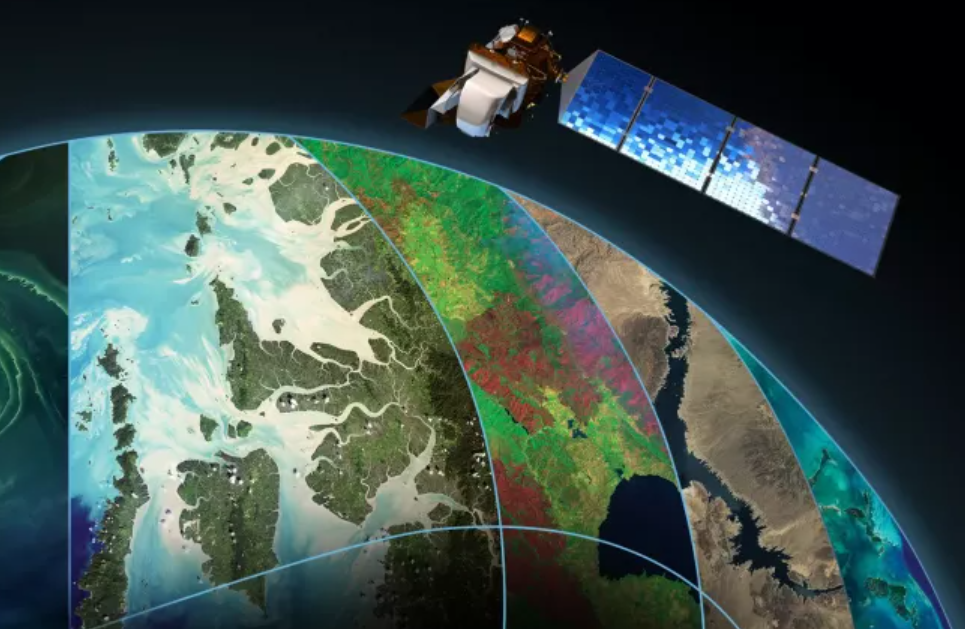
Open Cosmos has launched a combined satellite data and IoT platform, integrating Earth observation, secure broadband connectivity, and IoT into a single system. This service is designed to enhance situational awareness for monitoring infrastructure and environmental assets, but it also raises concerns about complexity and competition from other LEO constellations focused on broadband.
- Open Cosmos announced a new global space-based IoT service on 23 March 2026. The announcement combines named components—OpenConstellation, ConnectedCosmos and DataCosmos—but does not give the combined service a separate formal product name.
- Two ConnectedCosmos satellites have been independently reported in orbit, while PLATERO, LacunaSat-2B and an ESA-backed DataCosmos demonstration show relevant component experience. None of those records by itself proves global coverage, real-time sensor-to-image fusion or commercial service levels for the newly announced offer.
What was announced
The 23 March company announcement describes a space-based IoT service intended to combine ground-sensor readings with Earth-observation imagery and connectivity. It calls the offer global and the data real-time. Those are Open Cosmos's product claims; the release provides no public coverage map, latency distribution, service-level agreement, named customer deployment or independent performance test.
The architecture has three distinct control layers
TelecomTV's account identifies OpenConstellation as the Earth-observation fleet and ConnectedCosmos as the new low-Earth-orbit connectivity network. Open Cosmos's ConnectedCosmos page describes point-to-point broadband and direct-to-device IoT, with optical inter-satellite links planned as part of the network. DataCosmos is the separate data layer that stores, combines and processes imagery and third-party sources. Treating those names as one already mature platform hides which layer controls collection, relay, fusion and customer delivery.
Orbit is not the same as an operating global constellation
Space.com reported that Rocket Lab deployed the first two satellites of the planned ConnectedCosmos telecommunications constellation in January 2026 into an approximately 1,050-kilometre circular orbit. That verifies a launch and initial deployment, not fleet-wide commissioning, capacity, geographic availability, security or an end-to-end IoT and imagery workflow. The March release says existing Earth-observation satellites already carry IoT payloads and that future satellites will do so across the constellation; it should not be rewritten as proof that every satellite already has the same payload or service status.
Earlier missions prove pieces of the proposition
The Andalusian government's PLATERO record describes a nine-kilogram satellite launched in November 2023 with a multispectral camera, IoT communications and onboard artificial intelligence, commissioned through AGAPA for SmartFood and LifeWatch-related work. ESA's LacunaSat-2B mission record says the Open Cosmos-operated satellite collected messages from remote IoT devices during a three-year mission completed in 2024. These are concrete precedents for EO-plus-IoT payloads and remote-device connectivity, but neither establishes the new service's global scale or broadband layer.
DataCosmos has a documented demonstration, with limits
ESA's completed Real-Time Information Services project describes DataCosmos combining Open Cosmos imagery with Sentinel, Landsat and SuperView sources for pilots including oil-spill and sea-state analysis. ESA reports a claimed 90% delivery-time improvement, but the public project page does not supply the raw baseline, sample size or an independent audit. It is evidence of a multi-source data workflow, not proof that live IoT readings and satellite images are now aligned globally with guaranteed latency or accuracy.
Roadmap metrics remain targets
A later OpenConstellation 1.0 announcement presents design goals including revisit times as short as 30 minutes and processing up to three million square kilometres per day, with initial satellites planned for launch through 2026. Those figures are forward-looking fleet targets, not published service levels for the March IoT offer. Real-world performance also depends on tasking priority, cloud cover, sensor type, ground-station access, IoT protocol compatibility, third-party data rights and the timing gap between a ground reading and an image.
What customers can verify
Open Cosmos says it is working with partners and early adopters and targets governments and large enterprises. Public materials do not name those adopters or disclose pricing, deployment count, device count, geographic coverage, message success rate, imagery-to-alert latency, analytical accuracy, availability or case outcomes for the combined service. Buyers therefore need separate evidence for each control layer: satellite commissioning, spectrum and ground connectivity, device and protocol support, data provenance, fusion validation, customer security, incident handling and contractual service levels.
Why it matters and what to watch
The credible opportunity is not merely another satellite feed. It is the ability to connect a sparse ground signal to a recent image, preserve provenance through analysis and deliver a decision-ready alert where terrestrial links are weak. The impact depends on whether the layers operate together at a useful cost and cadence. Watch for additional ConnectedCosmos launches and commissioning results, coverage and latency measurements, named deployments, published protocol and data-source support, validation methods, security assurance and customer-level outcomes.
Until then, the evidence supports an integrated architecture and component experience, not a completed global real-time service.
Member Briefing
Deeper Trend Context
Sign in with the right membership level to unlock the full briefing and source notes.
Only for Strategic Circle
Strategic Circle
Open to all readers. Unlock trend briefings after joining and signing in.
Join Strategic CircleOnly for Leadership Alliance
Leadership Alliance
For operators, investors, and policy teams that need relationship evidence, failure paths, and source notes. Sign in to unlock.
Join Leadership Alliance