
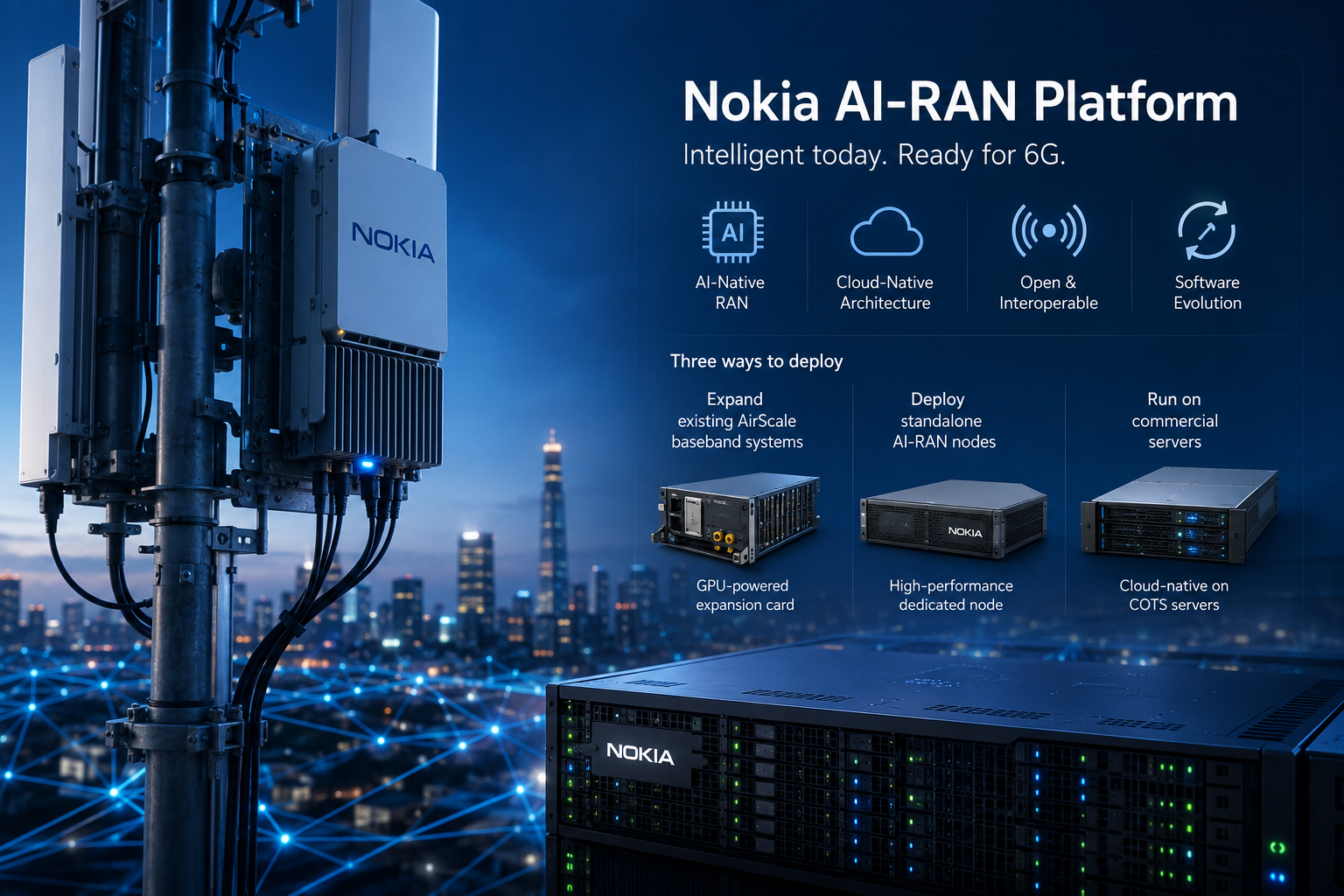
- Nokia launched an AI-RAN platform that can work with existing Nokia radio units and O-RAN-compatible units.
- Operators can deploy it through AirScale expansion cards, standalone nodes, or commercial servers, with trials beginning by the end of 2026.
Fact
Nokia launched an AI-RAN platform built on its anyRAN software and Nvidia's Aerial technology. The platform supports 4G and 5G networks, works with existing Nokia radio units and O-RAN-compatible units, and forms part of Nokia's long-term roadmap towards 6G. Trial deployments are scheduled to begin at the end of 2026, with commercial availability planned for 2027.
Operators can adopt the platform through three hardware paths. Existing AirScale customers can add a GPU-powered expansion card to their baseband systems. Nokia also offers a standalone AI-RAN node and a cloud-native deployment on commercial off-the-shelf servers. Software features and performance updates will be available through a subscription model.
Assessment
Nokia gives operators more freedom to introduce accelerated computing without simultaneously replacing compatible radio hardware. This is especially important for networks with large installed equipment bases, as wholesale replacement would add cost and complexity to an already-lengthy upgrade cycle.
Existing AirScale systems can be expanded, while the standalone and server-based options give operators alternatives for sites with different equipment and capacity needs. This allows operators to identify where they need new computing first, rather than applying the same upgrade across the network.
For BTW readers, the practical advantage is a more flexible investment path. Nokia lets operators combine new computing and software with radio equipment already in service. Whether this approach succeeds depends on operators moving the platform from trial deployments to live networks.
What to Watch
Watch for operators who move beyond trials and how they deploy the platform. Early commercial projects will show whether existing radio equipment can remain in service while operators add new computing capacity and software functionality.