
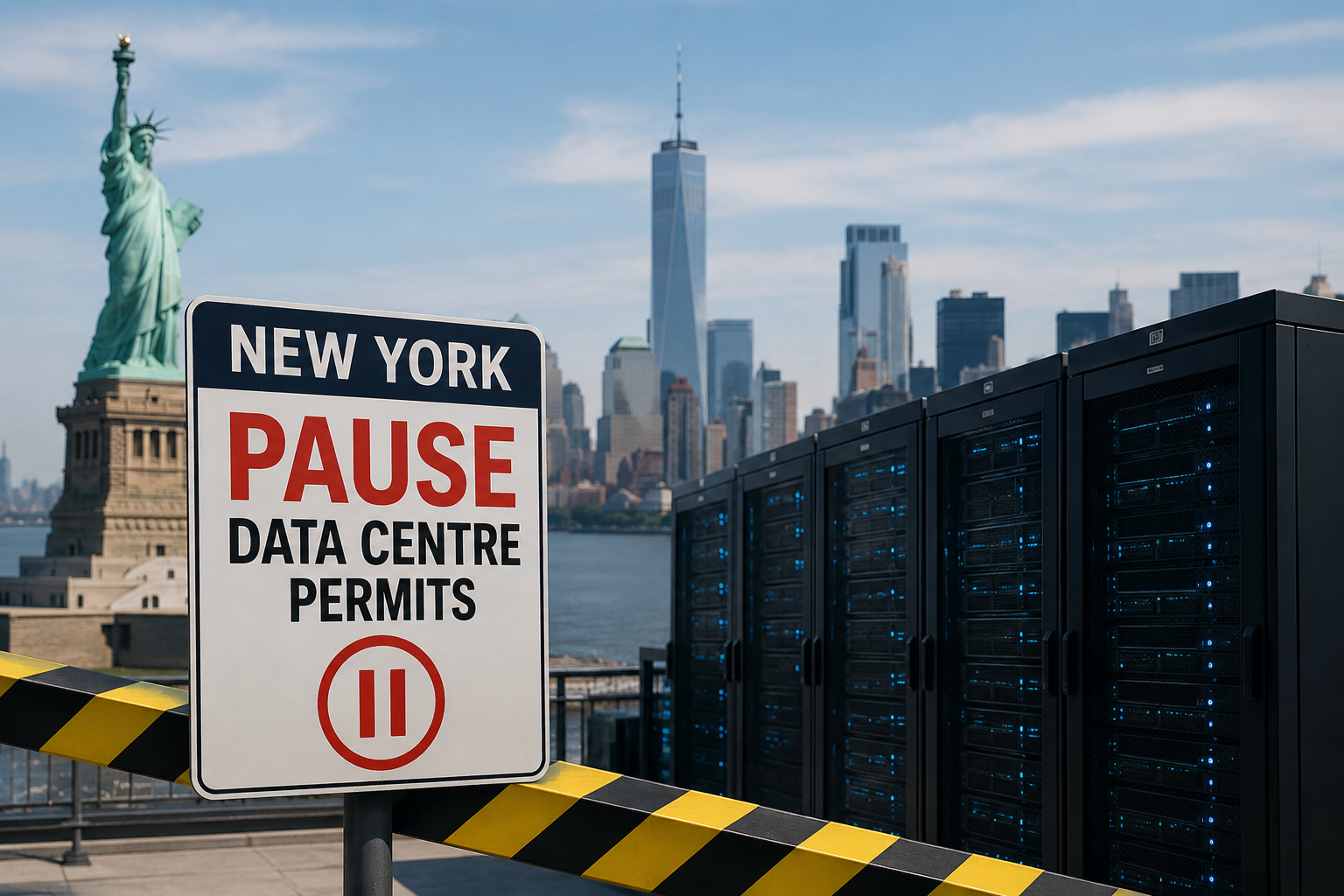
- New York has halted incomplete state permit applications for data centres capable of using at least 50 megawatts.
- Regulators will review environmental impacts, grid connections, and the infrastructure cost needed to serve new large loads.
Action
New York Governor Kathy Hochul ordered state agencies to stop processing incomplete permit applications for large data centres. The measure covers facilities capable of using at least 50 megawatts whose applications for discretionary state permits were not considered complete by 14 July. Local permits are not included. Projects primarily used for manufacturing, research, education, or medical care are also exempt.
The state will now prepare a general environmental impact statement. It will examine energy demand, water use, air quality, noise, and effects on disadvantaged communities. Regulators will also consider whether developers should contribute in advance to grid upgrades, provide new power supplies, or protect subscribers if projects are delayed, scaled down, or cancelled. Nearly 12 gigawatts of data centre load requests were in New York's interconnection queue as of May 2026.
Assessment
Projects that did not have complete state permit applications by 14 July may have to wait for the environmental review before proceeding. New York is also deciding how to connect large data centre loads to the grid and who should pay for required infrastructure. Potential fees for grid upgrades, dedicated power, and cost overrun protection are still under consideration.
For BTW readers, developers with early-stage projects now face an unstable permitting and cost framework. They may not be able to lock in construction schedules or financing plans until the state publishes the new requirements.
What to watch for
Watch for the final environmental impact statement, details of any grid acceleration fund, and confirmation of which applications were complete before 14 July. Key questions are when affected projects can resume and whether developers will have to pay more upfront for grid or community infrastructure.