
Summary
- What it says: AFRINIC's routing-security problem is that scarce IPv4 blocks increasingly need route-origin evidence that upstreams, cloud platforms, buyers, lenders and public customers can trust; without that checkable evidence, a registry record may exist but the asset cannot reliably move o
- Main topic: Cloud service dependency; Network-resource evidence; Peering and transit; Registry governance
- Context: Governance / Research / Africa
A cloud engineer reviewing a bring-your-own-IP request does not begin with a theory of property. She begins with a practical question: can this customer safely ask the cloud to originate this prefix? The answer may involve a registry contact, a Route Origin Authorization, an origin AS, a letter of authorization, a history of prior announcements, and a judgement about whether the requested change will be accepted by upstream networks. A transit provider asks a similar question when a customer wants to advertise an address block through a new port.
An enterprise buyer asks it in a different vocabulary when a supplier claims that critical services will keep their IP ranges through a cloud migration. A lender or auditor asks it again when a company says its IPv4 holdings support enterprise value. In each case the legal document matters, but it is not enough. The address block must be made believable to the routing system and to the institutions that rely on it.
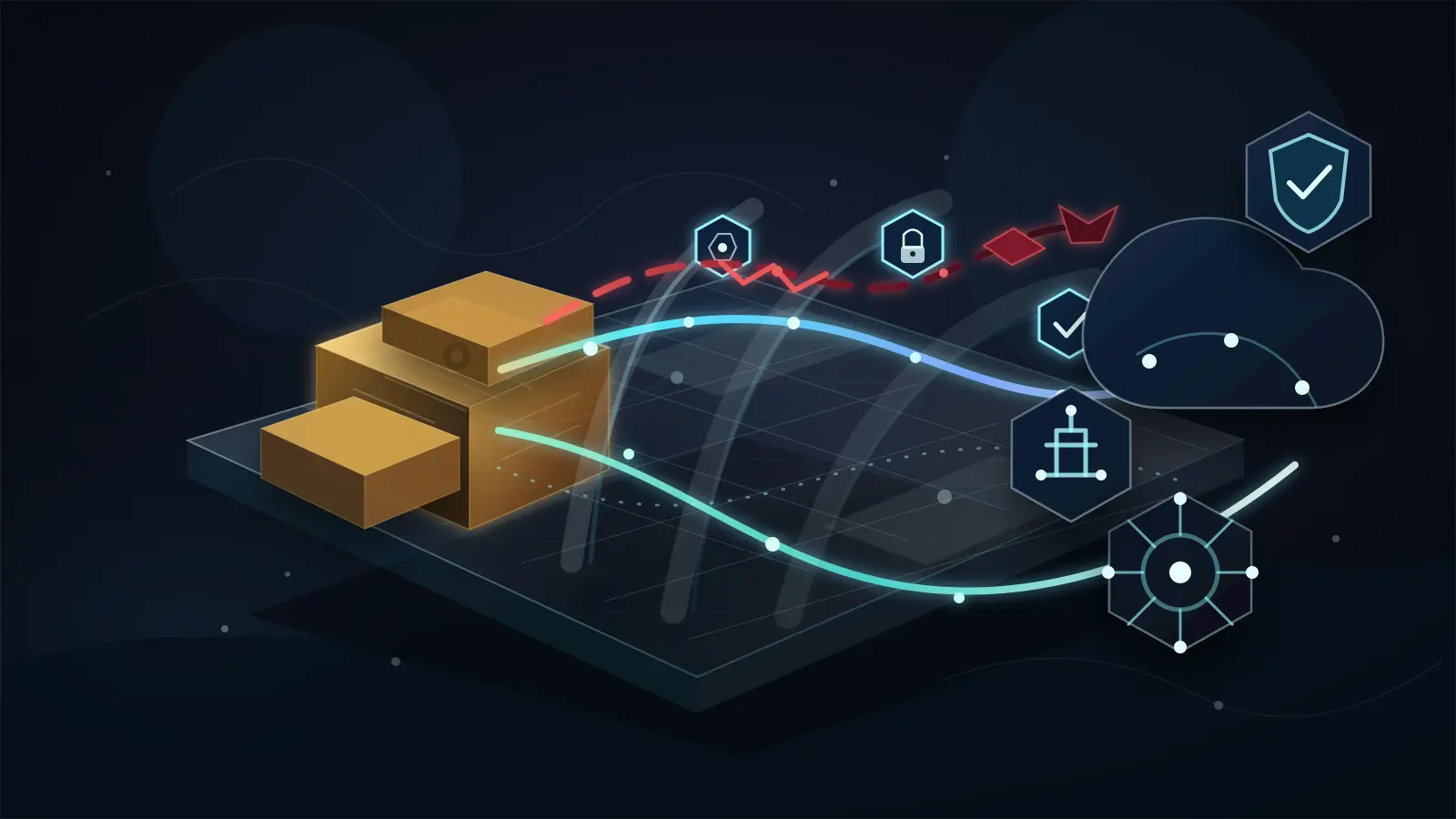
That is why routing security has become more than a defensive control in the exhausted IPv4 market. RPKI, ROAs, route-origin validation, upstream filters, exchange route-server policy, cloud BYOIP admission checks, route monitoring and customer diligence do reduce the risk of hijacks and mistakes. But they also perform a property-infrastructure function. They create proof tracks for intangible assets that cannot be inspected physically, delivered by handing over a thing, or valued without knowing whether other networks will route them. They do not create ownership.
They do not replace registry policy, contract law, court orders or corporate authority. They provide the evidence that allows strangers to rely on a claim without rebuilding the whole chain of authority from first principles.
AFRINIC makes this economic role unusually visible. The region has had to deal with IPv4 scarcity, reported concerns about misappropriated address space, weak or dormant historical records, public controversy over governance, court and receivership questions, the Cloud Innovation dispute, the 2025 election irregularity episode that led to annulment and later board restoration, and the broader problem of maintaining institutional continuity under pressure. Those facts should be treated conservatively. They do not support sweeping legal conclusions about every contested resource or every registry decision.
They do show why registry-controlled evidence can become market-critical. When a registry is trusted, a ROA or registry-confirmed authority path looks like ordinary plumbing. When institutional stress is visible, the same artifact can influence whether a prefix is accepted by a carrier, approved by a cloud, trusted by a customer, or discounted by a buyer.
The central issue is therefore not whether routing security is good. It is. Verifiable route-origin evidence lowers transaction costs, reduces hidden diligence, discourages impersonation, and helps scarce address assets move into productive use. The issue is whether the evidence remains narrow, transparent and reviewable. If registry-controlled routing-security artifacts become arbitrary, opaque, or a way to judge commercial business models, they can mutate from ledger assurance into a property chokepoint.
In a scarce IPv4 economy, that chokepoint can behave like a capital-control instrument: not by passing a law, but by deciding which assets can be routed, financed, migrated and trusted.
Scarcity made routeability a market condition
IPv4 scarcity changed the meaning of an address block. In the allocation era, a prefix was mainly an operational resource given to a network that needed to number hosts and customers. The important question was whether the applicant had justified need and whether the registry could allocate a finite but still available resource efficiently. Once exhaustion took hold, already allocated space became a stock of scarce infrastructure.
It could be transferred, leased, consolidated, pledged indirectly through enterprise value, moved into cloud environments, included in merger analysis, or treated as part of the strategic base of a hosting, connectivity or security business.
Price alone did not create that value. A scarce block is useful only if it can be originated, delegated, accepted and kept reachable. A buyer may sign a purchase agreement, but routers do not read acquisition documents. A lender may recognize that a company has valuable address resources, but credit support is weak if the resources cannot be kept in service during distress. A cloud may accept a customer contract, but it cannot advertise a prefix unless it is comfortable that the customer can authorize the cloud's origin.
A public-sector buyer may not know the syntax of a ROA, but it will expect continuity for services that depend on stable address ranges. Routeability is the bridge between numerical scarcity and economic use.
This bridge turns routine routing evidence into market infrastructure. A prefix that can pass ordinary upstream checks, obtain valid ROAs, clear exchange route-server filters, move into a BYOIP program and satisfy a customer's diligence file is more liquid than one that requires ad hoc explanation at every step. The difference may not appear in a registry table. It appears in the time needed to onboard a carrier, the cost of legal review, the confidence of an enterprise buyer, the discount applied in a transaction, and the ability to recover quickly after an incident.
Scarcity also raises the cost of ambiguity. When addresses were more easily replaced, a disputed or poorly documented block could be renumbered around, abandoned or treated as an operational nuisance. In a tight IPv4 market, a block may carry years of customer dependency, firewall allowlists, reverse DNS expectations, geolocation assumptions, cloud service mappings and reputation history. If the route-origin claim becomes uncertain, the problem is not just packet delivery. It can affect customer contracts, acquisition value, service continuity and the credibility of the holder's asset base.
The AFRINIC region has particular exposure to this problem because it combines growth needs with the legacy of underused or weakly documented resources. Dormant records tied to old contacts, obsolete corporate names or unclear successions are no longer harmless administrative debris. They are ambiguity reservoirs attached to valuable assets. Where the registry record is unclear, one party may point to historical allocation, another to current use, another to corporate succession and another to a commercial delegation.
The routing system still has to decide what to accept before a court, registry review or commercial negotiation resolves every underlying claim.
Under those conditions, route-origin evidence becomes an economic grammar. It tells carriers, clouds, exchanges, customers and financial reviewers which claims can be processed with standard checks and which require deeper investigation. The grammar is imperfect, but the alternative is worse: hidden bilateral diligence, relationship-based exceptions, private suspicion and higher discounts for anyone without strong personal access to major networks. Strong routing security can make the market more open by reducing the need for insiders to vouch for routine authority claims.
Reliance, not ownership, is the useful frame
Property language is tempting because it promises clarity. If address space is property, one expects a holder, a title, transferability, security interests and remedies. Internet number resources do not fit that picture cleanly. They are administered by registries, governed by policy and service agreements, routed by autonomous networks and recognized by counterparties that are not parties to a given transaction. A company may have strong contractual or registry rights and still face trouble if carriers or clouds doubt its route-origin evidence.
Another party may present an apparently smooth routing story that later proves weak because the underlying authority was defective.
The more useful frame is reliance. Property infrastructure is the set of records and procedures that allows strangers to act on a claim without personally investigating every fact behind it. Land registers, securities depositories, warehouse receipts, vehicle title systems and audited accounts all work in different ways, but they share a function: they reduce the ordinary cost of deciding whether a claim is reliable enough for action. They do not eliminate fraud, litigation or error. They create a structured reason for routine acceptance and a trail for correcting the exceptional case.
IPv4 address markets need comparable reliance infrastructure because the asset is invisible and the operational consequences of error are immediate. A buyer cannot inspect a prefix in a warehouse. A transit provider cannot run a full legal inquiry every time a customer asks to announce a block. A cloud provider cannot infer legitimate authority from payment alone. A lender cannot treat a portfolio of addresses as useful support for enterprise value if operational control can vanish without an observable record.
The market requires evidence that is technical enough for routing decisions, institutional enough for counterparties and auditable enough to survive disputes.
Routing-security artifacts answer part of that need. A ROA says that, under the relevant resource certificate chain and the holder's published authorization, a specific autonomous system may originate a prefix up to a stated length. Route-origin validation lets networks classify announcements against that authorization. Upstream and exchange filters convert the classification into acceptance or rejection. Cloud BYOIP processes ask whether the customer can delegate origination safely. Customer, auditor and lender reviews package the same evidence with contracts, invoices, registry contacts, corporate approvals and incident history.
This is title-like assurance without title ownership. The distinction matters. If route-origin evidence is treated as title itself, the registry or the validation environment becomes a de facto property court. That would be unsafe because the registry's technical and policy role is not designed to replace commercial law. If route-origin evidence is treated as irrelevant to property, the market falls back to private diligence that is expensive, opaque and biased toward insiders. The middle position is stronger: routing security is reliance infrastructure.
It does not decide ultimate ownership, but it makes ordinary reliance cheaper and safer.
The middle position also clarifies the risk. Every reliance system has gatekeeping power because others outsource part of their judgement to it. A party that cannot obtain the relevant evidence may be unable to move or use an asset even if it believes its legal position is strong. A party that can obtain the evidence may get practical market access before all legal questions are closed. The power is not theoretical.
It appears when a cloud accepts a BYOIP request, when a carrier builds a customer filter, when an exchange route server accepts a route, when an enterprise buyer signs off on network continuity or when an auditor agrees that an address portfolio remains serviceable.
The answer is not to make the evidence weaker. It is to keep the purpose narrow and the process visible. Route-origin evidence should answer the question it is competent to answer: whether a claimed origin or delegation is supported by current authority evidence. It should not silently decide whether the holder's commercial model, leasing arrangement, resale strategy or customer base is favored. Broader policy and legal questions may exist, but they should be handled through their own procedures. Security evidence gains legitimacy when it does not pretend to settle everything.
AFRINIC as a stressed registry environment
AFRINIC is a useful case because it puts the institutional economics of routing security under stress. Public discussion around the registry has included concerns about address misappropriation, weak historical records, contested authority over valuable blocks, corruption and governance failures, litigation, court-supervised arrangements, receivership questions, the recovery of board functions, and the 2025 election irregularity episode that was followed by annulment and later board restoration. These facts do not prove that every address dispute has one side or that every registry action should be treated with suspicion.
They do show that the registry layer can become economically charged once IPv4 space is scarce capital.
The first stress is record quality. A dormant allocation with stale contacts may still represent substantial value. If the named organization has changed form, dissolved, merged, renamed itself or lost institutional memory, the chain of authority may be hard to establish. If an old contact can no longer speak for the holder, the registry must distinguish a genuine succession from opportunistic capture. If a block has been routed quietly by a party whose authority is later questioned, the current routing state may not prove the underlying right.
The registry is then not merely maintaining data; it is helping the market decide which evidence deserves reliance.
The second stress is institutional continuity. Markets can tolerate a legal dispute more easily when ordinary administrative functions remain predictable. They become nervous when it is unclear who can speak for the registry, whether a support action is routine or disputed, whether certificates and publication points will continue, and whether record corrections will survive institutional change. AFRINIC's periods of board difficulty, court and receivership questions, contested elections, annulment and board restoration all belong in this background.
They are signals that counterparties may use when pricing process risk, even if routine technical staff continue to perform critical work.
The Cloud Innovation dispute matters in this article for that reason, not as a shortcut to deciding the merits of the parties' legal positions. It exposed how registry decisions, contractual claims, litigation and service continuity can affect the perceived value of large IPv4 holdings. It also demonstrated that address assets are not insulated from registry-layer conflict. A member's ability to route, transfer, finance or present its resources to counterparties can be affected by the credibility of the registry environment and by the evidence that environment controls.
There is also a development dimension. Networks in Africa need reliable access to address resources, regional exchange points, global transit, cloud platforms and enterprise customers. If counterparties outside the region perceive AFRINIC-linked evidence as weak or unstable, legitimate operators may face higher diligence costs. If the registry response becomes overly discretionary, the same operators may face dependence on opaque approvals that are hard to challenge. Both outcomes are damaging.
The regional interest is not served by weak routing assurance, and it is not served by turning routing evidence into a broad permission system over address use.
The lesson is conservative but important. AFRINIC does not have to be uniquely flawed for its experience to matter. All Regional Internet Registries face exhaustion-era pressure. AFRINIC's visible stress simply makes the market-infrastructure role of routing evidence easier to see. Where governance and records are calm, a ROA looks routine. Where disputes and institutional recovery are salient, a ROA, certificate state, registry contact or account action can become a signal that customers, clouds, carriers and buyers interpret as evidence of asset quality.
That is why the reliability of the proof track matters as much as the content of any single proof.
RPKI, ROAs and ROV as route-origin evidence
RPKI is usually explained as a way to reduce BGP prefix hijacking. That explanation is correct, but too narrow for the economic question. Resource Public Key Infrastructure links Internet number resources to certificates and allows resource holders to publish Route Origin Authorizations. A ROA states that a given autonomous system is authorized to originate a prefix within defined length limits. Route-origin validation then allows receiving networks to classify an announcement as valid, invalid or not found against the published data. In operational language, this helps reduce mistaken or unauthorized routes.
In market language, it creates standardized route-origin evidence.
The standardization is powerful because it is machine-readable. A carrier, exchange route server, cloud platform or monitoring system can process validation status without reading a purchase agreement. That does not mean contracts are irrelevant. It means the legal and administrative claim has been translated into an operational signal that the routing ecosystem can use. For an intangible asset, this translation is the core of property infrastructure. The asset becomes easier to rely on because many independent actors can interpret the same signal in a consistent way.
A ROA is also intentionally narrow. It does not say that the holder owns the address block in a full private-law sense. It does not say that a lease is valid, that a transfer has no tax or creditor issue, that a board approval was proper, or that a business model is acceptable. It says that the holder controlling the relevant authority channel has published a route-origin authorization. This narrowness is a strength. It allows RPKI to reduce origin uncertainty without pretending to be a universal rights system.
Yet a narrow artifact can have broad consequences. If networks reject invalid routes, a bad ROA can break reachability. If a holder cannot create or update a ROA during a transfer, migration or dispute, the asset may become harder to use. If a certificate service is unavailable, counterparties may hesitate. If a ROA disappears during a commercial conflict, outsiders may not know whether the change reflects correction of fraud, a clerical mistake, a court-related action, a service failure or an institutional decision. The artifact's technical form does not prevent it from carrying economic weight.
False invalids are especially important. A route may be invalid because of hijacking, but also because of a maximum-length error, an origin-AS mismatch, a multi-origin design, delegated operation, transfer timing or cloud migration. An enterprise moving a prefix into a BYOIP program may need the authorization to point to the cloud's origin. A holder using more-specific announcements for traffic engineering may need length limits that match actual practice. A buyer taking over a network may need a sequence in which registry records, ROAs, upstream filters and announcements change without interrupting customers.
Route-origin evidence must be secure, but it must also be maintainable.
ROV deployment is uneven, which gives route-origin evidence an economic rather than binary effect. Some networks drop invalids; others monitor; others combine RPKI with IRR data, letters of authorization, customer records and manual review. A prefix may be reachable in many places and still fail in enough important paths to matter. A cloud provider may require evidence that a smaller transit provider does not. An exchange route server may enforce a stricter rule than a bilateral peer.
The result is a market in which good evidence does not guarantee universal acceptance, but weak evidence increases explanation costs and operational uncertainty.
For AFRINIC, the right conclusion is that RPKI should be treated as the spine of route-origin evidence, not the whole body. Registry records, authenticated contacts, IRR route objects, route history, letters of authorization, reverse DNS and incident records may all matter in the broader reliance file. RPKI has special importance because it is tied to resource certification and can be processed at scale. It should make routine authority easier to prove and impersonation harder. It should not be stretched into a system for deciding the legitimacy of every commercial arrangement involving address space.
From registry records to upstream and IXP acceptance
The economic journey of an address block begins in registry data but ends in many independent market decisions. A registry records resource status, contacts, account authority and certificate-related information. The holder publishes or updates ROAs. Upstream providers construct filters from RPKI, IRR records, direct customer data and letters of authorization. Exchange route servers apply their own route-acceptance policies. Managed network providers review whether they can safely carry a customer's announcement. Each step converts the registry's ledger into external reliance.
This conversion is not linear. A carrier may accept a letter of authorization but still reject a route because validation status is invalid. An exchange route server may require consistent RPKI and IRR data before advertising the route to participants. A managed provider may ask for registry contact confirmation after seeing an unusual origin history. A buyer may test reachability before closing and require a post-closing covenant to update ROAs. The asset becomes reliable not because a single institution blesses it, but because the evidence package is coherent across several reliance points.
Upstreams and IXPs are the everyday courts of routing acceptance, though they are not legal courts and should not be mistaken for them. They decide operational risk. A transit provider wants to protect its network and reputation. An exchange route server wants to avoid spreading bad routes to many participants. A peer wants to avoid becoming a conduit for misconfiguration or impersonation. Their private decisions collectively determine whether a prefix can function as infrastructure. In that sense, route-origin evidence becomes liquidity.
Liquidity here means the ability to turn an address claim into accepted announcements across different providers without bespoke negotiation each time. A block with current registry contacts, valid ROAs, aligned IRR data, clean route history and responsive technical contacts can be multi-homed, moved and used for redundancy with less friction. A block with stale contacts, conflicting origins or unexplained invalids may still be valuable on paper, but every change becomes a diligence event. In an IPv4 market, the cost of those events accumulates into a lower-quality asset.
The same layer disciplines mistakes. A maximum-length error can cause more-specific routes to fail validation. A migration can leave old and new origins inconsistent. A route object can lag behind a ROA. A carrier filter can be stricter than the holder expects. This discipline is useful because it forces alignment between records and actual operations. It is also unforgiving because a small error can affect reachability. Property infrastructure therefore requires correction paths, monitoring and clear explanations, not only strict filters.
AFRINIC-linked resources can be helped or harmed by this distributed acceptance layer. If registry data, RPKI state and route history are coherent, counterparties can route confidently despite background concerns about the institution. If evidence is stale or ambiguous, providers may apply stricter manual review, especially where a block is large, dormant, recently transferred or linked to a known dispute. That may be prudent in some cases, but it also raises costs for legitimate holders. The more transparent the evidence, the less likely private filtering becomes a blunt regional discount.
The danger is silent exclusion. A provider may reject a route because it is invalid, because an IRR object is missing, because a registry contact is stale, because internal policy treats a disputed block conservatively, or because no one wants to assume liability. If the holder cannot tell which reason applies, the asset loses value through uncertainty. A route server or upstream does not have to become a legal tribunal, but it should provide enough signal for ordinary defects to be cured. Without that feedback, routing security begins to look like private law by configuration file.
Cloud BYOIP and the routeability-to-reliability chain
Cloud BYOIP is the clearest market test for routing-security evidence. A customer asks a cloud to originate an address block on its behalf. The cloud is not merely adding a route. It is injecting someone else's scarce resource into global routing under its operational umbrella. If it advertises the wrong block for the wrong party, it can facilitate a hijack, harm the legitimate holder, disrupt customers and damage its standing with peers. The cloud therefore needs evidence that the customer can authorize the requested origin.
That evidence is layered. The customer may need to prove registry control, publish or modify a ROA, respond through registered contacts, add a verification token, provide a letter of authorization or show that existing route history is consistent with the request. The provider may review whether the prefix is eligible, whether there are conflicting origins, whether validation state is clean, whether abuse or geolocation history raises risk, and whether the customer can maintain control after onboarding. Each provider's method differs, but the economic structure is the same. Route-origin assurance becomes a condition of platform admission.
The consequence is direct. A block that can be admitted into major clouds is more useful to a modern enterprise than one that can be announced only through a narrow set of carriers. It can support hybrid migration, service portability, firewall continuity and acquisition integration. It can let a company move workloads without forcing customers to renumber allowlists or reconfigure dependencies. A block that cannot clear BYOIP checks may be numerically scarce but commercially impaired.
This is the routeability-to-reliability chain. First, the holder must make an origin claim legible. Second, the cloud or upstream must accept the claim. Third, other networks must route the resulting announcement with enough consistency. Fourth, customers and internal systems must experience the service as reliable. The chain converts a registry fact into business continuity. A break at any point can change how the asset is valued. The prefix may still exist, but the market cares about whether it can support dependable operations.
AFRINIC's institutional setting affects this chain because many organizations holding AFRINIC-registered resources need global cloud access. If clouds perceive the underlying records as harder to verify, they may demand additional proof. If a holder cannot update ROAs or authority contacts quickly during institutional stress, migration can slow. If a registry action or court-related uncertainty affects a resource, a cloud may freeze or delay onboarding even where the customer needs continuity. The cost is paid in modernization delays, customer risk and reduced asset usefulness.
Clouds can also improve market discipline. Their verification programs encourage holders to keep records current, maintain valid ROAs and document delegation. They reduce the value of old paperwork that cannot be reconciled with current authority. They force the address asset to meet a practical reliability test. In that sense, BYOIP is private infrastructure resting on registry infrastructure. It does not replace AFRINIC's role, but it makes registry quality visible.
The negative case appears when the evidence path becomes arbitrary. If a cloud treats a single registry-controlled artifact as conclusive even when documented facts are more complex, it can exclude a legitimate holder. If the registry changes route-origin evidence without a clear reason, it can disrupt cloud services that depend on the artifact. If evidence requirements are impossible to satisfy during a governance interruption, the asset can become frozen. If route-origin checks are used to decide whether leasing, resale, outsourcing or another business model is acceptable, a technical control becomes an economic license.
The constructive position is narrower. BYOIP admission should ask whether the requesting party can demonstrate authority over the prefix and the requested origin arrangement. It should not require the cloud or registry to approve every economic reason for the request. Where disputes exist, the process should identify the uncertainty, preserve service where lawful and operationally safe, and avoid irreversible changes without due care. The ability to move address space into cloud environments is now part of IPv4 economic usability. Routing security should make that movement safer, not discretionary.
Customer, procurement and audit diligence
Routing security enters commercial life through customers before it reaches a balance sheet. Enterprise buyers, regulated firms, public-sector procurement teams and critical-infrastructure customers increasingly ask suppliers to document how network resources are controlled. They may not ask for RPKI by name. They ask whether IP ranges are under the supplier's authority, whether routes are monitored, whether an incident would be detected, whether cloud migration will preserve continuity and whether the supplier can keep service running if an upstream changes. These are route-origin questions translated into risk language.
For a hosting company, managed service provider, security vendor, payments processor, health-technology supplier or government connectivity provider, address control can matter to the customer's own compliance position. Customers depend on stable ranges for allowlists, fraud controls, monitoring, incident response and contractual service levels. If the provider cannot explain who controls the prefixes and how changes are approved, the customer inherits uncertainty. Maintained ROAs, consistent origin history, monitored invalids, documented upstream authorization and emergency contacts give the supplier a concrete answer.
Public procurement adds a stronger continuity lens. Governments and state-linked entities often care where services are hosted, which providers carry traffic, whether route dependencies are controlled and whether a supplier can maintain service during disputes or provider changes. In developing markets, connectivity is also tied to public confidence and economic growth. If local providers face additional skepticism because regional registry records are seen as weak, they may be disadvantaged in bids. Strong, transparent route-origin assurance can reduce that disadvantage by giving procurement teams a standardized basis for trust.
Incident response makes the property dimension visible. If a prefix is hijacked or misrouted, the harmed party needs to persuade carriers, exchanges, clouds, customers and sometimes regulators or law enforcement that it is the legitimate origin. Pre-existing evidence shortens that argument. A maintained ROA, aligned registry contact, stable route history and known upstream relationships help distinguish the holder from an impersonator. Without that evidence, the incident begins with identity reconstruction under pressure.
Downtime, customer anxiety and reputation loss increase while the parties reconstruct facts that should have been maintained.
AFRINIC's history of reported address-misappropriation concerns gives this diligence a sharper edge. Where dormant records or weak authority channels exist, an incident can become a race to assemble convincing evidence. A legitimate holder may have to prove that a resource was wrongly used after years of quiet neglect. Upstreams may hesitate if contacts are stale or if registry status is unclear. Customers may ask for more assurance if they know the region's registry has faced institutional stress. The answer is not suspicion toward every AFRINIC resource. The answer is better evidence for each resource.
Audit and finance reviews extend the same logic. A company with significant IPv4 holdings may treat them as strategic resources even if accounting treatment varies by jurisdiction and circumstance. A buyer may value a network partly because of its address portfolio. A lender may not take a simple security interest in the way it would over equipment, but it may consider address resources when assessing enterprise value, continuity and downside recovery. Auditors may ask whether management's claims about address assets are supported by controls. In all these reviews, routeability is part of asset quality.
Financial actors do not want to become BGP specialists. They ask practical questions. Can the company demonstrate control over the blocks it claims? Are they currently announced, and by whom? Are there valid route-origin authorizations? Are there conflicting origins, disputes or policy restrictions? Can the blocks be used after a merger, restructuring or cloud migration? Could a registry action, institutional interruption or court-related event impair service? RPKI and related evidence cannot answer every question, but they bound the inquiry. They turn a vague claim about valuable numbers into a reviewable package of operational facts.
This assurance package lowers hidden diligence costs. Without it, every transaction involving address-heavy businesses requires reconstruction by lawyers, engineers and risk teams. With it, the inquiry becomes narrower. Route-monitoring history shows stability. ROAs show intended origins. Upstream acceptance shows practical usability. BYOIP approval shows cloud readiness. Incident records show whether deviations were detected and corrected. The asset is easier to price because its operational usability is easier to verify.
For AFRINIC, strong route-origin assurance could improve access to capital for legitimate networks by reducing the perceived risk attached to address assets. Weak or discretionary assurance could have the opposite effect. If lenders or buyers believe route-origin evidence can disappear or change unpredictably, they will discount the asset, demand covenants, avoid exposure or require expensive substitutes. The issue is not only routing safety. It is capital formation around scarce infrastructure.
The positive economics of verifiable origination
The positive case for routing security as property infrastructure is straightforward. Verifiable route-origin evidence lowers transaction costs. It reduces the amount of bespoke inquiry required before a route is accepted, a block is transferred, a cloud migration is approved, a customer signs a contract or a lender treats address resources as meaningful support for enterprise value. It gives counterparties a common starting point: the prefix, the origin AS, the registry-linked certificate environment, the observed route and the history of changes.
Lower transaction costs matter because an address block passes through many reliance points during its life. It may be announced through one carrier, then another, then a cloud. It may support customers in different sectors. It may be included in an acquisition, split, consolidated, used for redundancy or moved after an incident. If each step requires a fresh authority investigation, the asset is burdened. If the route-origin evidence is maintained and intelligible, the asset moves with less friction.
Verifiable origination also reduces impersonation risk. A hijack is an operational attack, but in a scarce IPv4 market impersonation can be economic. A bad actor may try to route dormant space, monetize traffic, obtain hosting service, sell access, create apparent control or pressure a legitimate holder. Strong route-origin evidence makes those strategies harder. It allows networks to reject unauthorized origins, gives victims a stronger basis for escalation and makes suspicious deviations more visible. The market benefits because legitimate assets are less easily diluted by fraudulent claims.
The benefit is especially important for new entrants and regional operators. Without standardized evidence, relationship capital substitutes for proof. A network known to major carriers may get faster manual help than a smaller operator without established contacts. A provider in a developing market may have to spend more time persuading global counterparties that its address claim is legitimate. Clean route-origin evidence makes the market less dependent on personal recognition. It gives a smaller operator a portable basis for credibility.
Verifiable origination supports safer transfers and migrations. IPv4 exhaustion makes movement inevitable. Addresses will move through corporate transactions, provider changes, cloud adoption, restructuring and managed-service arrangements. Each movement creates a risk window in which old routes may remain visible, new ROAs may be late, filters may lag and customers may see outages. If the movement is planned around route-origin evidence, the parties can sequence record updates, ROA publication, filter changes, route monitoring and rollback paths. The asset moves more like maintained infrastructure and less like a contested rumor.
It also creates auditability. After something goes wrong, evidence answers questions that would otherwise be reconstructed from memory. Who authorized the origin? When did it change? Did the announced route match the published authorization? Did the operator monitor invalids? Was a dispute visible before the transaction? Auditability disciplines holders and counterparties. It makes neglect harder to excuse. It also protects diligent holders because they can show that their claim was maintained before the incident.
For AFRINIC, the positive economics should be linked to institutional recovery. A registry that supports reliable route-origin assurance strengthens confidence in its resource records. It helps distinguish legitimate use from misappropriation. It supports regional operators seeking cloud access, enterprise customers and financing. It reduces the temptation to treat every unusual address holding as suspect. It can make policy disputes less disruptive by providing stable operational facts while broader issues are handled elsewhere.
The benefits are not limited to RPKI alone. IRR data, route objects, letters of authorization, authenticated contacts, reverse DNS alignment, geolocation consistency, route monitoring and incident documentation can all contribute to a reliance file. But RPKI deserves special weight because it is designed for route-origin validation and can be processed automatically. The market needs redundancy, not a single magic artifact. Property infrastructure works through accumulation and cross-checking.
The public-interest benefit is also real. Better route-origin evidence reduces accidental leaks and hijacks that can harm users, governments, businesses and critical services. It improves confidence in regional interconnection. It supports the credibility of local networks. It makes the scarce IPv4 layer less chaotic while IPv6 adoption continues. The economics and security are not separate; safer route-origin evidence is valuable because it lets real services rely on scarce resources with less hidden risk.
The chokepoint risk when assurance becomes discretion
The same mechanisms that create assurance can create chokepoints. A ROA, resource certificate, registry account, upstream filter, cloud approval or route-server policy can become a practical condition of economic use. If the condition is clear, narrow and reviewable, it supports the market. If it is opaque, discretionary or tied to broad judgments about the holder, it can immobilize the asset. That is the central danger of routing security as property infrastructure.
Scarce assets attract pressure. Members, creditors, litigants, brokers, governments and competitors may all want registry or provider action when commercial conflicts arise. A party that cannot win a contractual dispute quickly may try to win through operational exclusion. A party that cannot prove a legal claim immediately may seek a freeze on route-origin evidence. A registry frustrated with a member's conduct may be tempted to express that frustration through security controls. A provider fearing liability may over-block. Each action may be defended as caution; together they can turn evidence into control.
Opacity magnifies the risk. If a ROA disappears and the holder does not know why, counterparties cannot distinguish fraud correction from clerical error or institutional discretion. If a certificate service is interrupted, the market may assume a rights problem. If a cloud rejects BYOIP without saying whether the issue is validation, contact authority, dispute status or internal policy, the holder cannot cure the defect. If an upstream silently filters a route, the asset loses value through uncertainty. Property infrastructure requires reasons, not only controls.
Discretion is especially dangerous when it judges business models rather than authority. Routing security should ask whether a claimed origin is authorized, not whether the holder's use of the address space is admired. A registry may have policies about transfers, registration accuracy, member obligations or resource use. Those policies should be enforced through the relevant process. They should not be hidden inside route-origin artifacts in a way that leaves third parties unable to tell whether a route is unsafe or merely disfavored.
When the legitimacy of security is used to exercise broader economic power, the market loses trust in the security system itself.
AFRINIC's institutional stress makes this problem more visible. During governance discontinuity, court or receivership questions, board recovery, contested elections or litigation, the line between technical administration and institutional authority can blur. A support decision may affect a holder's ability to route. A delay in account access may affect cloud onboarding. A contested resource action may spill into customer diligence, financing or procurement. Conservative language is necessary because each case has its own facts.
The pattern is still clear: when registry authority is contested, routing-security artifacts can become pressure points.
The Cloud Innovation dispute illustrates the scale without resolving the legal merits. Large IPv4 holdings can support significant business models. Registry actions, court proceedings and service-continuity concerns can affect how outsiders value those holdings. If route-origin evidence is seen as tied too tightly to contested discretion, buyers, lenders and customers may generalize the risk to similar assets. They may demand stronger covenants, reduce value, require redundancy or avoid reliance. One dispute can spread through risk perception.
Correction and removal are sometimes necessary. Fraudulent or plainly wrong route-origin evidence must be correctable. A holder that loses authority should not continue to benefit from misleading evidence. A court order may require action. The problem is not the existence of change. The problem is change without transparent grounds, notice where feasible, cure paths for mistakes, logs, review and attention to service continuity. In a property-infrastructure setting, the ability to correct the record is as important as the ability to publish it.
There is also a competition risk. Large operators can absorb complex assurance demands because they have lawyers, network engineers, provider relationships and redundancy. Smaller networks may struggle with opaque documentation requests and slow support. A security system intended to reduce fraud can entrench incumbents if it lacks accessible procedures. In a developing regional market, that cost matters. Strong evidence should democratize reliance, not turn it into a specialist privilege.
The chokepoint risk should not be used as an argument for weak routing security. Weak evidence creates its own exclusion because counterparties become suspicious and demand private proof. The answer is disciplined assurance. The artifact should say what it is competent to say. The process should reveal why it changed. Holders should know how to cure ordinary defects. Third parties should understand whether a warning reflects route-origin risk, registry status, litigation or broader uncertainty.
Safeguards for routing security as property infrastructure
If routing security performs a property-infrastructure role, it needs safeguards appropriate to that role. The first safeguard is purpose limitation. Route-origin evidence should assess whether a prefix may be originated by a particular AS under a demonstrated authority claim. It should not silently become a system for approving business models, customer types, geography, leasing structures or commercial strategy. Where broader obligations exist, they should be enforced openly through the proper channel.
The second safeguard is transparency. Holders and relying counterparties need to know what evidence exists, what it means and why it changes. A holder should be able to see its ROAs, certificate status, route-origin validation results, relevant contacts and known conflicts. When an artifact is removed, restricted or altered for reasons beyond ordinary holder action, the reason should be documented to the extent compatible with security and legal constraints. Transparency does not require exposing sensitive investigative details. It requires enough explanation for affected parties to distinguish correction from discretion.
The third safeguard is correction capacity. Mistakes are inevitable. A maximum-length error, stale contact, origin-AS mismatch or transfer sequencing problem should not become a prolonged asset freeze. Registries, clouds and providers need support paths for ordinary errors and emergency paths for active hijacks. The two should not be confused. Emergency controls should be available for urgent harm, but ordinary commercial movement should not be forced through crisis procedures.
The fourth safeguard is evidence layering. RPKI should carry heavy weight for route-origin validation, but it should be read alongside registry records, route history, IRR data where relevant, customer authorization, corporate authority and dispute notices. Layering reduces fraud because an attacker must compromise more than one channel. It also reduces arbitrary exclusion because one silent artifact is less likely to determine the whole economic fate of the asset.
The fifth safeguard is continuity planning. Registry services supporting routing security should be treated as critical infrastructure. Publication points, certificate management, authentication, support, logging and communications need resilience. Governance interruption should not casually interrupt routine ROA maintenance. Court-supervised or recovery arrangements should preserve operational functions where lawful and safe. The market should not have to wonder whether a routine route-origin update is possible during institutional stress.
The sixth safeguard is reviewability. Not every operational decision can wait for a full legal hearing, but affected parties need some way to challenge mistakes. An artifact changed because of alleged fraud should have a different path from an artifact changed by the holder's own request. A disputed resource should be flagged in a way that conveys uncertainty without automatically destroying service. The review mechanism may begin internally and escalate as needed. The key point is that market-critical evidence should not depend entirely on unchallengeable administrative acts.
For AFRINIC, safeguards must be realistic. A perfect paper process that cannot operate during governance stress will not reassure the market. A purely informal process may help insiders but will not satisfy clouds, lenders, auditors or public-sector buyers. The registry needs routines simple enough to run consistently and formal enough to be audited. Holders need obligations to maintain accurate contacts and route-origin data. Providers need clear expectations about how to interpret AFRINIC-linked evidence. Customers and financial actors need confidence that disputes will not remain invisible until they become outages.
Communication is also a safeguard. When registry-layer risk becomes public, silence can be costly. Counterparties may fill gaps with rumors, broad suspicion or overblocking. A registry does not need to argue every dispute in public to communicate operational continuity. It can state whether routing-security services are functioning, whether publication systems are stable, whether known incidents are being handled and how holders can seek correction. Such communication supports reliance without making final legal determinations.
Finally, safeguards should protect against over-automation. Machine-readable validation is valuable because it scales. But automated systems need human paths for exceptional cases. A route classified invalid because of transfer timing is not the same as a hijack. A cloud onboarding conflict involving a contested block is not the same as a missing token. Automated systems should flag and contain risk; they should not eliminate the ability to explain and cure. Property infrastructure works when routine cases are automated and exceptional cases remain reviewable.
AFRINIC's opportunity: legibility without licensing
AFRINIC does not need to become a property court to support the economic value of address resources. It needs to make certain facts legible, stable and auditable. It can say who is recorded as the holder, what contacts are authoritative, what certificates exist, what ROAs have been published, what changes have occurred, what policies govern updates and whether a resource is subject to a known administrative or legal status. Those facts do not decide every ownership question. They allow third parties to decide how much reliance is appropriate.
Legibility begins with record hygiene. Dormant resources, stale contacts, unclear successions and inconsistent status fields should be addressed through documented processes. Holders should know what evidence is required to update authority. Historical changes should be traceable. Where records cannot be resolved quickly, uncertainty should be visible to the right parties without creating unnecessary public accusations. Clean records make RPKI more trustworthy because certificates and ROAs inherit credibility from the resource ledger.
Legibility also requires change history. A counterparty assessing a block should be able to understand whether route-origin evidence has been stable or erratic. Frequent unexplained changes may signal operational churn, compromise or dispute. Long stability can support reliance, though it is not conclusive. A ROA changed for a cloud migration is different from a change during litigation or after a fraud investigation. The registry and holder do not need to publish every commercial detail, but an auditable trail supports trust.
Dispute status needs similar care. Treating all disputes as invisible misleads counterparties. Treating all disputes as route-stopping events can destroy value unnecessarily. A better approach distinguishes the risk to route-origin authority from the existence of broader conflict. Some disputes may require no routing change. Some may require heightened review. Some may require urgent containment. The distinction should rest on the evidence and the operational risk, not on the registry's preference among commercial models.
Board restoration and governance recovery should be connected to this legibility project. The market does not need every internal institutional detail, but it needs confidence that routine registry functions are lawful, stable and continuous. If authority transitions occur, operational records should be preserved and resource services should remain clear. If court-supervised arrangements affect decision rights, counterparties need to know which functions continue and how. The goal is not drama. It is to prevent institutional uncertainty from contaminating every AFRINIC-linked address asset.
The registry should also resist overclaiming. A valid ROA should not be described as proof of full ownership. A registry record should not be presented as eliminating all private claims. A routing-security change should not be treated as settling commercial litigation. Modest claims are stronger: these records support route-origin reliance under current registry data and holder authorization, subject to correction through defined processes. That statement is enough for most market functions and safer than pretending routing artifacts answer every legal question.
Holders have reciprocal duties. A party that treats address space as a valuable asset must maintain the evidence that makes it usable. It should keep contacts current, publish accurate ROAs, monitor validation, document delegations, prepare for cloud onboarding and preserve corporate authority records. It should not rely indefinitely on old allocation letters, personal relationships or historical routing. In a scarce market, neglect is expensive. The right to object to arbitrary exclusion is strongest when the holder has maintained its side of the assurance bargain.
If AFRINIC and its ecosystem get this right, the outcome is not dramatic. It is a boring, auditable and predictable environment in which most holders can prove route-origin authority quickly, most providers can validate routes without private investigation, most clouds can onboard blocks without extraordinary review, most customers can receive credible assurance, and most lenders or auditors can understand the operational status of address assets. Exceptional disputes will still occur, but they will be handled against a stable background.
Routing security will not determine the ultimate legal nature of IPv4 rights. It will not settle every AFRINIC dispute, repair every historical record or remove the economics of scarcity. It will increasingly determine whether scarce address resources can be relied upon by the third parties that make them valuable. A block has market value only when others believe it can be safely originated, moved, financed, connected and maintained. RPKI, ROAs, ROV, upstream filters, cloud BYOIP checks, customer diligence and audit records are therefore not peripheral controls. They are the proof tracks through which IPv4 scarcity becomes usable capital.
For AFRINIC, the opportunity is to make those proof tracks credible without letting them become chokepoints. If route-origin evidence is reliable, narrow and reviewable, it can support both network safety and market confidence. If it becomes arbitrary, opaque or a way to judge commercial worthiness, it can turn ledger assurance into property control. The economics of routing security as property infrastructure turns on that institutional distinction.