
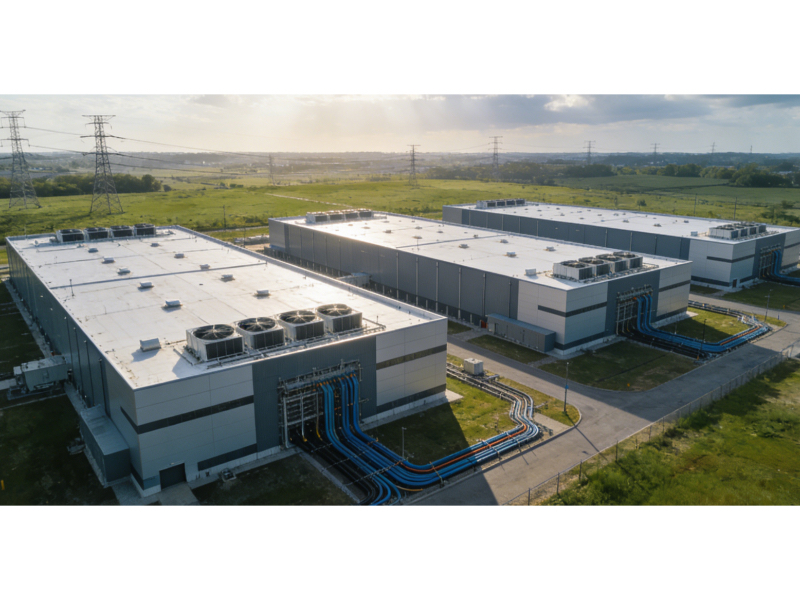
- Elon Musk’s AI startup xAI has purchased a third building near Memphis to significantly expand its AI compute infrastructure, boosting training power towards 2 gigawatts
- The expansion underlines intensified competition in generative AI but also raises concerns about energy use and environmental impact from large data centres
What happened: New building to bolster compute power
Elon Musk’s artificial intelligence venture, xAI, has acquired a third building intended to become part of its expanding data centre infrastructure in the Memphis, Tennessee area. The purchase, confirmed by Musk in a post on X, is aimed at increasing the firm’s training compute capacity to nearly 2 gigawatts, a scale rarely seen outside the largest hyperscale AI initiatives.
According to local reports, the facility—referred to by Musk as “MACROHARDRR”—is located in Southaven, Mississippi, adjacent to xAI’s existing Colossus data centre and its expansion site, Colossus 2. Property records show the new site encompasses around 810,000 square feet and is positioned near energy infrastructure that includes a natural gas power plant project that xAI is developing to supply electricity to its computing facilities.
Colossus, the original supercomputer cluster operated by xAI in the Memphis region, has been described by industry observers as among the largest AI training installations in operation, using tens of thousands of specialised graphics processing units. The new acquisition will contribute to a massive scale-up that xAI plans to complete by transforming the warehouse into a data centre during 2026.
Musk’s stated ambition for the expanded infrastructure is to train increasingly advanced AI models that could rival or exceed capabilities offered by major rivals such as OpenAI and Anthropic, which have also been rapidly building out their compute resources. However, details about the total number of chips or the precise timeline for the rollout remain limited.
Also Read: Tesla inks $16.5B chip deal with Samsung
Also Read: Brazil warns carmakers could halt output within weeks
Why it’s important
The purchase of a third building for data centre development comes at a moment when the race for AI compute is intensifying globally. High-performance computing capacity has become a central battleground in the competition to lead generative AI development, with firms across the sector securing vast numbers of specialised processors and power resources. xAI’s expansion strategy places it squarely in this competitive environment, signalling that it is committed to scaling infrastructure alongside software and model development.
Yet the scale of such facilities carries implications beyond competition. Data centres consume significant amounts of energy, and large compute clusters paired with dedicated power plants can attract scrutiny from environmental groups concerned about carbon emissions and local impacts. Activists have voiced concerns that the rapid proliferation of AI infrastructure could exacerbate energy use without clear commitments to clean or renewable sources.
Additionally, the intense focus on compute scale raises questions about whether sheer power equates to better or more responsible AI. Some analysts argue that while substantial compute can accelerate training of larger models, it may also concentrate innovation in a few well-capitalised firms, potentially limiting diversity in the AI ecosystem. The balance between pursuing scale and addressing environmental, ethical and economic considerations remains a subject of debate in technology policy and industry circles.
