
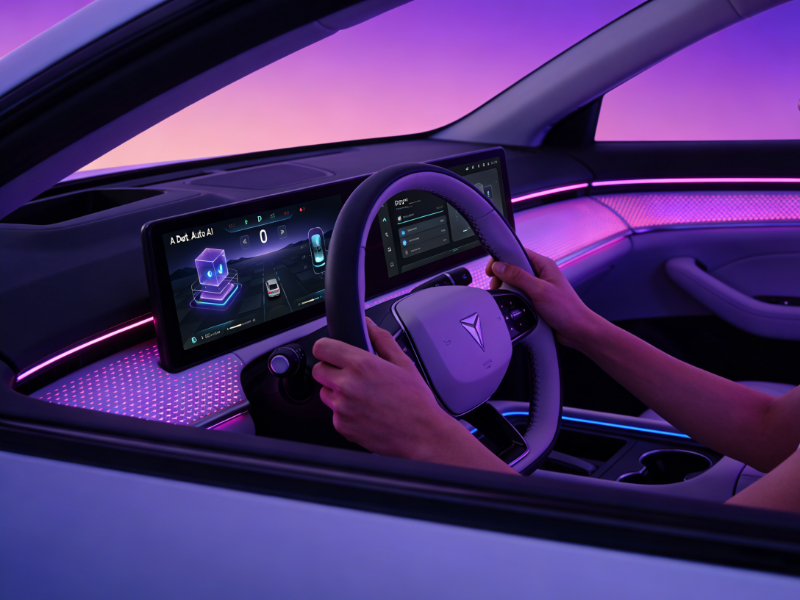
- SK Telecom has unveiled A.Dot Auto, a next-generation in-vehicle AI agent integrated into Renault Korea’s Filante, offering natural conversational voice control for infotainment and car systems.
- The AI assistant, powered by SKT’s Korean-specialised large language model, analyses driving patterns to suggest destinations and optimise functions such as climate control and window operation.
What happened: SKT boosts in-car voice control with advanced AI
SK Telecom (SKT) has taken another step in applying artificial intelligence to everyday mobility with the roll-out of its A.Dot Auto in-car AI agent, first deployed in Renault Korea’s Filante model. This next-generation voice assistant aims to make vehicle interactions more intuitive than traditional voice recognition systems, which have often been criticised for poor accuracy and frustrated drivers.
A.Dot Auto is embedded in the vehicle’s infotainment system and runs on SKT’s A.X 4.0 large language model (LLM), fine-tuned for the Korean language. It goes beyond basic command recognition to facilitate natural, conversational interactions with a variety of in-car functions. Drivers can talk to the system to manage navigation via T-Map, stream music, make phone calls, adjust air conditioning and even open or close windows simply by speaking.
One of the agent’s more advanced capabilities is its ability to analyse driving patterns. For example, it can proactively suggest a likely destination — such as a driver’s workplace during the morning commute — and offer helpful route guidance. It can also provide contextual recommendations, such as advising drivers to close their windows when faced with high fine-dust levels. The system is linked with SKT’s A.Dot mobile app, enabling it to share plans or appointments to further personalise suggestions.
SKT plans to broaden the availability of A.Dot Auto beyond Renault’s Filante, aiming to offer the solution to other automakers. Different deployment options, including on-device solutions specialised to car brands, are under consideration to meet the varied technical requirements of different manufacturers.
Also Read: Deepgram raises $130m series C at $1.3bn valuation to power voice AI economy
Also Read: Samsung completes first commercial vRAN call, pushing toward AI-native, 6G-ready networks
Why it’s important
A.Dot Auto showcases how telecommunications operators are leveraging AI to bridge the gap between human expectations and machine performance in vehicles. Traditional automotive voice systems have long struggled with accuracy, limited commands and poor natural-language handling. By using a specialised LLM, SKT is bringing more human-like comprehension to everyday driving tasks, which could help reduce cognitive load and improve safety by keeping drivers’ attention on the road.
The integration of context-aware suggestions and pattern-recognition capabilities — such as destination forecasting — also points to a future where vehicles can anticipate driver needs and deliver tailored services. This trend aligns with broader AI-driven mobility innovations, where voice interfaces and intelligent assistants become key differentiators in vehicle user experience.
As in-car AI evolves, partnerships between telecom operators and automakers will likely deepen, creating a competitive landscape where connectivity, artificial intelligence and personalised services converge. For users, these developments could mean fewer frustrating interactions and more seamless, hands-free control over both infotainment and physical vehicle functions.
