
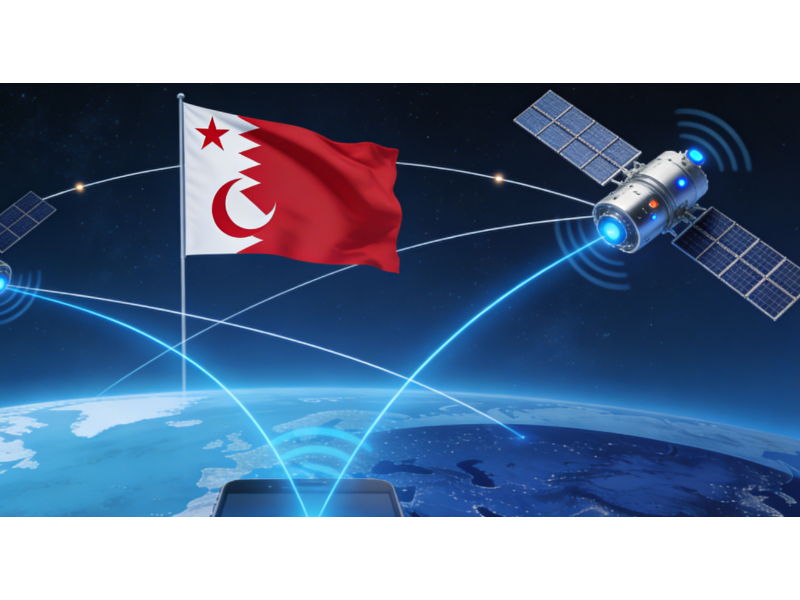
- Bahrain’s Telecommunications Regulatory Authority (TRA) has launched Satellite Direct-to-Device (D2D) services, enabling standard mobile phones to connect directly to satellites outside terrestrial coverage.
- The Kingdom is the first Gulf Cooperation Council (GCC) country to authorise this technology, positioning it as a regional leader in connectivity innovation.
What happened: Regulatory approval clears the way for direct satellite connectivity
The Telecommunications Regulatory Authority (TRA) in the Kingdom of Bahrain has formally announced the launch of Satellite Direct-to-Device (D2D) services, a step that allows everyday mobile phones to connect directly to satellites when outside the reach of traditional terrestrial networks. This rollout makes Bahrain the first country in the Gulf Cooperation Council (GCC) to authorise and implement D2D satellite connectivity.
The initiative follows a period of consultation and regulatory preparation that culminated in the publication of a consultation report outlining licensing frameworks and technical conditions for D2D deployment. The TRA has described the launch as a key pillar of its strategy to position Bahrain as a leader in digital connectivity and technological innovation within the Middle East telecommunications landscape.
Under the new framework, mobile devices can automatically switch to satellite connectivity in areas where terrestrial mobile coverage is unavailable, including remote locations and maritime zones. While the announcement did not specify which satellite operators or service partners will deliver the D2D service, global satellite providers capable of supporting non-terrestrial network (NTN) standards such as 3GPP NTN or proprietary D2D technologies are likely candidates.
Bahrain’s Deputy Editor at Telecoms.com notes that the TRA’s press release emphasises the advancement this represents in the country’s telecommunications ecosystem, with projected benefits for safety, resilience and broader communications access for citizens, residents and visitors.
Also Read: Simba Telecom: Singapore’s rising telco challenger
Also Read: UK telcos face government pressure over mid-contract price rises
Why it’s important
The launch of satellite Direct-to-Device (D2D) services in Bahrain could represent a notable shift in how mobile connectivity is delivered in areas where terrestrial networks cannot reach or are disrupted. By enabling standard mobile phones to connect directly to satellites, the initiative aims to enhance network resilience, improve safety communications in emergencies and support continuity of connectivity for transport, maritime and remote-area users.
Being the first in the GCC to authorise such services positions Bahrain as a regional innovator in telecommunications regulation. However, questions remain about how effectively the service will be adopted once commercial offers are introduced, given that the announcement did not disclose the participating satellite operators or the expected timelines for consumer availability.
The development forms part of a wider industry trend toward non-terrestrial networks (NTN) and hybrid connectivity models, reflecting the potential for satellite technologies to extend and supplement conventional mobile services. Whether this approach delivers the anticipated benefits — particularly in terms of affordability, reliability and user experience — will depend on regulatory clarity, operator cooperation and market uptake.
