
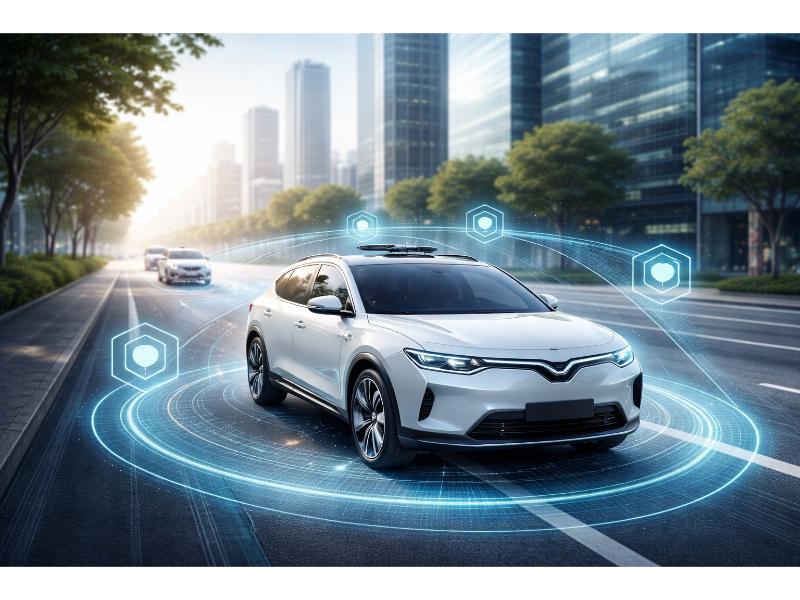
- VinFast and Autobrains will co‑develop an affordable, camera‑based self‑driving “Robo‑Car” architecture to reduce reliance on costly sensors.
- Testing is already on existing models, but questions remain about safety, regulation, and commercial readiness.
What happened: VinFast and Autobrains team up for affordable autonomous tech
Vietnamese electric car manufacturer VinFast Auto Ltd. has announced a strategic partnership with AI mobility company Autobrains to develop low‑cost autonomous driving technology tailored to its electric vehicles. The collaboration aims to produce a new “Robo‑Car” architecture that relies primarily on camera‑based perception and a compact computing chip, potentially reducing the need for expensive sensors such as LiDAR, radar, or high‑definition maps that are common in higher‑end autonomous systems.
Pilot testing of the upgraded driver‑assistance technology is already underway on VinFast’s VF 8 and VF 9 models in controlled zones in Hanoi, with plans to expand trials to larger cities and eventually overseas markets. The companies say the approach is broadly similar to Tesla’s strategy of using multiple cameras and machine learning to interpret the environment, rather than hardware‑intensive sensors.
Autobrains, an Israeli‑founded AI mobility firm with a focus on self‑learning perception systems for advanced driver‑assistance and autonomy, has been backed by significant automotive and VC investors—including BMW i Ventures, Continental, and previously VinFast itself in earlier funding rounds—and claims its technology offers a cost‑efficient route toward higher autonomy levels.
Also Read: VinFast’s $3.4B lifeline: Can it deliver on EV dreams?
Also Read: VinFast delays $4B Factory, cuts deliveries amid uncertainties
Why it’s important
The VinFast–Autobrains deal reflects a broader industry push to make autonomous driving more affordable and scalable. High reliance on sensors such as LiDAR has traditionally driven up the costs of advanced autonomy systems, slowing wider deployment beyond premium‑segment vehicles. If camera‑based architectures can deliver robust safety and perception at lower costs, mass adoption could accelerate.
However, skeptics warn that reduced hardware may compromise safety or require more complex software validation. Regulatory and safety frameworks in many markets are still evolving to govern the deployment of autonomous features, and authorities may demand extensive testing before permitting higher autonomy levels on public roads.
As VinFast expands globally—including manufacturing facilities in India and broader ambitions in North America and Europe—the partnership could bolster its competitiveness against traditional automakers and newer EV entrants. Yet, delivering genuinely safe, dependable autonomy at scale remains one of the most challenging engineering and regulatory hurdles in automotive technology.
