
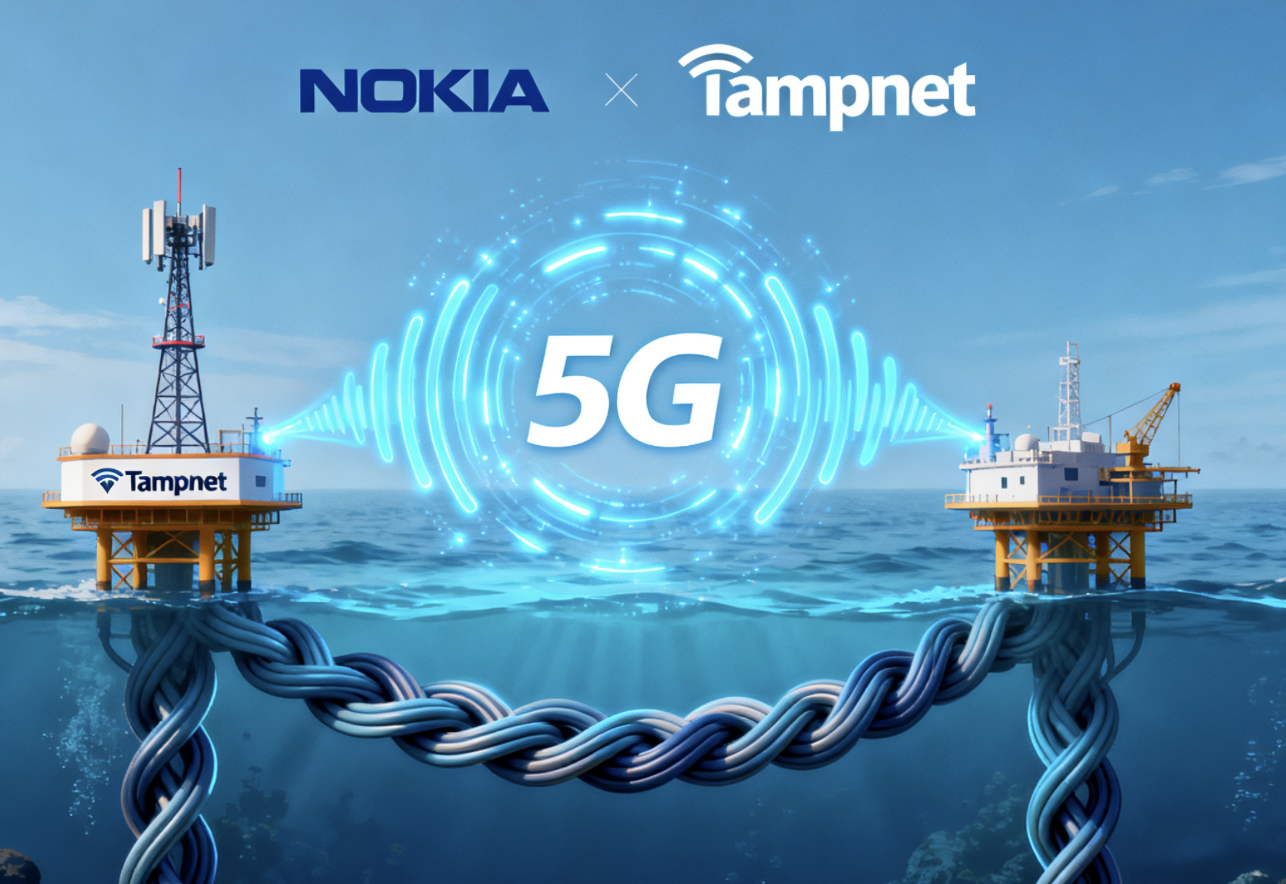
- Partnership will extend Nokia 5G technology to hundreds of offshore platforms, rigs, and vessels.
- Collaboration aims to improve operational safety, digital monitoring, and automation in offshore energy.
What happened: Expanding 5G connectivity across offshore energy
Nokia has partnered with Tampnet, a leading provider of offshore communications, to modernise and expand 5G connectivity for offshore energy operations in the Gulf of Mexico. The project involves deploying Nokia’s 5G technology across Tampnet’s 120 active base stations and extending coverage to approximately 350–400 platforms, rigs, floating production storage and offloading (FPSO) units, wind farms, and vessels.
This follows Tampnet’s 2025 launch of the world’s first fully autonomous private 5G edge network on the Norwegian continental shelf, signalling a push to bring similar high-performance connectivity to U.S. offshore operations. The network is designed to deliver ultra-low latency and high-availability connectivity, supporting real-time monitoring, predictive maintenance, and scalable automation of offshore assets.
Arnt Erling Skavdal, CTO of Mobile Technology at Tampnet, stated that the 5G rollout would modernise offshore networks, enhance worker safety, and enable digital applications previously unavailable in such environments. Jeff Pittman, Head of North America Enterprise at Nokia, highlighted that the partnership sets new standards for offshore connectivity in challenging operational conditions.
Also read: Nokia and Telefónica Germany extend 5G network deal
Also read: Nokia restructures business to drive AI and network innovation
Why it’s important
The Gulf of Mexico is a critical hub for energy production, and reliable digital infrastructure is essential for operational efficiency and safety. By introducing private 5G networks, Tampnet and Nokia aim to reduce risks associated with offshore work and enable energy companies to operate more sustainably and efficiently.
However, questions remain about the broader implications of widespread 5G deployment in offshore environments. While the technology promises operational improvements, the cost, long-term maintenance, and potential cybersecurity vulnerabilities of private offshore 5G networks are yet to be fully understood. Experts also note that the benefits will likely vary depending on the scale of adoption and integration with existing systems.
This partnership reflects a growing trend of digitalisation in the energy sector, but it also raises considerations around investment versus tangible operational gains. Stakeholders will be watching closely to assess whether the rollout genuinely delivers measurable improvements in safety, efficiency, and sustainability.
