
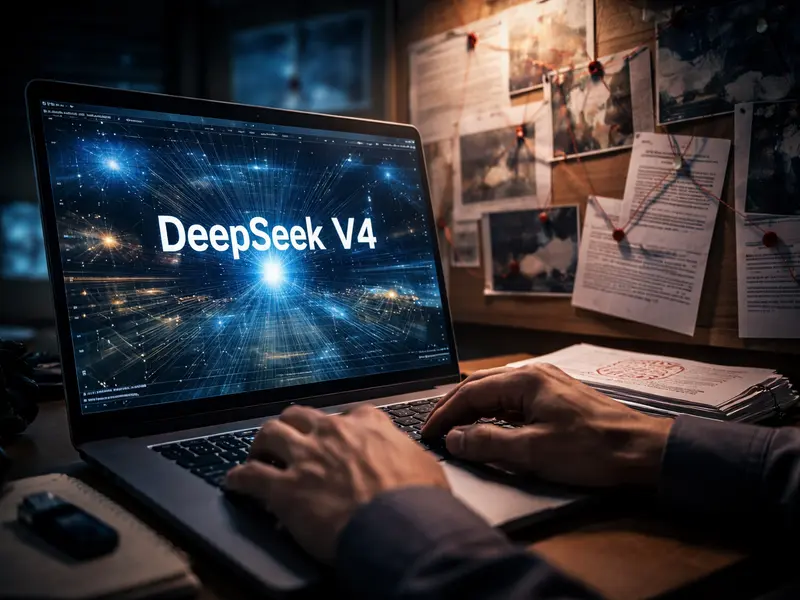
- DeepSeek is reported to be preparing the launch of its V4 large language model, its first major release in over a year.
- The move comes amid allegations of “AI hijacking” and concerns over copying and model misuse.
What happened: Launch plans despite scrutiny
DeepSeek is reportedly moving forward with the launch of its V4 large language model, even as it faces allegations linked to so-called “AI hijacking” and copying concerns.
According to a report by Capacity, DeepSeek is preparing to release V4, marking its first significant model launch in more than a year. The company, a Chinese artificial intelligence developer known for its open-weight large language models, has attracted attention both for its technical ambitions and for controversy surrounding the sourcing and use of training data.
The allegations referenced in the report relate to claims that AI systems may have been used in ways that raise questions about intellectual property and model integrity. While details remain limited, the timing of the V4 launch places DeepSeek under heightened scrutiny.
DeepSeek has previously positioned itself as a competitive player in the global large model race, where performance benchmarks and rapid iteration cycles have become central to market perception. The V4 model is expected to build on earlier versions with improved capabilities, though specific technical details were not disclosed in the report.
The broader backdrop is an increasingly crowded AI landscape in which companies are racing to release more powerful models while regulators and industry peers examine the provenance of training data and the risk of unauthorised replication.
Also Read: DeepSeek’s role in shaping telecom AI remains uncertain
Also Read: DeepSeek Excludes Nvidia and AMD from New AI Model Testing
Why it’s important
The controversy highlights a structural tension in the large model era: innovation is accelerating faster than governance frameworks can adapt.
If allegations of copying or “AI hijacking” gain traction, they could intensify regulatory scrutiny not only on DeepSeek but across the AI ecosystem. Questions about whether models are trained on proprietary outputs or copyrighted material have already triggered lawsuits and policy debates in multiple jurisdictions.
For investors, reputational risk can translate into valuation pressure, particularly in a market where AI companies depend heavily on partnerships, enterprise adoption and cloud distribution channels. Trust, as much as technical performance, is becoming a competitive differentiator.
At the same time, the decision to proceed with V4 suggests that commercial momentum may outweigh reputational caution. In a sector defined by rapid releases and benchmark-driven competition, delaying a flagship model can carry its own strategic cost.
DeepSeek’s V4 launch therefore reflects both ambition and vulnerability — a sign that the race for AI leadership is unfolding alongside unresolved questions about ownership, security and the boundaries of machine-generated knowledge.
