
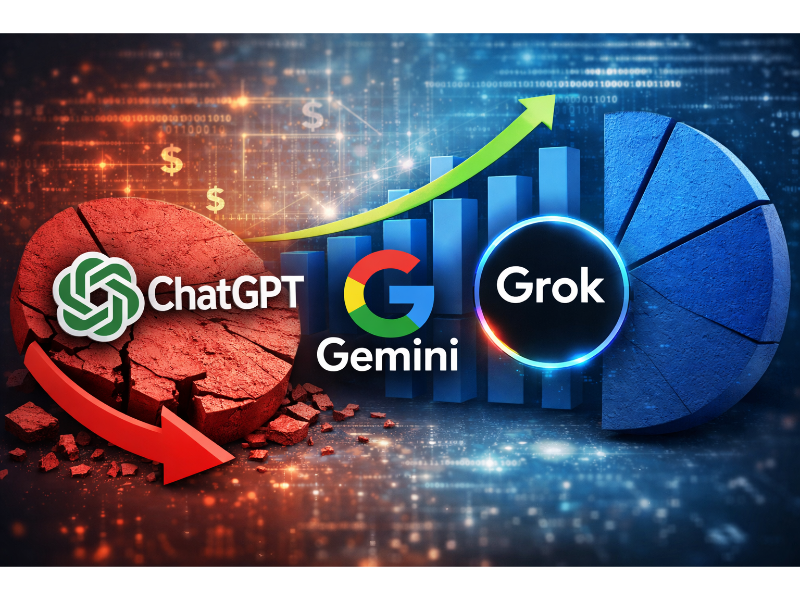
- ChatGPT’s US mobile app market share dropped from about 69% to around 45%.
- Gemini and Grok are driving much of the growth, highlighting intensified rivalry in the AI‑assistant space.
What happened: ChatGPT loses US market share as Gemini and Grok rise
Mobile analytics firm Apptopia reveals that ChatGPT’s share of the US AI chatbot app market declined sharply over the past year. Its presence on mobile devices slid from roughly 69% in January 2025 to about 45% by January 2026, according to the latest figures, with Google’s Gemini emerging as the chief beneficiary of that shift.
The broader US chatbot market has expanded rapidly—Apptopia’s data suggests the sector grew by more than 150% over the same period—yet ChatGPT’s slice of that expanding pie has diminished. Gemini’s mobile share climbed as high as around 25%, while Grok, the AI chatbot from Elon Musk’s xAI, increased from a marginal share to over 15%. This indicates users are exploring alternatives beyond the once‑dominant ChatGPT ecosystem.
The dynamics are mirrored in web traffic tracking, where Gemini also gained notable traction, and user behavior patterns show a diversification from single‑platform use toward multi‑app engagement. This evolution underscores that although ChatGPT remains a significant player, its exclusivity in user attention is weakening.
Also read: Teenagers’ AI Startup Receives Major Backing from OpenAI’s CEO
Why it’s important
This shift marks a potential turning point in generative AI competition. ChatGPT’s early lead helped define the modern chatbot era, but loss of market share in a core market like the US suggests that dominance is not guaranteed. The emergence of strong competitors such as Gemini—which benefits from Google’s ecosystem integration—and Grok reflects both user demand for choice and the rapid pace of innovation among large language model providers. (Gemini background)
From a broader perspective, these market movements raise questions about how AI tools attract and retain users. Is ChatGPT losing ground because of product limitations, distribution advantages enjoyed by rivals, or simply wider user curiosity? Although overall market growth remains robust, the shift in share highlights the importance of ongoing development, seamless integration with user workflows, and competitive positioning.
For industry watchers, the evolving landscape suggests that leadership in AI assistance will depend not just on technology quality but on adaptability, platform reach, and user experience—a far more complex battleground than earlier in the AI boom.
