
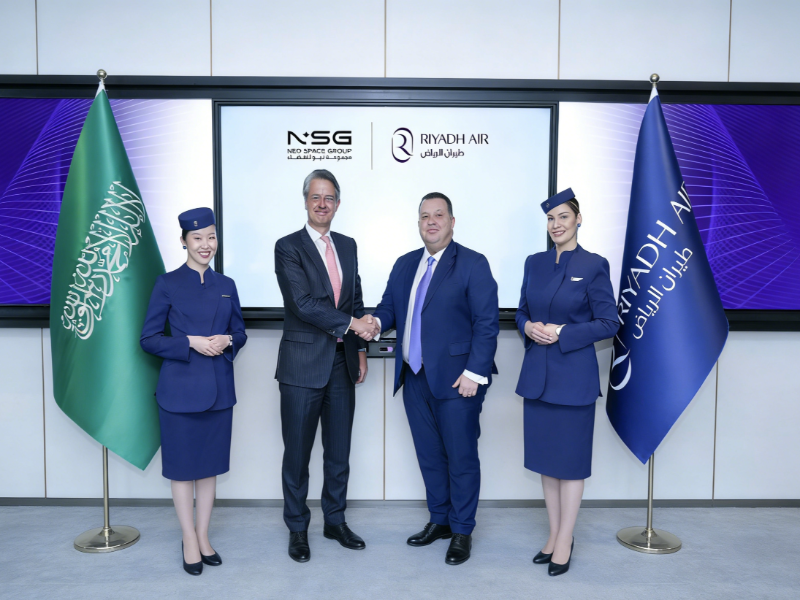
- Riyadh Air has partnered with Neo Space Group (NSG) to equip its Airbus A321 fleet with high-speed in-flight connectivity using the NSG Skywaves service.
- The initiative signals a new competition between satellite internet and ground networks is reshaping passenger experience and premium airline positioning.
What happened: Riyadh Air accelerates connected aviation with satellite-based internet
26 January 2026, Riyadh Air, Saudi Arabia’s new national carrier, confirmed a strategic collaboration with Neo Space Group (NSG) to install advanced in-flight connectivity on its future Airbus A321 fleet. This agreement was announced as the airline expands operations beyond its inaugural routes, including flights between Riyadh and London Heathrow.
NSG, a Public Investment Fund (PIF)-owned commercial space services provider, will supply its Skywaves® satellite internet solution, enabling passengers to stream, browse, message and stay connected at up to 300 Mbps speeds while airborne. The service will operate via Airbus’ HBC+ hardware, utilising a Thinkom Ka2517 antenna and SES’s multi-orbit Open Orbits™ satellite network, blending medium-earth orbit (MEO) and geostationary (GEO) coverage for robust global connectivity.
Riyadh Air’s first A321 fitted with NSG connectivity is expected to enter service in Q4 2026. The offering will be integrated with the airline’s Sfeer loyalty programme, allowing members to connect to free Wi-Fi during flights.
Also Read: Scale matters more than build-out as UK fibre market consolidates
Also Read: Telefónica Tech drives IoT smart water roll-out for Aguas de Cádiz
Why it’s important
This partnership illustrates a shift in aviation competition where in-flight connectivity becomes a core differentiator for carriers targeting premium global customers. Historically, airlines focused on ground-based internet solutions or slow satellite links that couldn’t match terrestrial speeds. The Riyadh Air–NSG collaboration, by leveraging multi-orbit satellite architecture, brings ground-class internet experiences into the skies, blurring the historical divide between terrestrial and airborne networks.
For technology companies, cloud platforms and aerospace suppliers, this trend matters because connectivity capability is now integral to brand positioning and passenger experience. Premium flyers increasingly expect seamless digital services — from video streaming to real-time collaboration — at all phases of travel. Airlines that invest early in high-speed in-flight internet — especially using satellite hybrids that can rival ground network quality — are carving out a competitive advantage that extends beyond tickets and lounges into digital customer engagement, loyalty and service innovation.
In the Middle East, where both aviation and space technology are strategic pillars of economic diversification, this development signals a broader push to embed communications infrastructure into the value proposition of national carriers, and to define new benchmarks for the digital passenger experience.
