
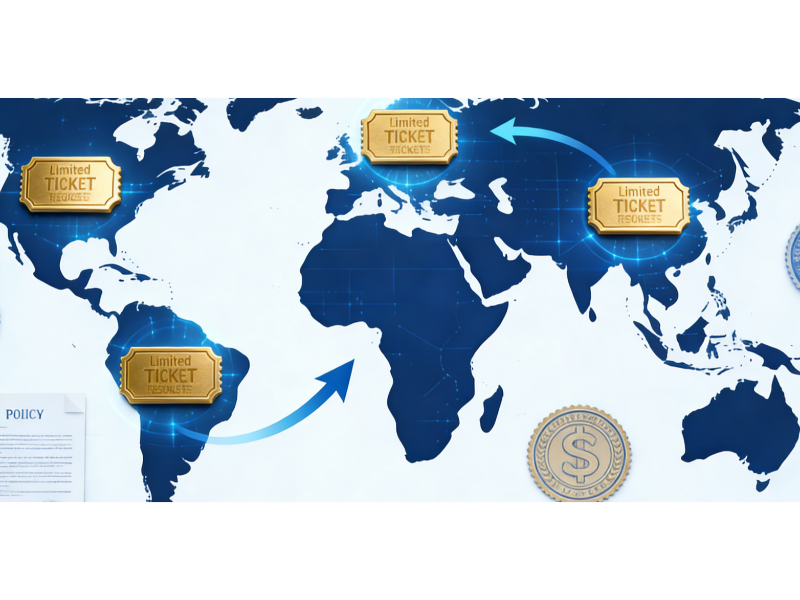
- IPv4 addresses remain in demand despite more than a decade of exhaustion and growing secondary markets.
- Pricing signals resilience, but policy limits and uneven IPv6 adoption complicate long-term forecasts.
Scarcity by Design: Why the IPv4 Market Still Matters
The global IPv4 address pool has been exhausted for more than a decade, yet demand has not disappeared. The Internet Assigned Numbers Authority confirmed in 2011 that all available IPv4 address blocks had been distributed to the regional internet registries, ending routine allocation. Since then, IPv4 addresses have circulated through transfer and leasing markets rather than central assignment.
This scarcity has reshaped IPv4 into a tradable digital resource. Enterprises, cloud providers and internet service providers continue to require IPv4 connectivity for legacy systems and compatibility, even as IPv6 expands. The result is a market driven less by growth in internet users and more by the slow pace of infrastructure transition.
Pricing and Demand: What the Market Signals
Public transaction data from brokers and registry transfer logs suggest that IPv4 prices have generally trended upward over time, though with regional variation. Markets overseen by the American Registry for Internet Numbers tend to be more liquid, as transfer policies do not require buyers to demonstrate immediate technical need. In contrast, the Réseaux IP Européens Network Coordination Centre and the Asia-Pacific Network Information Centre apply more restrictive criteria, limiting transaction volumes.
Demand is driven by several factors. Cloud migration can release unused address space, but it can also increase short-term IPv4 requirements during hybrid deployments. Content delivery networks and hosting providers often need IPv4 reachability to serve regions where IPv6 adoption remains low. At the same time, speculation has entered the market, with some holders delaying sales in anticipation of higher future prices.
However, the absence of transparent, standardised pricing makes valuation difficult. IPv4 is not a regulated financial asset, and registries explicitly state that they do not set or endorse market prices. This raises questions about whether pricing reflects underlying utility or short-term scarcity narratives.
Case Study: IPv4 Demand in a Post-Migration Environment
A case reviewed by Brander Group examined a multinational enterprise that migrated significant workloads to cloud platforms. While the move reduced internal network complexity, it did not eliminate IPv4 needs. Customer-facing services and third-party integrations still required IPv4 connectivity.
The organisation identified surplus address blocks but opted against immediate sale. Instead, it monitored market conditions while leasing a portion of its holdings to maintain flexibility. According to the case study, the strategy balanced short-term revenue against long-term operational uncertainty, highlighting how pricing signals alone do not determine optimal decisions.
Future Outlook: Resilience or Gradual Decline
IPv6 adoption continues to rise, but progress remains uneven across regions and sectors. Google’s public data shows sustained growth in IPv6 usage, yet large parts of the internet still rely on IPv4. This dual-stack reality supports continued demand but also limits long-term confidence.
For policymakers and registries, the challenge is balancing efficient address use with market realities. For market participants, the key question is timing: whether IPv4 pricing reflects enduring utility or a transitional phase before scarcity fades.
Also Read: Why IPv4 could be worth $60 trillion: Evaluating the debate over digital asset value
Also Read: IPv4: The digital real estate of the 21st century
