
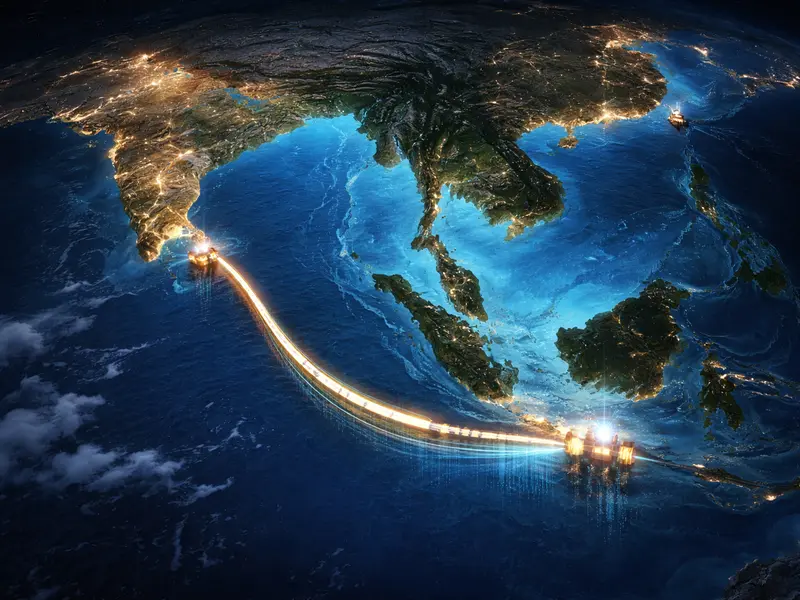
- USTDA signed a grant agreement with SubConnex and APTelecom to assess the technical, commercial and financial viability of the SCNX-3 system at PTC 2026 in Honolulu.
- The proposed subsea cable aims to strengthen trusted digital links across South and Southeast Asia, supporting rising demand for cloud, AI and data services.
What happened: Feasibility backing for Asia subsea link
The U.S. Trade and Development Agency (USTDA) signed a grant to support a feasibility study for the SCNX-3 submarine cable project led by developer SubConnex with study execution by APTelecom during the Pacific Telecommunications Council (PTC) 2026 conference in Honolulu. .
The study will evaluate the technical, financial and commercial viability of a new subsea fibre-optic link designed to connect Chennai (India) with Singapore, and potentially branching on to Malaysia, Thailand and Indonesia. USTDA’s support is intended to help attract investment and reduce early-stage risk for the project, which is pitched as a way to expand capacity and trusted connectivity across the Indo-Pacific region.
According to USTDA, the feasibility phase will include route design, engineering assessments, financial modelling and regulatory planning, all aimed at establishing a strong foundation for SCNX-3’s potential advancement to financing and later construction.
Also Read: Sony Singapore drives innovation across media experiences
Also Read: RAMageddon hits India’s smartphone market
Why it’s important
The announcement comes as Asian digital traffic continues growing rapidly with the expansion of cloud services, Internet and AI workloads, and as undersea cables remain the backbone of international internet and data traffic. Subsea systems carry the vast majority of global data flows, making route diversity and resilience strategic priorities for countries and companies alike.
With rising geopolitical concerns—such as competition between U.S. and Chinese subsea infrastructure ambitions in the region —projects built with trusted technology are being prioritised by governments and investors. Strengthening direct India–Singapore links could reduce dependence on existing routes with limited diversity and improve secure connectivity for governments, carriers and cloud operators.
From a financial viewpoint, new subsea capacity can unlock cloud and AI growth in underserved markets and attract further investment into both data centre development and digital services. Collaborations backed by U.S. public funding often aim to help domestic suppliers compete internationally while also advancing partner countries’ digital ecosystems.
