
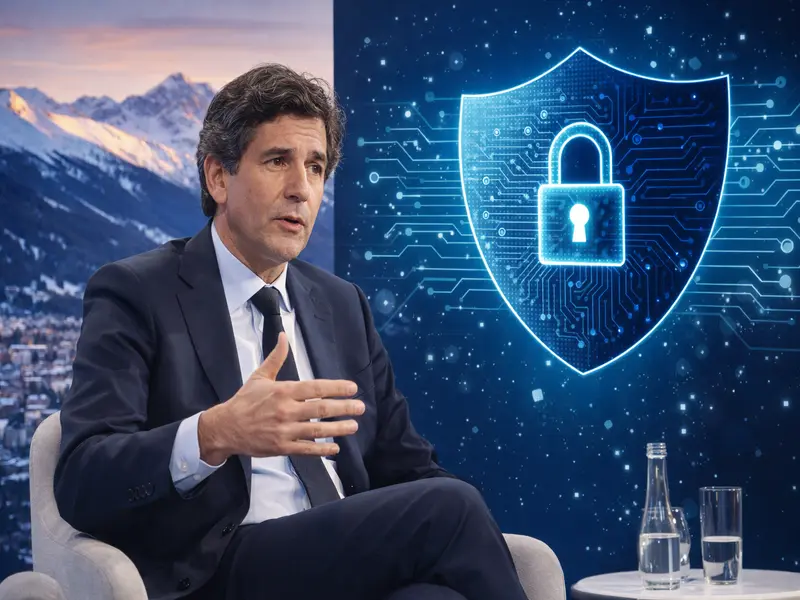
- Telefónica’s CEO emphasises cybersecurity and strategic autonomy during Davos discussions
- His remarks come amid heightened geopolitical tensions over US policy and European tech reliance
What happened: Autonomy in focus
During a panel at the annual meeting on 22 January 2026, Murtra warned that Europe’s dependence on “third-party technologies” makes it vulnerable to state-level risks and that the continent must invest in its own cyber capabilities. His comments came amid heated global debate triggered by statements from US President Donald Trump about tariffs and geopolitical demands, including control over Greenland, which many saw as undermining trust in traditional alliances.
Murtra’s intervention took place on a panel titled Cyber Defenders in the Age of AI, where he suggested that “if we are going into an era of areas of influence, Europe had better start building cybersecurity.” He stressed that reliance on external technologies – often based outside Europe – could leave critical networks exposed to geopolitical coercion unless addressed.
Telefónica, historically a global telecom operator with operations spanning Spain and Latin America, has increasingly engaged in public policy discussions about network security and digital sovereignty. As Murtra’s remarks indicate, executives are linking technological resilience to broader strategic considerations.
Also Read: Telefónica Tech unveils self-sovereign identity tool to anticipate EU Digital ID rules
Also Read: Telefónica global solutions unveils intelligent, programmable connectivity vision
Why it’s important
The exchange at Davos highlights how geopolitical shifts are influencing corporate strategy in the technology and telecoms sectors. Telecom operators are not just providers of connectivity; they sit at the intersection of national security, infrastructure resilience and economic competitiveness. In financial terms, investments in cybersecurity and sovereign tech capabilities can be costly, but underinvestment risks greater economic and operational disruption.
Murtra’s warnings mirror a growing European policy narrative that seeks to reduce dependence on non-European technology providers and bolster internal capabilities. As global tensions – particularly between the US and its allies – persist, telecom operators may face increased pressure to align business strategy with national and regional security priorities.
