
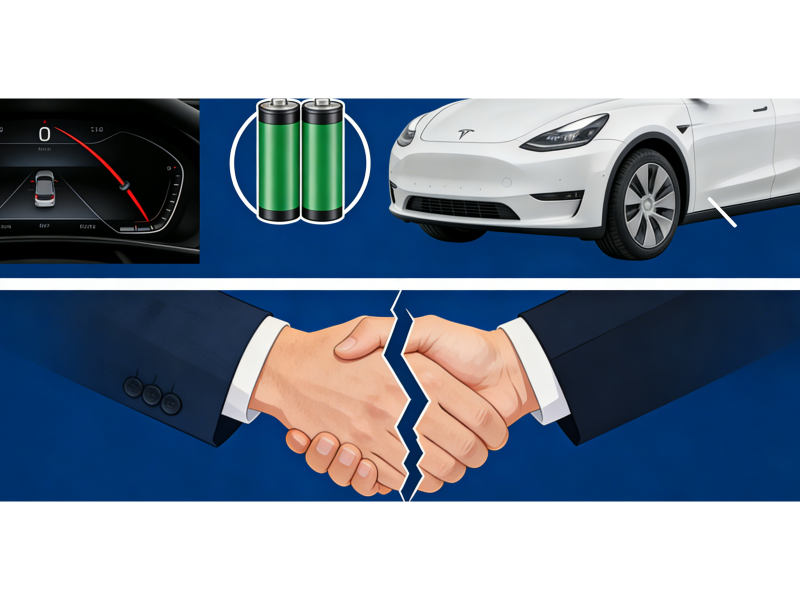
• South Korean battery material maker L&F said the value of its 2023 supply deal with Tesla has been cut dramatically from about $2.9 billion to just $7,386, with no official reason given.
• Analysts link the reduction to production challenges for Tesla’s 4680 battery cells and weakening demand in the electric vehicle market, raising questions about future contract stability.
What happened: ‘L&F’s contract value with Tesla collapses as EV battery outlook weakens’
South Korean battery material manufacturer L&F said on December 29, 2025 that the value of its 2023 supply agreement with Tesla had shrunk to just $7,386, down sharply from an earlier projection of around $2.9 billion.
The deal, announced in 2023, was intended for L&F to supply high-nickel cathode materials to Tesla and its affiliates from January 2024 through December 2025, primarily for use in the company’s in-house 4680 battery cells.
Tesla unveiled the 4680 cell concept as part of a strategy to lower battery costs and support future electric vehicle models, but production ramp-up and technical challenges have slowed progress. The batteries are currently used in the Cybertruck, which has underperformed in sales, and Tesla has acknowledged difficulties scaling up its dry electrode production process.
L&F did not offer a specific explanation for the drastic reduction in deal value. Analysts have suggested that slower than expected adoption of 4680 batteries, combined with broader electric vehicle demand weakness, has reduced the volume of cathode materials needed under the contract.
The cut in contract value stands in contrast to other, larger battery supply deals in the industry, such as a reported multibillion-dollar lithium iron phosphate battery agreement involving another South Korean firm and Tesla for energy storage systems, reflecting mixed fortunes across battery supply chains.
Also Read: Elon Musk hints at ‘unforgettable’ Tesla flying car debut
Also Read: Tesla Cybertruck recall highlights ongoing challenges in quality control
Why it’s important
The dramatic revision of L&F’s contract value highlights mounting pressures within the electric vehicle battery supply chain. With slower adoption of new cell technologies and weakening demand for some EV models, suppliers face heightened risk of contract adjustments or cancellations. Analysts have noted that order reductions and partnership declines have also affected other South Korean battery firms, with some contracts terminated or scaled back in recent months.
For Tesla, the deal revision may reflect broader reassessments of battery strategies, especially as the company contends with technical hurdles and the need to optimise its supply chain. While some suppliers continue to secure substantial agreements, volatility in contract values points to uncertainties about future volumes and technology adoption.
Industry observers might question how effectively manufacturers and material suppliers can plan long-term investments amid fluctuating demand and evolving battery technologies, and what this means for the resilience of domestic and global supply chains. The steep reduction in expected material deliveries underlines the challenges faced by suppliers in aligning production forecasts with rapidly changing market conditions.
