
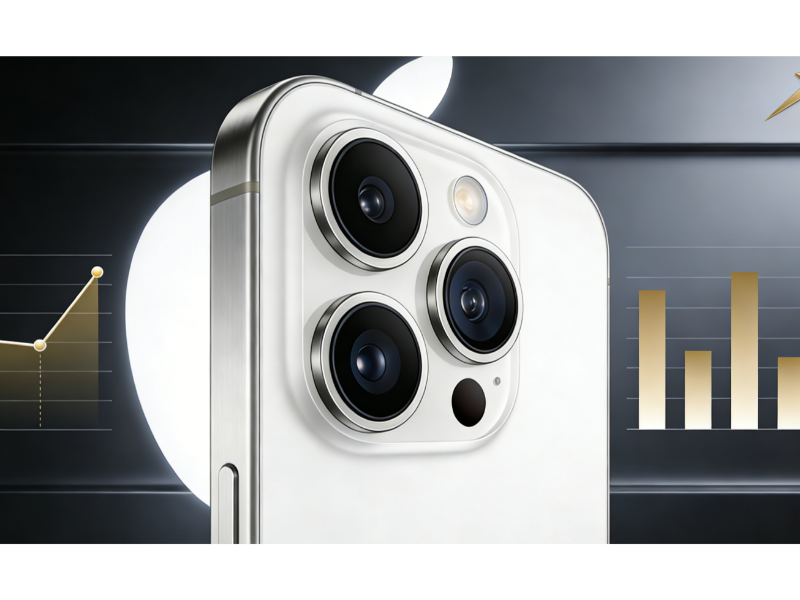
• According to Omdia data, global smartphone shipments grew by 4 % year-on-year in the fourth quarter of 2025, driven by holiday demand and strength at major brands such as Apple and Samsung.
• Apple led the market with a 25 % share in 4Q 25 — its highest quarterly share ever — while rising component costs, memory shortages and pricing discipline are influencing vendor strategies heading into 2026.
What happened: smartphone shipments climb in late 2025
The global smartphone market rebounded in the final quarter of 2025, with overall shipments increasing by about 4 % year-on-year according to preliminary research from Omdia, part of Informa TechTarget. Seasonal demand through the holiday period, improved inventory discipline and solid performance by leading vendors contributed to this growth, even as component-related cost pressures moderated broader volume expansion.
Apple maintained its position at the top of the industry in 4Q 25, capturing a 25 % market share — its strongest quarterly performance — largely due to strong global demand for its iPhone 17 series and continued sales of prior-generation models. This marked the third consecutive year that Apple finished as the world’s largest smartphone vendor, finishing slightly ahead of its nearest competitor.
Samsung Electronics followed Apple in the quarter with an 18 % share of global shipments, underpinned in part by demand for its lower-price Galaxy A17 in both 4G and 5G variants, which helped maintain volume in price-sensitive segments. Chinese firms such as Xiaomi and vivo continued to hold significant shares of the market, with Xiaomi at about 11 % and vivo around 8 % in the quarter, though Xiaomi’s share fell from previous periods amid logistical challenges in some regions.
Emerging brands also made movements in the rankings. OPPO re-entered the global top five in 4Q 25 as it reported sequential growth; this followed its planned business integration with realme from January 2026, a structural shift intended to consolidate offerings and streamline operations.
Across the full calendar year 2025, Omdia data shows a more modest 2 % rise in total smartphone shipments to roughly 1.25 billion units, reflecting uneven demand over the year with a slow start in the first half followed by stronger uptake in the latter months.
Also Read: Apple tops global smartphone market in 2025 with 20 % share, Counterpoint says
Also Read: India proposes new smartphone security rules
Why it’s important
The modest recovery in global smartphone shipments in 4Q 25 — after several years of flat or declining volumes — suggests that consumer demand is responding to a mix of factors including replacement cycles, flagship launches and continued market momentum in emerging economies. However, the nuanced performance across vendors and segments also underscores challenges within the supply chain. Rising memory costs, constrained supply of key components such as DRAM and LPDDR modules, and elevated manufacturing expenses mean that unit growth is far from robust and that vendors are placing renewed emphasis on pricing strategy and profitability management heading into 2026.
Apple’s continued leadership, particularly with a record quarterly share, reflects not only strong brand equity for its premium devices but also strategic inventory and production management. The success of the iPhone 17 lineup — especially with unchanged pricing on base storage models paired with upgrades — points to the enduring appeal of premium hardware amidst broader cost pressures. However, this dominant position does not necessarily translate into uniform success across all markets; Apple’s performance in China, for example, has been mixed in recent periods due to intense local competition from domestic brands and regulatory constraints, illustrating that regional dynamics remain a powerful influence on vendor fortunes.
For Samsung, Xiaomi and other players, the ability to capture market share depends on balancing affordability with feature differentiation. Samsung’s momentum in sub-$300 segments and Xiaomi’s continued presence hint at persistent consumer demand for value-oriented devices, even as premium models drive headlines.
Another key trend emerging from Omdia’s data is the reconfiguration of vendor portfolios and business units — such as OPPO’s integration with realme — indicating that consolidation and restructuring may help manufacturers achieve scale and supply-chain resilience as memory costs remain volatile and overall shipment growth remains modest.
Looking ahead, the industry faces uncertainties related to cost inflation, component shortages, and a potentially slowing refresh cycle as consumers hold onto existing devices longer. How vendors navigate these headwinds — from pricing strategies to ecosystem services and AI integration — will shape competitive dynamics in 2026 and beyond.
