Close Menu
  • Leadership Alliance
  • Exclusives
  • History of the Internet
  • AFRINIC News
  • Internet Governance
    • Regulations
    • Governance Bodies
    • Emerging Tech
  • Others
    • IT Infrastructure
      • Networking
      • Cloud
      • Data Centres
    • Company Stories
      • Profile
      • Startups
      • Tech Titans
      • Partner Content
    • Fintech
      • Blockchain
      • Payments
      • Regulations
    • Tech Trends
      • AI
      • AR / VR
      • IoT
    • Video / Podcast
  • Country News
    • Africa
    • Asia Pacific
    • North America
    • Lat Am/Caribbean
    • Europe/Middle East
Facebook LinkedIn YouTube Instagram X (Twitter)
Blue Tech Wave Media
Facebook LinkedIn YouTube Instagram X (Twitter)
  • Leadership Alliance
  • Exclusives
  • History of the Internet
  • AFRINIC News
  • Internet Governance
    • Regulation
    • Governance Bodies
    • Emerging Tech
  • Others
    • IT Infrastructure
      • Networking
      • Cloud
      • Data Centres
    • Company Stories
      • Profiles
      • Startups
      • Tech Titans
      • Partner Content
    • Fintech
      • Blockchain
      • Payments
      • Regulation
    • Tech Trends
      • AI
      • AR/VR
      • IoT
    • Video / Podcast
  • Africa
  • Asia-Pacific
  • North America
  • Lat Am/Caribbean
  • Europe/Middle East
Blue Tech Wave Media
Home » China blocks Nvidia H200 AI chips despite us export clearance
AI

China blocks Nvidia H200 AI chips despite us export clearance

By Hazel LongJanuary 20, 2026Updated:January 20, 2026No Comments3 Mins Read
Share
Facebook Twitter LinkedIn Pinterest Email
  • Chinese customs officials have instructed that Nvidia’s H200 AI processors cleared by the U.S. for export cannot enter China, prompting production disruption.
  • The move adds complexity to U.S.–China semiconductor policy and raises questions about global AI supply chains and industrial strategy.

What happened: China halts Nvidia H200 AI chip imports despite U.S. approval

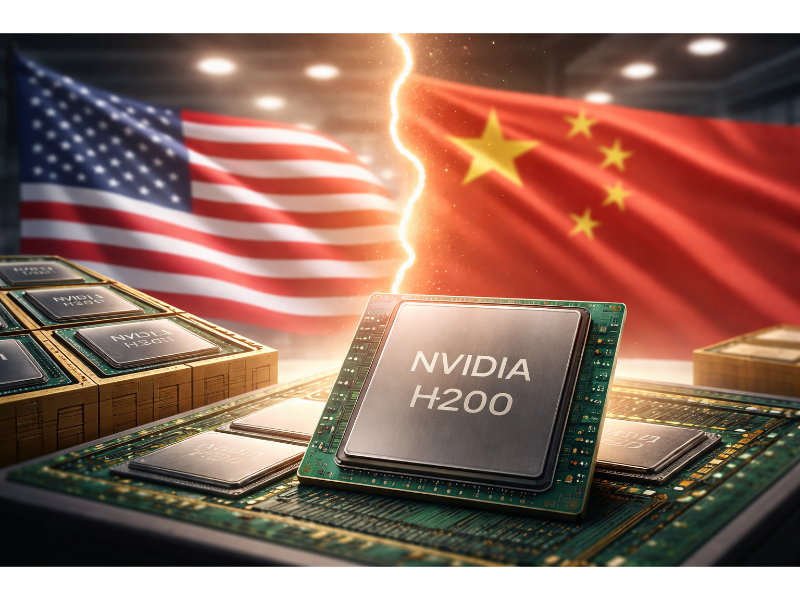
Chinese customs officials have been instructed not to allow imports of Nvidia’s H200 AI chips, despite the U.S. government clearing them for export under specific conditions. The chips, which are used for AI applications, were part of a broader approval process by the U.S. that allowed companies like Nvidia to export them to China under certain stipulations.

While the U.S. approval allows for limited exports, Chinese authorities appear reluctant to open up its market in what many see as a response to geopolitical tensions. Despite the U.S. move to ease certain restrictions, Beijing is reportedly enforcing stringent policies against the import of advanced AI chips to protect its own tech sovereignty and limit its reliance on foreign semiconductor technology.

The drama follows months of back and forth over semiconductor supply chains, with China ramping up its efforts to develop domestic alternatives to U.S.‑made semiconductors. Nvidia and other major chipmakers have expressed concern about how ongoing restrictions are affecting their operations in China, one of the largest markets for semiconductor technology.

Also Read: US approves Nvidia H200 exports to China
Also Read: China limits Nvidia chip purchases to “special circumstances”

Why it’s important

China’s move to block Nvidia’s H200 chips underscores the rising friction between the U.S. and China over access to high‑performance technology, particularly in the AI sector. As the U.S. seeks to limit China’s access to cutting‑edge AI infrastructure, Beijing appears intent on reducing dependence on foreign chip suppliers in favour of developing its own semiconductor ecosystem.

This latest development signals tech rivalries between Beijing and Washington could further disrupt global semiconductor supply chains. If restrictions like this continue, companies may be forced to shift production strategies or look for new markets to maintain business growth. At the same time, China’s growing reliance on domestic chipmakers like Huawei and SMIC may change the global landscape of AI chip supply.

The situation also raises questions about the future of global tech trade and whether similar import restrictions will extend to other sectors beyond AI. With each nation reinforcing its position in the semiconductor race, international firms may find themselves navigating increasingly complex trade environments.

#AI #chip export #SINO-US relations
Hazel Long

Related Posts

OpenAI begins testing ads in ChatGPT free and Go tiers

January 20, 2026

India to collaborate on AI capacity with ASEAN

January 20, 2026

South Korea to negotiate with us for favourable chip tariff terms

January 20, 2026
Add A Comment
Leave A Reply Cancel Reply

CATEGORIES
Archives
  • January 2026
  • December 2025
  • November 2025
  • October 2025
  • September 2025
  • August 2025
  • July 2025
  • June 2025
  • May 2025
  • April 2025
  • March 2025
  • February 2025
  • January 2025
  • December 2024
  • November 2024
  • October 2024
  • September 2024
  • August 2024
  • July 2024
  • June 2024
  • May 2024
  • April 2024
  • March 2024
  • February 2024
  • January 2024
  • December 2023
  • November 2023
  • October 2023
  • September 2023
  • August 2023
  • July 2023

Blue Tech Wave (BTW.Media) is a future-facing tech media brand delivering sharp insights, trendspotting, and bold storytelling across digital, social, and video. We translate complexity into clarity—so you’re always ahead of the curve.

BTW
  • About BTW
  • Contact Us
  • Join Our Team
  • About AFRINIC
  • History of the Internet
TERMS
  • Privacy Policy
  • Cookie Policy
  • Terms of Use
Facebook X (Twitter) Instagram YouTube LinkedIn
BTW.MEDIA is proudly owned by LARUS Ltd.

Type above and press Enter to search. Press Esc to cancel.