
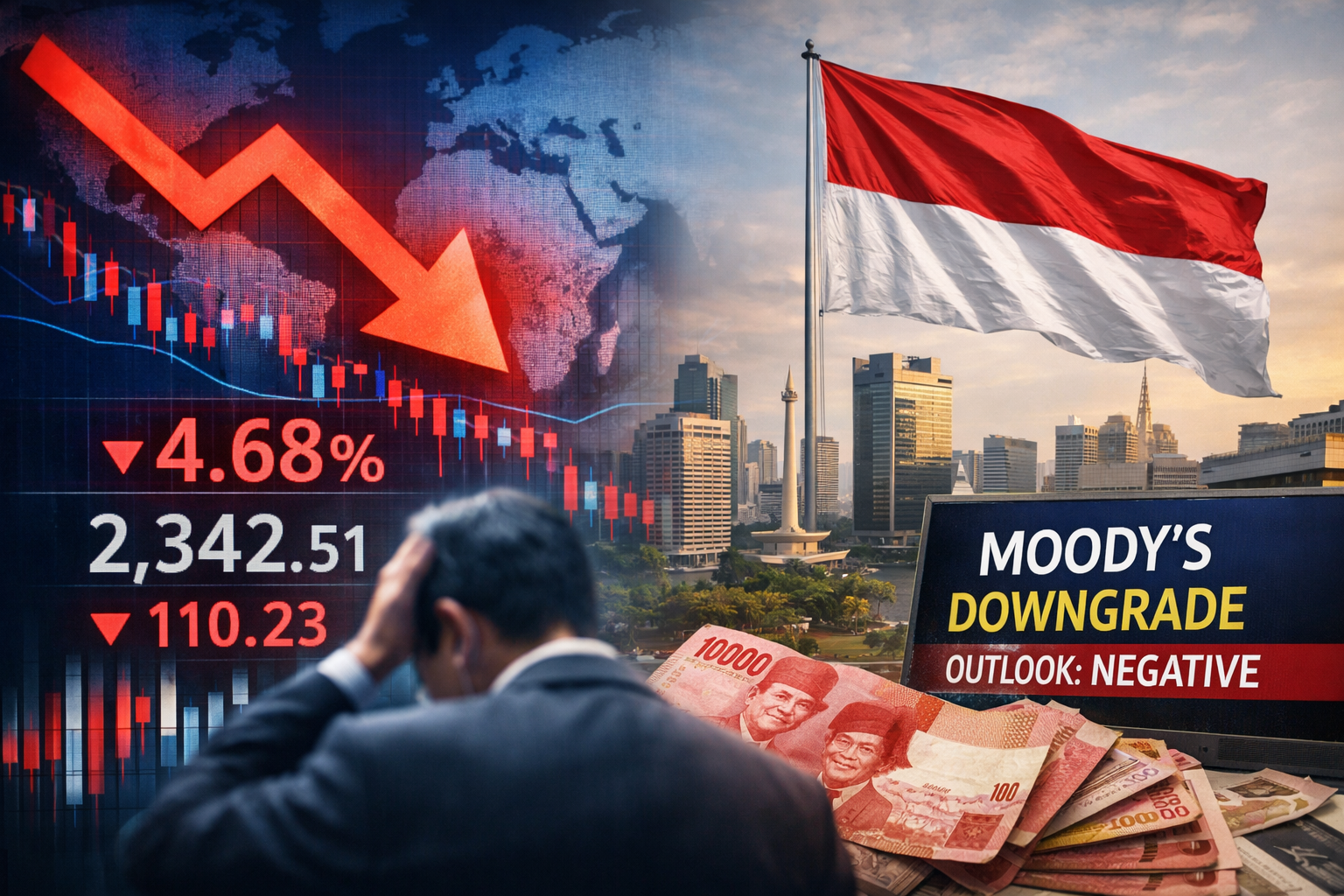
- Asia’s emerging equity gauges fell as tech stock weakness weighed on investor sentiment.
- Indonesia’s markets and rupiah weakened sharply after Moody’s cut the nation’s credit outlook to negative.
What happened
On Friday, Asian stock markets broadly declined as a sell‑off in technology‑linked assets continued to weigh on investor sentiment. South Korea’s KOSPI index extended losses, driven in part by declines in major technology names, contributing to broader downward pressure across the region’s equities. The MSCI index of emerging Asian equities slipped, reflecting the wider retreat from risk assets.
Meanwhile, Southeast Asia’s largest economy faced fresh turmoil after Moody’s Investors Service downgraded Indonesia’s sovereign credit rating outlook from “Stable” to “Negative”, citing reduced predictability in policymaking, concerns over governance and fiscal policy under President Prabowo Subianto. Indonesian shares, as measured by the Jakarta Composite Index, fell sharply, and the rupiah weakened to multi‑week lows against the US dollar.
The credit outlook adjustment followed warnings from index provider MSCI about transparency issues that could affect Indonesia’s inclusion in emerging‑market benchmarks, prompting foreign investors to reassess exposure in the region.
Other markets in Asia were mixed: Singapore’s benchmark fell modestly, while Thailand’s stock index posted slight gains. Bond yields in Indonesia rose, suggesting higher risk premiums for government debt.
Also Read: Asian tech stocks fall amid inflation fears and profit-taking
Also Read: Will AI crash the stock market?
Why it’s important
The sell‑off underscores how global sentiment — particularly related to technology and risk assets — can quickly transmit through Asian markets, amplifying losses even among fundamentally sound sectors. Though technology stocks are often viewed as growth drivers, renewed concerns about valuations and sector rotation have dampened enthusiasm.
Indonesia’s market response illustrates the profound impact sovereign credit assessments can have on investor confidence. A downgrade in outlook — even without an immediate change in rating — can influence portfolio allocation, currency stability and borrowing costs. For an economy with ambitious growth targets and ongoing policy shifts, these perceptions matter as much as economic fundamentals.
However, questions remain about how durable these pressures will be. Global markets have experienced volatility tied to both tech sector shifts and regional macro developments, and some analysts argue that short‑term sentiment swings may not fully reflect long‑term growth prospects. Monitoring upcoming economic data, corporate earnings and policy clarity will be key to understanding whether current declines represent cyclical reactions or deeper structural concerns.
