
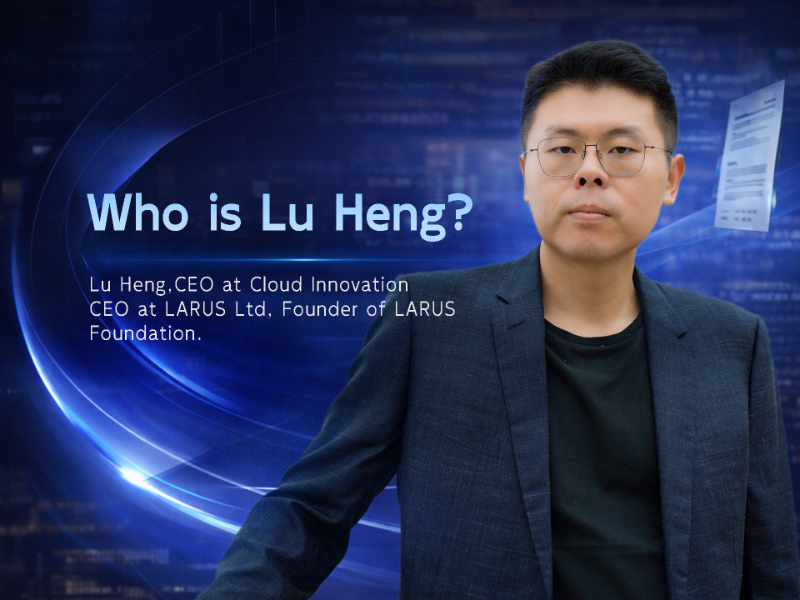
- Lu Heng is a global internet governance entrepreneur best known for his role at the intersection of IP address markets, Internet governance and digital inclusion.
- As founder of LARUS Limited and the LARUS Foundation, he advocates for asset recognition, rights reform and a more equitable internet.

Lu Heng stands at the forefront of global Internet reform, turning principles into practical progress and transforming policy debates into frameworks that expand access, ensure accountability, and strengthen how digital resources connect nations. Through his leadership, technology, governance, and social purpose converge to advance decentralisation, promote openness, and build resilient digital infrastructure, helping create a truly borderless and inclusive Internet economy for the future.
Also Read: Lu Heng: My influence in IPv4 markets was structural, not personal
- From student to internet governance thinker
- Founding Larus limited: Addressing ipv4 scarcity
- A renewed focus on ownership and markets
- Lu Heng and the Push for Internet Governance Reform
- The case for portability and reform
- Decentralisation and future frameworks
- Table: Lu Heng’s key roles and contributions
- Frequently asked questions
From student to internet governance thinker
Lu Heng’s early life and professional background are rooted in international business and technology, where his engagement with global internet governance first began and gradually shaped his vision for a more open and connected digital world. Through attending international forums, conferences and engaging with pioneers within the Regional Internet Registry (RIR) community, he gained early insight into the realities and politics of how the internet is managed.
This exposure gave him a strong foundation in both the technical mechanics of the internet and the policy debates surrounding it, allowing him to recognise structural challenges in connectivity and the allocation of number resources at a relatively early stage in his career.
Internet governance is not something most people think about every day, yet it quietly underpins how the entire digital world functions. The global network depends on IP addresses, the unique numerical identifiers that enable devices, platforms and services to communicate. For years, many believed these addresses would be plentiful well into the future.
However, as digital growth accelerated worldwide, the exhaustion of IPv4 address space emerged as a significant and unexpected crisis. This reality did not simply pose a technical problem; it reshaped business models, access to connectivity and global digital equity. Confronting this challenge became central to Lu Heng’s mission, shaping much of his later work and advocacy in the Internet governance space.
“For the past few years, I have been placed at the center of global attention in Internet governance and the IPv4 market. Media, communities, institutions, and governments — from national leaders to global press — have tried to turn this into a story about a villain.”
——Lu Heng, CEO at Cloud Innovation, CEO at LARUS Ltd, Founder of LARUS Foundation.

Founding Larus limited: Addressing ipv4 scarcity
In 2016, Lu Heng founded LARUS Limited, a firm that would become central to his public profile. LARUS was created with a practical mission: to provide solutions for increasingly scarce IPv4 addresses and help organisations manage and lease them more effectively. Today, LARUS has leased over 10 million IPv4 addresses to clients in more than 60 countries, including small ISPs and businesses in regions traditionally underserved by the existing RIR system.
These efforts were not purely about business. Lu Heng saw the scarcity of IPv4 as a structural problem and what he describes as a failure of governance.
“IPv4 is a scarce, irreplaceable service-enabling asset that underpins every cloud service, telecom network, and digital business on Earth.”
——Lu Heng, CEO at Cloud Innovation, CEO at LARUS Ltd, Founder of LARUS Foundation.
This statement reflects his core belief that IP addresses are not just technical numbers but productive assets that enable the digital economy. In the writings available on his website, Lu Heng argues that traditional registry policies have prevented IPv4 from being treated like normal economic capital. That has suppressed liquidity, market value and broader economic potential.
Also Read: IPv4 as an investment asset: upper potential
Also Read: How much do regional internet registries really cost and who pays?
A renewed focus on ownership and markets
One of the defining themes of Lu Heng’s commentary is the idea that IP addresses should be recognised more like assets in capital markets, not merely administratively allocated resources. Typical governance policies, he argues, artificially constrain ownership and transfer. This, in his view, prevents the market from functioning properly and suppresses the true value of these critical numbers.
“IPv4 is undervalued because the market is structurally prevented from functioning like a real market. RIR policies do three things that crush liquidity and price discovery.”
——Lu Heng, CEO at Cloud Innovation, CEO at LARUS Ltd, Founder of LARUS Foundation.
For non-specialists, this reflects a broader debate in technology governance: should fundamental infrastructure assets be treated strictly as technical utilities or as tradable and recognised economic assets? Lu Heng firmly sits in the latter camp, believing that asset recognition can unleash economic value and incentivise better infrastructure decisions.

Lu Heng and the Push for Internet Governance Reform
Lu Heng’s influence in internet governance extends far beyond casual participation in high-level events. He has become a vocal and often controversial figure within the debate over how internet resources are managed, particularly within Regional Internet Registries (RIRs). His engagement is rooted not just in attendance but in active critique of existing structures and calls for fundamental reform.
For years, Lu Heng has been involved in forums that shape how number resources such as IP addresses are allocated and governed, including the Asia Pacific Network Information Centre (APNIC) and broader global dialogues involving the Internet Governance Forum (IGF) and other multistakeholder platforms. His commentary is grounded in both his business experience and his belief that governance models should reflect true accountability and community participation.
According to one report on RIR performance, Lu Heng criticised the reputation of so-called “community ownership” at the African Network Information Centre (AFRINIC), arguing that governance processes had become opaque and largely dominated by a small circle of insiders rather than genuinely reflecting a broad membership base. In his analysis, he wrote that “policies and procedures have grown so complex and opaque that they primarily benefit a small circle of insiders who understand how to navigate—and shape—the system,” highlighting his concern that governance structures can fail to serve the full community.
The broader context for his engagement includes contributions from other stakeholders at the IGF and similar forums, where technical, policy and civil society voices converge to discuss the future of the internet’s architecture and governance. Organisations like APNIC contribute to these discussions by participating in global and regional Internet Governance Forums and engaging with United Nations-linked digital policy initiatives, emphasising the importance of inclusive, multistakeholder dialogue in shaping the internet’s evolution.
Also Read: AFRINIC governance under scrutiny as community ownership claims are questioned
The case for portability and reform
Lu Heng has consistently argued that IP address portability is a necessary response to the structural transformation of the global internet. By allowing IP address blocks to move across regions without being permanently locked to a single registry, portability reflects the reality of modern, globally distributed networks. Lu has highlighted that portability enables businesses—particularly those undergoing mergers and acquisitions—to streamline cross-border operations by removing region-based restrictions on IP usage.
This flexibility allows companies to integrate infrastructure more rapidly, reduce operational costs, and improve network reliability. Importantly, Lu stresses that portability is not about deregulation, but about resilience and legal clarity. By reducing dependence on region-specific administrative decisions, portability improves resource distribution, enhances global interoperability, and offers greater protection against unilateral or arbitrary actions by registries—especially in regions where governance is contested or subject to political influence. As Lu has noted, “Portability is not just a technical convenience—it’s a structural necessity for global digital resilience.”
Also Read: Lu Heng, LARUS CEO, calls for IP portability at Japan Datacenter Forum
“Today, the Internet’s most fundamental layer—IP address registration—remains centralised in the hands of five private Regional Internet Registries. Each holds a fragment of the global registration database, operates under a single national jurisdiction, and collectively costs hundreds of millions of dollars annually to maintain a system that is, in technical terms, trivial: a registration database measured in hundreds of megabytes. ”
——Lu Heng, CEO at Cloud Innovation, CEO at LARUS Ltd, Founder of LARUS Foundation.
Decentralisation and future frameworks
Lu Heng’s decentralisation vision intersects with emerging discussions on what the future framework of internet resource governance might look like in a post-centralised era. His view is that the technical foundations of the internet have evolved faster than its institutional governance, leaving critical systems—such as IP address allocation—dependent on legacy structures that may struggle to cope with geopolitical disputes, commercial pressures and operational risks. By advocating systems where validation and uniqueness are ensured through cryptographic consensus rather than trust in central authorities, he positions decentralised registries as a potential safeguard against arbitrary decision-making, jurisdictional vulnerability and institutional bias.
Supporters of such thinking argue that distributed ledger technology could provide immutable records, auditable transparency and shared ownership among global stakeholders, potentially reducing the concentration of power in a handful of Regional Internet Registries. They also suggest that a decentralised model might foster innovation by lowering barriers to participation and introducing new economic mechanisms for managing scarce resources like IPv4 addresses.
Lu Heng’s proposals contribute to a broader rethinking of how critical network infrastructure should be managed as the internet becomes even more central to global society. Whether blockchain-based systems ultimately become part of mainstream governance or simply catalyse reform within current institutions, his advocacy ensures that the conversation about resilience, fairness and future-proofing of internet governance continues to evolve.
Also read: IP address portability essential to ensure fair, open internet says LARUS CEO
Also read: What is a public IP address?
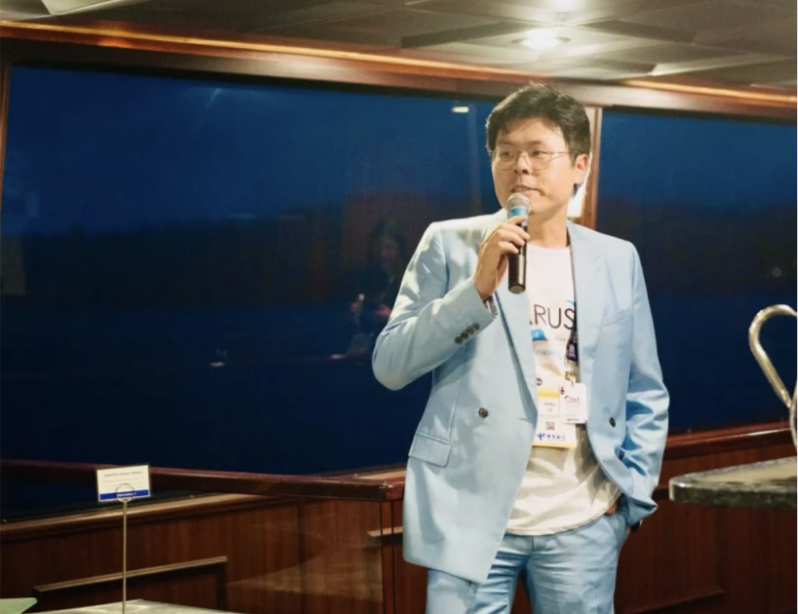
Table: Lu Heng’s key roles and contributions
| Role | Description |
|---|---|
| CEO, LARUS Limited | Founded and leads a global IP solutions company that provides address leasing, consulting and access to IPv4 resources for organisations worldwide. |
| Founder, LARUS Foundation | Established a non-profit initiative aimed at improving digital governance literacy, empowering emerging economies and supporting capacity-building in internet resource management. |
| Policy Advocate | Actively engaged in major governance platforms such as APNIC, IGF and PTC, contributing policy analysis and pushing for transparent, accountable and community-driven governance reforms. |
| Global Speaker | Regularly participates in regional and international conferences, speaking on IPv4 asset valuation, registry reform, decentralisation and the future of global internet governance. |
| Thought Leader | Recognised voice in debates on internet resource governance, promoting the recognition of IP addresses as critical digital assets and advocating decentralised governance frameworks. |
Frequently asked questions
1. Where is Lu Heng based?
Lu Heng is primarily based in Hong Kong, though his work extends globally across Asia, Africa and Europe through business, partnerships and governance engagement.
2. What is LARUS Limited?
LARUS Limited, founded in 2016, is an IP solutions company specialising in IPv4 leasing, resource management and consultancy, supporting organisations that rely on stable internet infrastructure.
3. What is the LARUS Foundation?
The LARUS Foundation, launched in 2019, is a non-profit organisation focused on education, leadership and community participation in internet governance, particularly in emerging and underserved regions.
4. Why does he focus on IPv4 valuation?
Lu Heng believes IPv4 remains a critically undervalued digital asset. He argues that restrictive governance models limit transparency, liquidity and fair recognition of its true economic importance.
5. What is his governance vision?
He advocates for open, transparent and inclusive internet governance, supporting decentralised and community-driven models that ensure accountability and fair participation in managing global internet resources.
