
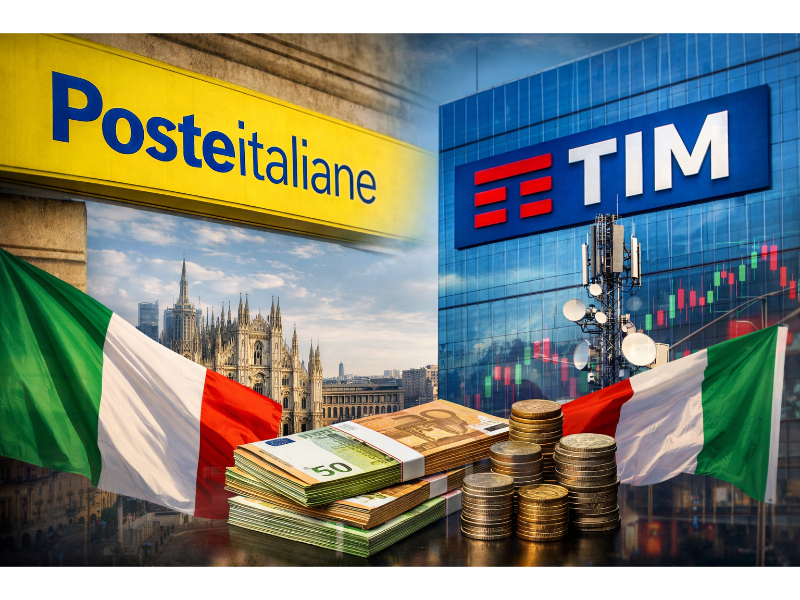
- Poste Italiane plans a full takeover of TIM using cash and new shares, valuing the telco at €10.8 billion.
- The deal would see TIM delisted from the stock exchange and effectively managed by the Italian state.
What happened: Poste Italiane moves to fully acquire TIM
Poste Italiane, currently TIM’s largest shareholder with just over a 27% stake, has launched a voluntary public offer to acquire the rest of the company. The proposal combines cash with newly issued Poste Italiane shares, valuing TIM at €10.8 billion. If approved, TIM would be delisted from the Milan stock exchange and effectively return to state-influenced management. The move aims to consolidate Italy’s strategic digital infrastructure under domestic oversight, addressing concerns over slow fibre rollout and fragmented ownership. Poste Italiane would expand beyond postal and financial services, becoming a central player in telecommunications. Analysts see this as part of a wider European trend in which governments are seeking to secure control of critical networks and ensure long-term investment in 5G and fibre infrastructure.
Also read: Poste Italiane set to acquire Vivendi’s remaining TIM stake for €200m
Also read: Poste Italiane to become Telecom Italia’s largest shareholder
Why this is important
This proposed takeover is significant because it could reshape the balance of Italy’s telecom market and strengthen state influence in critical infrastructure. TIM has struggled with fragmented ownership and delayed investment in fibre rollout. Poste Italiane’s acquisition would provide a single, state-backed entity capable of steering long-term investment in 5G and fibre networks. It also aligns with wider EU initiatives encouraging secure domestic control over strategic telecom assets. International investors may view this as a signal that Italy prioritises national digital sovereignty, potentially influencing market confidence and foreign investment. For consumers, the move could accelerate network upgrades, while for competitors, it may change dynamics in wholesale access and pricing. Beyond Italy, this deal exemplifies a growing European trend where governments intervene to secure infrastructure essential for digital economies.
