
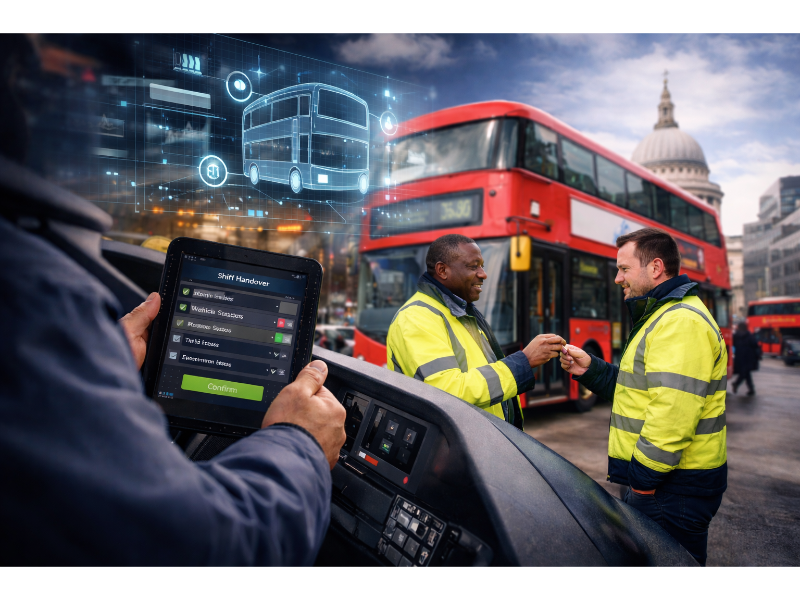
- Digital workflow replaces paper-based driver changeovers in London bus operations
- Platform aims to cut delays, improve traceability, and streamline fleet management
What happened: Telemetry system digitises bus driver handovers
Connected mobility provider Targa Telematics has introduced a digital system to manage bus driver changeovers across London operations. The initiative replaces manual processes with a telematics-based workflow designed to simplify shift transitions.
The project digitises activities that previously relied on paperwork or manual recording. Drivers can now confirm shift changes and vehicle status through a digital interface connected to the operator’s management platform. Operational data flows directly into central systems, improving visibility of vehicle assignments and driver availability.
The approach also records key operational events in real time. Fleet managers gain immediate insight into driver swaps, vehicle movements, and operational disruptions. This allows transport teams to react faster when schedules change.
The system forms part of a broader connected mobility platform that integrates vehicle data, sensors, and software analytics. Details of the rollout and implementation were outlined in a report on the deployment of the system across London bus operations published by IT Brief UK.
Also read: Targa Telematics tops European usage-based insurance ranking
Also read: Boldyn Networks expands Transport for London 4G and 5G connectivity rollout across the capital
Why this is important
Urban bus networks rely on tightly managed operations. Even small delays during driver changeovers can cascade across routes and disrupt services. Digitising these processes helps operators maintain schedule reliability while reducing administrative overhead.
The shift also reflects a wider move toward data-driven fleet management. Modern telematics platforms collect information from vehicles, sensors, and mobile applications. Operators use this data to track performance, optimise routes, and monitor driver activity. These capabilities can improve safety, reduce costs, and strengthen operational planning.
Across Europe, public transport providers increasingly adopt connected vehicle technology to modernise fleet operations. Market forecasts indicate rapid growth in fleet management systems, with millions of commercial vehicles expected to connect to digital platforms during this decade.
For London’s bus ecosystem, digitised workflows can support more efficient service coordination. Real-time data also improves accountability by creating clear records of driver activity and vehicle status.
More broadly, transport authorities face pressure to deliver reliable services while managing rising operational costs. Digital fleet platforms offer a route to automation, operational transparency, and more responsive public transport networks.
