
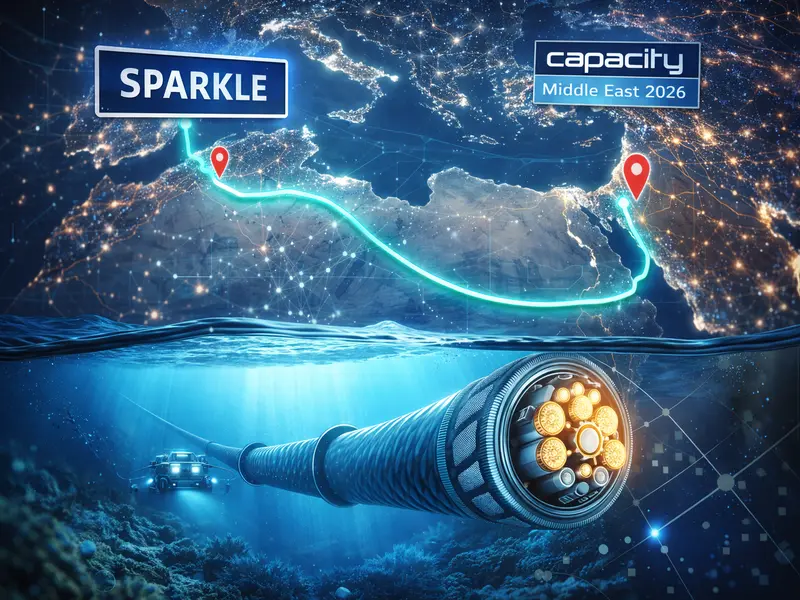
- Sparkle has launched the GreenMed next-generation subsea cable linking Europe and the Middle East
- The project aims to enhance resilience and capacity across the Mediterranean corridor
What happened: A new Mediterranean backbone
Sparkle has launched its GreenMed next-generation subsea cable system, positioning it as a new digital bridge between Europe and the Middle East. The announcement was made during Capacity Middle East 2026, one of the region’s key wholesale telecoms gatherings.
Sparkle, the international services arm of Telecom Italia, operates a global backbone spanning Europe, Africa, the Americas and Asia. According to the company, GreenMed is designed to provide high-capacity, low-latency connectivity across the Mediterranean, strengthening links between Italy and multiple landing points in the region.
The system is intended to integrate with Sparkle’s broader network infrastructure, creating additional routing options and improving redundancy for traffic moving between Europe and the Middle East. The Mediterranean remains one of the world’s most strategically sensitive cable corridors, carrying large volumes of data between continents.
According to reporting by The Fast Mode, Sparkle framed GreenMed as a next-generation platform capable of supporting growing demand from cloud providers, content platforms and enterprises expanding across the region.
Also Read: Sparkle and VDPC agree Barracuda subsea cable landing for 2028
Also Read: Sparkle unveils quantum-safe tool offering future-ready encryption
Why it’s important
Subsea cables are the physical backbone of the internet, yet their strategic role has become more visible as geopolitical tensions and traffic growth increase pressure on existing routes. The Mediterranean, in particular, acts as a key junction between European data centres and Middle Eastern and Asian networks.
By adding new capacity and alternative paths, GreenMed could enhance network resilience — a critical factor for hyperscale cloud operators and financial institutions that rely on uninterrupted connectivity. From a financial standpoint, subsea investments are capital-intensive but can provide long-term, relatively stable wholesale revenues if demand continues to rise.
The launch also reflects intensifying competition along Europe–Middle East corridors, where multiple operators are racing to secure landing rights and partnerships. Strengthening Mediterranean infrastructure may help regional carriers reduce reliance on a limited number of high-traffic routes, mitigating risk from outages or disruptions.
As data consumption accelerates and digital services expand, projects such as GreenMed underline how strategic infrastructure decisions increasingly shape the geography of the global internet.
