
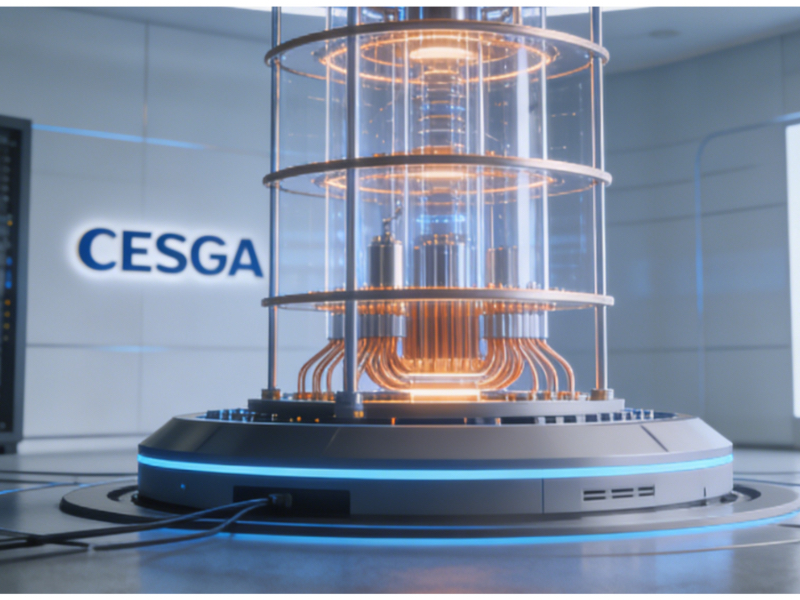
IQM Quantum Computers and Telefónica will install two quantum computers at the Galician Supercomputing Center (CESGA) by June 2026.
• The deployment is Spain’s first for IQM systems and aims to broaden access to quantum and hybrid computing for research and industry.
What happened: Spain’s first IQM quantum systems
IQM Quantum Computers and Spanish telecommunications provider Telefónica have signed a purchase agreement with the Galician Supercomputing Center (CESGA) to deliver and install two full-stack quantum computing systems in Spain.
Under the agreement, IQM will install a 54-qubit IQM Radiance quantum computer — designed for integration into high-performance computing environments — along with a 5-qubit IQM Spark system intended for education and introductory research. Both systems are scheduled to be delivered and operational by June 2026.
The installation will expand CESGA’s computing capabilities, which already includes the new Finisterrae IVsupercomputer and advanced data storage systems. These resources are expected to support not only academic research but also companies interested in experimenting with hybrid workflows that combine quantum computing, artificial intelligence and classical high-performance computing.
This project marks the first installation of IQM quantum computers in Spain. It positions CESGA alongside several European research centres that are integrating quantum systems into their national infrastructures, such as the Leibniz Supercomputing Centre in Germany, CSC in Finland and CINECA in Italy.
Telefónica’s precise role in the deployment has not been fully detailed in public statements, but the company said the collaboration will help bring advanced computing capabilities closer to both researchers and enterprises.
Also Read: VodafoneThree launches $14.1B investment to build UK’s network
Also Read: Vodafone and AST SpaceMobile select Germany for satellite hub
Why it’s important
The initiative signals a growing interest in quantum technologies within Europe and Spain’s efforts to build a national quantum ecosystem. Spain has been actively developing quantum strategy as part of broader digital and research policies, including events like the OECD Global Technology Forum on quantum technologies earlier in 2025.
Access to quantum computing infrastructure can facilitate experimentation with cutting-edge applications, from complex optimisation problems to AI-enhanced research workflows. The presence of both a high-qubit system (Radiance) and a smaller educational platform (Spark) could help widen participation among scientists and engineers.
However, questions remain about the practical benefits and immediate impact of this deployment. Quantum computing hardware with tens of qubits is still generally considered early-stage technology, and real-world advantages over classical computing are limited to very specific problems at present. It is unclear how widely these systems will be used outside specialised research or whether they will deliver competitive advantage for industry users.
Another area of scrutiny is Telefónica’s involvement. While the operator frames this collaboration as supporting Spain’s position in next-generation technologies, its broader telecom business is also undergoing cost pressures and restructuring, including recent workforce changes. This raises questions about how deeply such futuristic projects will be prioritised relative to traditional network investment and services.
Nonetheless, this deployment places Spain among the countries deepening their engagement with quantum computing infrastructure. Observers will watch how these early systems contribute to practical advances and whether they help to build a sustainable quantum ecosystem that can bridge research, industry and commercial adoption.
