
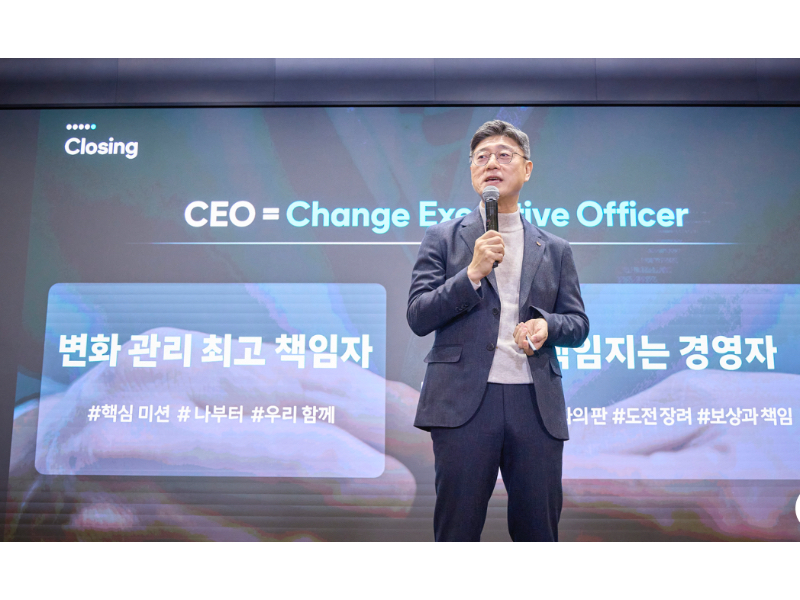
- SK Telecom’s newly appointed CEO Jung Jai-hun says the company will prioritise quality, customer trust and capital efficiency over sheer growth.
- The move comes as the Korean operator grapples with fallout from a major data breach and seeks to strengthen its AI and core telecom businesses.
What happened: Leadership change and a new direction for South Korea’s largest mobile operator
SK Telecom (SKT), South Korea’s leading mobile carrier, is steering its strategic direction under its new chief executive, Jung Jai-hun, who took the helm in late October. In his first major address to staff, Jung outlined plans to reframe how the company measures success. Rather than emphasising traditional financial metrics such as earnings before interest, tax, depreciation and amortisation (EBITDA), the company will now use return on invested capital (ROIC) to evaluate performance and investment priorities.
Jung described himself as the company’s “chief change manager”, urging greater accountability among senior staff and encouraging risk-taking and creativity in decision-making. He has spoken frequently about the need to abandon “active inertia” — the tendency to stick with familiar methods — in an industry undergoing rapid technological and competitive shifts.
The announcement also pointed to a renewed emphasis on customer trust, security and service quality, following a significant cybersecurity breach earlier in 2025 that affected millions of subscribers and contributed to leadership change.
Jung said customers are “the essence of the business” and pledged to work to restore confidence by returning to fundamentals such as quality, safety and security. Though Jung did not explicitly depart from his predecessor’s initiatives, efforts such as an expanded information protection plan involving hundreds of millions of dollars in enhanced cybersecurity investment remain relevant to the company’s operational priorities.
Also Read: AWS Fastnet: New High‑Capacity Transatlantic Cable
Also Read: Verizon signs deal to build fibre routes for AWS data centres
Why it’s important
The emphasis on quality and capital efficiency reflects broader challenges for traditional telecom operators facing intense competition from global cloud providers, shifting consumer expectations and evolving security threats. SKT’s pivot from a volume-driven strategy to one focused on sustainable value creation signals recognition that scale alone may not assure long-term competitiveness.
However, questions remain about how effectively this cultural and strategic shift will address deeper structural challenges. For example, how will the company balance investments in AI and customer-facing services while still protecting core network infrastructure? How will ROIC as a metric align with long-term innovation that may only pay off over many years? These are practical concerns for any operator transitioning beyond traditional telecom services into data-driven solutions.
As SKT and other carriers navigate a rapidly changing industry — where security, AI and customer experience converge — the effectiveness of quality-first strategies will remain an important barometer of telecom resilience and adaptability in the face of both technological and external pressures.
