
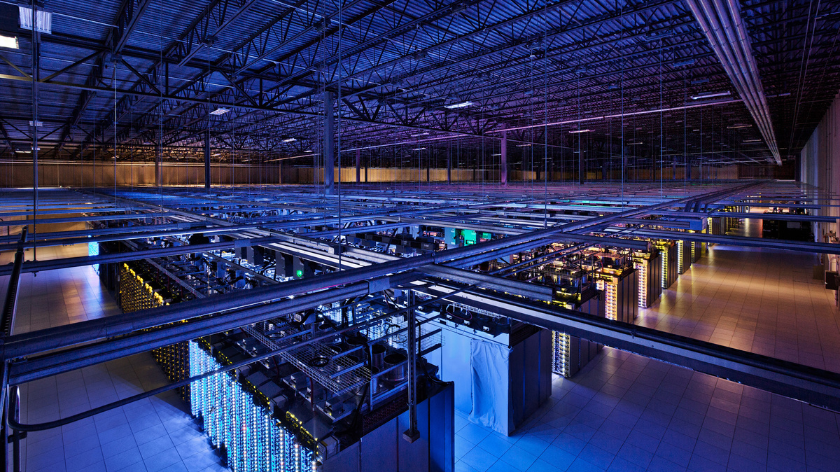
- State-backed investment is accelerating hyperscale AI data centre builds in Saudi Arabia
- The move positions the Middle East as a strategic alternative to US and European compute hubs
What happened: Saudi Arabia backs AI data centres to reshape global compute geography
In January 2026, Saudi Arabia took a decisive step to elevate its role in the global AI infrastructure race. Humain, an artificial intelligence company backed by the kingdom’s Public Investment Fund (PIF), announced a strategic financing framework with the National Infrastructure Fund (Infra) to support the development of large-scale, AI-optimised data centres across the country.
The framework, revealed during the World Economic Forum in Davos, provides for up to $1.2 billion in funding and underpins plans to build as much as 250 megawatts of new data centre capacity. Unlike conventional facilities, these sites are designed specifically for AI workloads, supporting high-density GPUs required for model training, inference and advanced research.
Humain, launched in 2025 as part of Saudi Arabia’s broader digital and economic diversification drive, is positioning itself as a national AI platform rather than a standalone data centre operator. Led by CEO Tareq Amin, the company aims to integrate compute infrastructure with AI services spanning healthcare, climate modelling and enterprise applications. The partnership with Infra also includes discussions around an AI infrastructure investment platform to attract international institutional capital.
Also Read: Telefónica chief warns Europe on cyber autonomy at Davos
Also Read: Extreme Networks launches global AI-driven partner programme
Why it’s important
This story stands out because it illustrates a structural shift in how and where global computing power is being built. For decades, hyperscale data centres — particularly those serving AI — have been concentrated in North America, Western Europe and parts of East Asia. Saudi Arabia’s approach combines sovereign capital, energy availability and strategic policy alignment, creating a new gravitational centre for compute.
For technology companies — from cloud providers and chipmakers to systems integrators and AI developers — the Middle East is no longer a peripheral market. State-backed AI infrastructure on this scale signals long-term commitment and reduces deployment risk for partners seeking alternative locations for capacity expansion.
Crucially, this is not just about national ambition. By framing AI compute as critical infrastructure and backing it with public capital, Saudi Arabia is accelerating time-to-market and lowering barriers for global customers. As AI demand continues to outstrip supply, the kingdom’s move suggests that compute power itself is becoming a geopolitical and economic asset — and that the Middle East intends to play a central role in its future distribution.
