
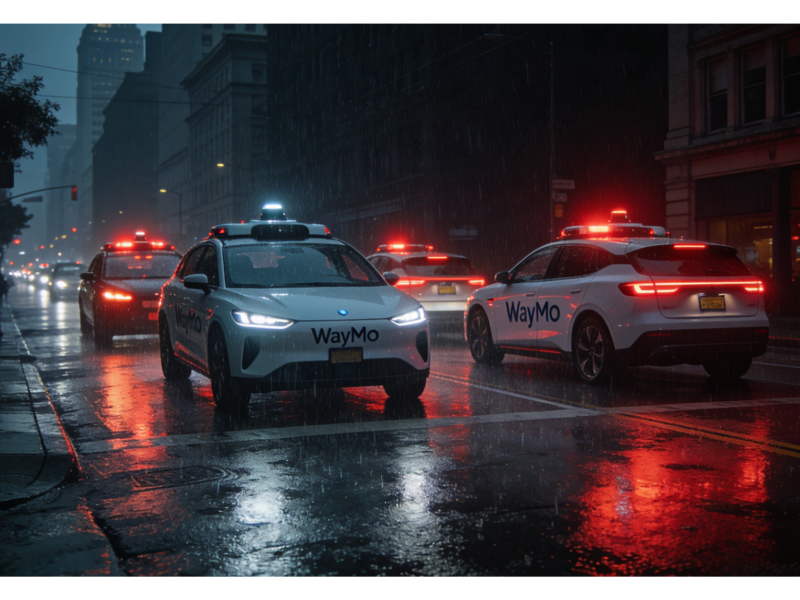
- Widespread blackout in San Francisco left dozens of Waymo robotaxis stalled at darkened intersections, intensifying concerns about autonomous vehicle behaviour in major emergencies
- Regulators and safety experts are pressing for stricter oversight and clearer emergency protocols for robotaxi operations as fleets expand across US cities
What happened: A power outage disrupted Waymo’s robotaxi operations across San Francisco
In the early evening of 20 December 2025, a fire at a Pacific Gas & Electric substation triggered a widespread power outage that knocked out roughly one-third of San Francisco’s electricity grid. With traffic signals offline and roads plunged into darkness, the city’s growing fleet of autonomous taxis from Alphabet’s Waymo struggled to navigate the conditions.
A significant number of Waymo vehicles stalled at intersections or pulled over unexpectedly, their hazard lights blinking as human drivers and pedestrians struggled to work around them. The company temporarily suspended its robotaxi service in the city and resumed operations about a day later once conditions stabilised.
Waymo said its vehicles are programmed to treat non-functional traffic lights as four-way stops, but many machines requested “confirmation checks” from remote human support agents when encountering dark signals, a safety measure originally designed for smaller outages. The concentrated volume of confirmation requests contributed to delays and congestion, even though the company noted its fleet successfully traversed several thousand darkened intersections.
Waymo has since begun rolling out software updates providing its cars with additional context about power failures, with the aim of helping them navigate outages more decisively.
Also Read: Expert: Cyber retaliation is real and threatens US systems
Also Read: Optus outage in Australia sparks fury, calls for overhaul
Why it’s important
The incident has reignited debate about whether current autonomous vehicle systems are ready for real-world emergencies, particularly when critical infrastructure such as power and traffic control fail. Critics argue that the reliance on remote “fleet response” teams to confirm decisions exposes a weakness in a system touted as capable of full autonomy.
Experts, including Carnegie Mellon’s Philip Koopman and Missy Cummings of the George Mason University Autonomy and Robotics Center, have called for more rigorous federal regulations governing how robotaxi operators prepare for and respond to rare but high-impact events such as blackouts or natural disasters. Koopman cautioned that if a system cannot cope with a blackout without creating traffic gridlock, much less an earthquake or flood, regulators must require proof that broader failure scenarios are handled safely.
California’s Department of Motor Vehicles and the California Public Utilities Commission have confirmed they are reviewing the outage and considering tightening requirements for emergency response and oversight of remote drivers.
The episode underlines broader challenges facing the autonomous vehicle industry. Deploying fully driverless services has proved more complex and costly than anticipated, with high-profile setbacks such as the revocation of GM Cruise’s permit following a pedestrian accident in 2023 underscoring the stakes. At the same time, competitors such as Tesla and Amazon-backed Zoox are pressing ahead with their own robotaxi deployments, intensifying pressure on regulators to balance innovation with safety.
