
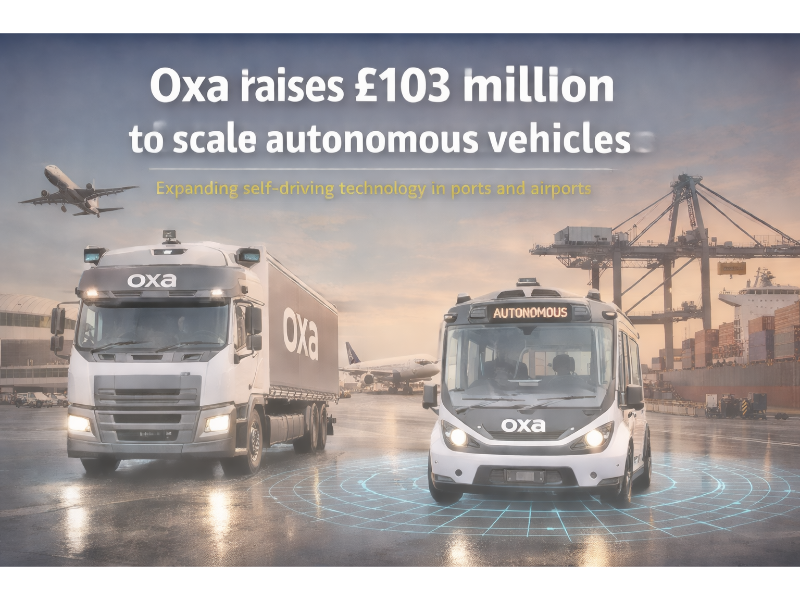
- Oxa aims to bring self-driving technology to high-traffic logistics hubs, including airports and ports, to improve safety and efficiency.
- The funding round was led by influential investors, including venture capital firms such as Amadeus Capital Partners and the UK government’s Future Fund.
What happened: Oxa secures funding to expand self-driving technology for logistics
Oxa, a UK-based self-driving startup, has secured £103 million in a Series B funding round to accelerate the development of its autonomous vehicle solutions. The company plans to deploy these vehicles in high-traffic logistics environments such as airports and ports, aiming to improve operational efficiency and safety.
The funding round was led by Amadeus Capital Partners, with participation from the UK government’s Future Fund. Oxa’s self-driving technology is currently in trial phases and designed to operate in complex, dynamic environments like transportation hubs, where automation can increase efficiency and reduce human error. The capital raised will help Oxa expand its presence in these sectors, allowing the company to further develop its systems and technology.
Also read: Steering towards compliance: Legislation for autonomous vehicles
Also read: UK aims for fully self-driving cars by 2026
Why this is important
The logistics and transport industries are under increasing pressure to improve efficiency. Airports and ports, which handle large volumes of goods and passengers daily, are ideal environments for autonomous technology. Oxa’s self-driving vehicles could help streamline operations, reduce delays, and improve safety. As the sector embraces automation, this investment reflects the growing demand for innovative solutions in critical transport hubs.
This funding also highlights the UK’s role in shaping the future of autonomous transport. The participation of the UK government’s Future Fund underlines the importance of public and private sector collaboration in driving technological advancements. This financial backing strengthens the country’s position in the global race for innovation, providing further opportunities for Oxa and similar startups to scale their operations and impact.
Furthermore, Oxa’s success follows a global trend, as companies like Waymo and TuSimple are making strides in autonomous freight transport. With self-driving technology expected to disrupt industries worldwide, Oxa’s progress is an indicator of how these developments could transform logistics and supply chains. As more companies adopt autonomous solutions, the logistics sector could undergo significant changes, creating new opportunities and challenges for businesses, regulators, and workers.s.
